

TL;DR:
- Automated manufacturing uses software, machines, and sensors to perform production tasks with minimal human input, enhancing speed and precision. Success depends on proper system integration, validation, and aligning hardware with enterprise-level information architecture. Selecting the right automation type and planning incremental adoption are crucial for maximizing return on investment and operational efficiency.
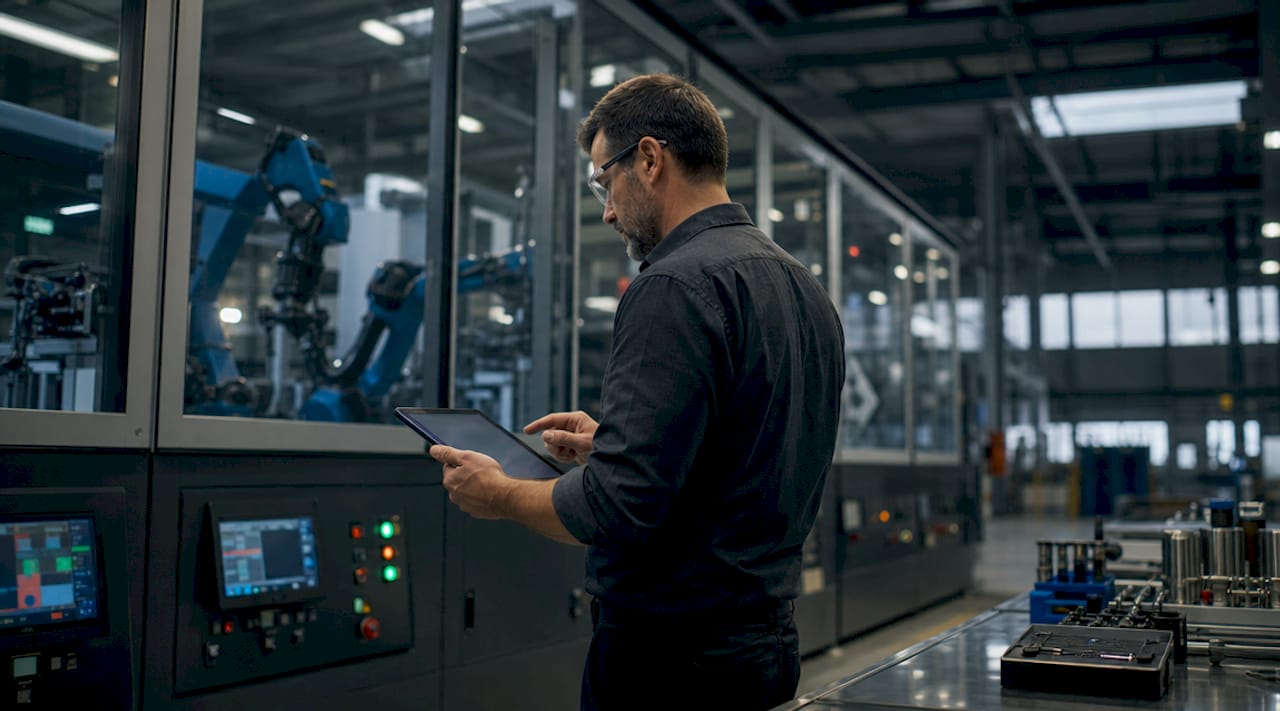
Automated manufacturing is the use of software, machines, and control systems to perform production tasks with minimal human intervention, achieving faster, safer, and more precise output. Where traditional production lines depend on manual labor for repetitive operations, automated systems use robots, sensors, and decision-making software to execute those same tasks consistently at scale. For OEMs, contract manufacturers, and industrial operations producing high volumes of precision components, understanding this technology is not optional. It is the foundation of competitive production in every sector from aerospace to defense.
What is automated manufacturing and how does it work?
Automated manufacturing, formally defined by control devices, sensors, and programmed machines including industrial robots, is the practice of replacing or augmenting manual production tasks with technology-driven systems. The industry standard term for the broader discipline is industrial automation, though “automated manufacturing” accurately describes its application within production environments. Both terms appear throughout this guide.
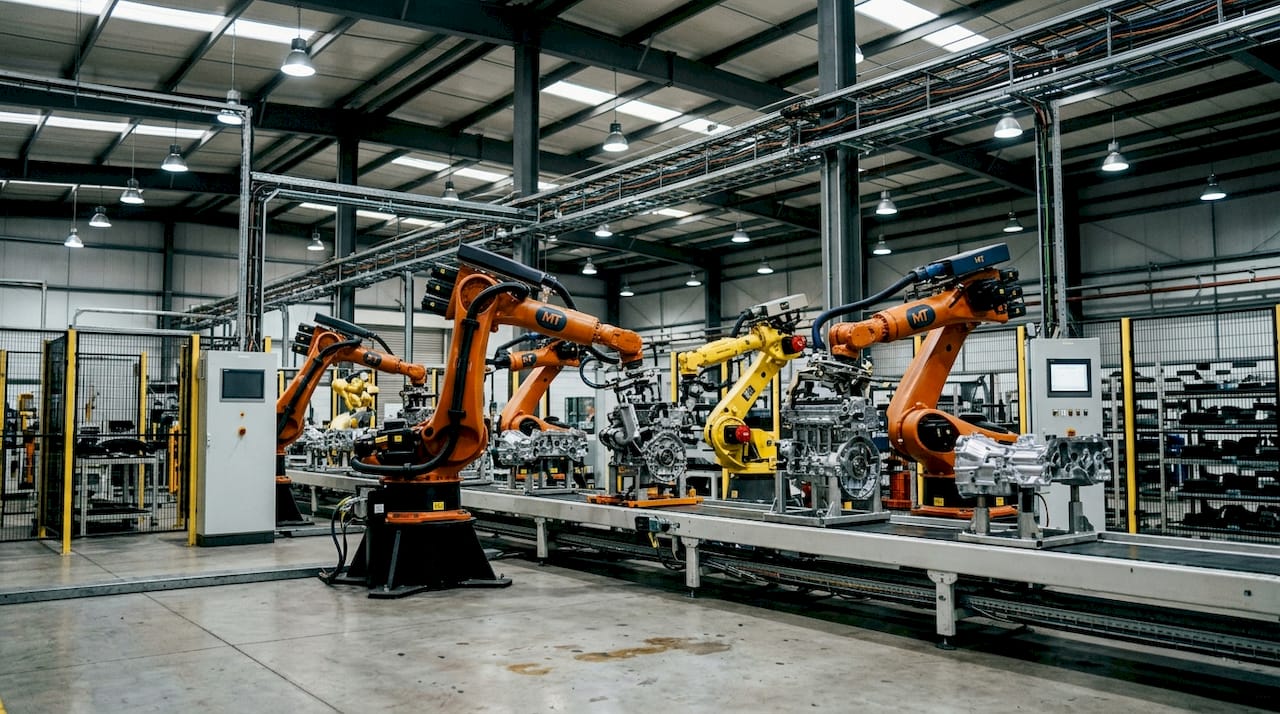
At the hardware level, automated manufacturing systems include CNC machines, robotic arms, conveyor systems, vision sensors, and material handling equipment. These physical components execute the actual work: cutting, welding, assembling, inspecting, and moving parts through a production sequence. Each device operates according to programmed instructions, not human judgment in the moment.
The software layer is where the real intelligence lives. AI and machine learning layers enable systems to respond dynamically to changing conditions on the floor, adjusting parameters without operator input. Manufacturing Execution Systems (MES) sit between the shop floor and enterprise planning software, translating production orders into machine-level instructions in real time.
The ANSI/ISA-95 standard, updated in 2025, defines exactly how enterprise systems like ERP connect to manufacturing control systems like MES. This layered model clarifies the information flow from business planning down to individual machine commands, and it is the architecture most serious automation implementations follow. Without this integration, machines run in isolation and the full productivity potential of automation goes unrealized.
Pro Tip: Before selecting any automation hardware, map your information architecture first. Knowing how your ERP, MES, and machine controllers will communicate prevents costly retrofits after installation.
Practical examples of automated tasks include:
- CNC milling and turning operations that hold tolerances within microns across thousands of parts
- Robotic welding cells that maintain consistent weld parameters across every cycle
- Automated optical inspection systems that flag dimensional deviations in real time
- Conveyor and pick-and-place systems that move parts between workstations without manual handling
What are the key benefits of automated manufacturing?
Automation boosts production rates, improves material efficiency, and enhances workplace safety, making it one of the most widely adopted strategies across industrial manufacturing. These gains compound over time as systems accumulate operational data and improve their own performance.
The core advantages of automated production, ranked by operational impact, are:
- Higher throughput. Automated systems run continuously without fatigue, shift changes, or breaks. A facility producing 20 million parts annually, like Machiningtechllc’s operation in Webster, Massachusetts, depends on this consistency to meet delivery commitments.
- Improved quality and consistency. Machines do not drift in attention or technique. Every part produced under the same program receives the same process, which directly reduces scrap rates and rework costs.
- Material efficiency. Precise, repeatable cuts and operations waste less raw material per part. This matters significantly in aerospace and defense applications where material costs are high.
- Workplace safety. Automation substitutes equipment for manual work in hazardous tasks like heavy lifting, high-temperature operations, and exposure to cutting fluids or metal particulate. Fewer human hands in dangerous positions means fewer injuries.
- Labor cost reduction. Automated cells produce more output per labor hour, shifting human roles from repetitive execution to oversight, programming, and quality management.
“Automation’s benefits include productivity and material efficiency gains but require balanced decision-making considering potential drawbacks.” — Britannica
The drawbacks deserve equal attention. High upfront capital costs, complex integration requirements, and the need for specialized programming and maintenance skills create real barriers. Facilities that automate without a clear validation plan often find that equipment installation does not equal operational success. The benefits of automated machining for OEMs only materialize when systems are properly integrated and validated against actual production requirements.
How do the types of automated systems compare?
Automation systems fall into three categories: fixed, programmable, and flexible. Each serves a different production profile, and selecting the wrong type for your volume and product mix is one of the most common and expensive mistakes in automation planning.
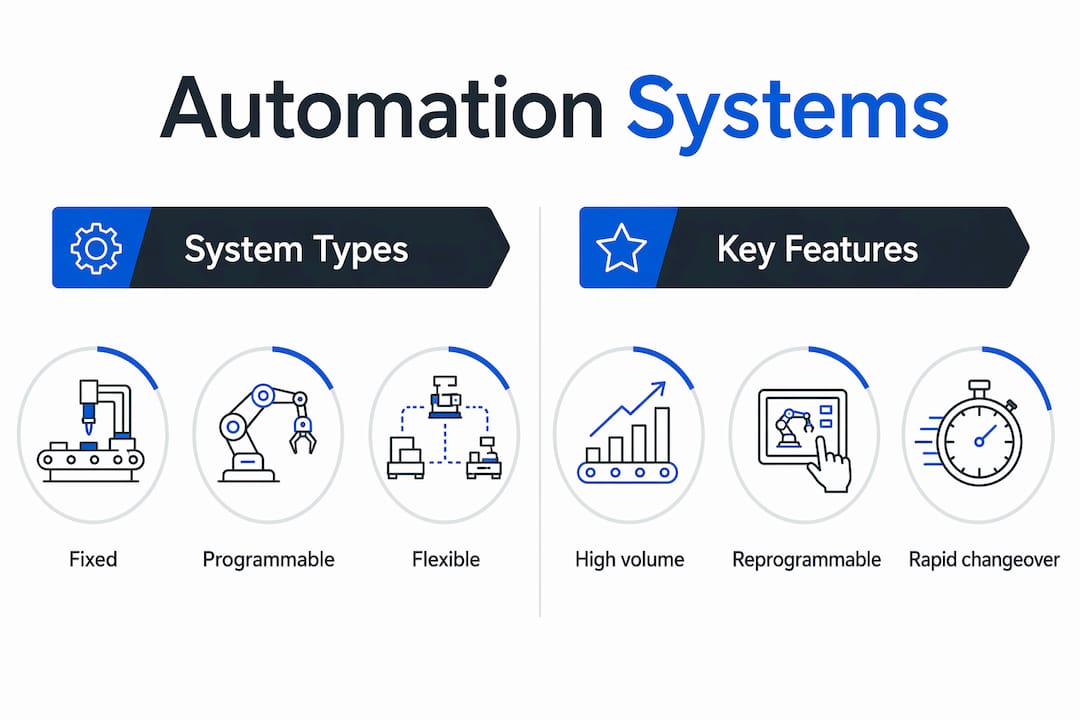
| System type | Best use case | Key advantage | Key limitation |
|---|---|---|---|
| Fixed automation | Single product, very high volume | Lowest per-unit cost at scale | No flexibility for product changes |
| Programmable automation | Batch production, moderate variety | Reprogrammable for different products | Downtime required to switch programs |
| Flexible automation | High variety, lower volumes | Rapid changeover, minimal downtime | Higher initial investment |
Fixed automation, sometimes called hard automation, is designed for one product and one process. Transfer lines in automotive engine manufacturing are the classic example. The throughput is exceptional, but retooling for a new product requires significant time and capital.
Programmable automation uses computer-controlled equipment that can be reprogrammed between production runs. CNC machining centers fall into this category. A shop running aerospace brackets one week and firearm components the next relies on programmable systems to switch between part programs without replacing physical tooling.
Flexible automation takes programmability further by enabling rapid, often automatic changeover between product types. Robotic cells with vision systems and modular tooling represent this tier. The sheet metal fabrication sector has adopted flexible automation aggressively because product variety is high and batch sizes are often small.
Pro Tip: Match your automation type to your actual production mix, not your aspirational one. A flexible system purchased for variety that never materializes is capital tied up in unnecessary capability.
What should you consider before implementing automated manufacturing?
Successful implementation of automated manufacturing processes requires more than purchasing equipment. NIST emphasizes robotics flexibility, safety, and integration challenges, advocating measurement science to confirm system readiness before full deployment. This is the step most facilities skip, and it is why many automation projects underperform.
Key considerations before and during implementation:
- Start with bounded use cases. An incremental adoption strategy that begins with one or two well-defined automation cells builds internal competency before scaling. Trying to automate an entire facility simultaneously creates integration complexity that overwhelms most teams.
- Validate before you scale. NIST’s robotic workcell research demonstrates that simulated manufacturing environments can test system performance, cybersecurity posture, and digital twin accuracy before live deployment. Validation plans should define specific performance metrics, not just equipment uptime.
- Integrate your information systems. The ISA-95 framework exists precisely because ERP and MES systems frequently fail to communicate effectively. Automation that runs without enterprise-level data visibility produces parts but not insight. Connecting machine data to your planning systems is what turns automation into intelligent manufacturing.
- Plan for human-robot collaboration. Safe integration of robots with human workers requires physical safeguarding, speed and force limiting, and clear procedural protocols. Regulatory compliance under OSHA and ANSI/RIA R15.06 is not optional.
- Build for scalability. Systems designed around open communication standards and modular architectures adapt more readily to new products, higher volumes, and Industry 4.0 technologies like digital twins and real-time supply chain traceability.
The facilities that extract the most value from automation treat it as an ongoing program, not a one-time capital project. Reviewing industrial machining safety protocols alongside automation planning keeps compliance and performance aligned from day one.
Key takeaways
Automated manufacturing delivers measurable gains in throughput, quality, and safety only when hardware, software, and enterprise systems are integrated and validated as a unified operation.
| Point | Details |
|---|---|
| Definition is precise | Automated manufacturing combines robots, sensors, and software to execute production tasks with minimal human input. |
| ISA-95 is the integration standard | The 2025-updated ISA-95 standard defines how ERP and MES systems connect to enable true manufacturing automation. |
| Three system types exist | Fixed, programmable, and flexible automation each suit different production volumes and product variety levels. |
| Validation precedes scaling | NIST’s workcell testing model shows that measuring system performance before full deployment prevents costly failures. |
| Incremental adoption works | Starting with limited use cases builds internal agility and reduces integration risk on the path to Industry 4.0. |
Why the information layer matters more than the machines
Most decision-makers I have worked with arrive at automation planning focused entirely on the physical equipment. Which robot? Which CNC platform? How many spindles? That focus is understandable, but it consistently leads to underperforming installations.
The machines are the easy part. A six-axis robot arm from FANUC or a Hydromat rotary transfer machine will do exactly what it is programmed to do. The hard part is the information architecture surrounding those machines. What data are they generating? Where does it go? How does your ERP respond to it? How does your MES prioritize jobs when a machine goes down?
I have seen facilities with genuinely impressive hardware running at 60% of theoretical capacity because nobody built the software integration layer properly. The ISA-95 standard exists because this problem is universal, not exceptional. The 2025 update to that standard specifically addresses modular and data-centric architectures, which tells you where the industry knows the gaps are.
The other misconception I encounter regularly is treating ROI as a function of the equipment purchase. Real ROI in automated manufacturing is a function of validated performance in your specific environment. A robot that performs brilliantly in a vendor demo may behave differently when integrated with your legacy MES, your specific material handling setup, and your actual part mix. NIST’s workcell testing methodology exists to close that gap. Facilities that adopt it before committing to full-scale deployment make better decisions and recover their investment faster.
My honest advice: hire for integration skills before you buy hardware. A controls engineer who understands ISA-95 and your ERP platform is worth more to your automation program than a slightly better robot model.
— Andrew
How Machiningtechllc delivers precision through automation
Machiningtechllc has operated automated, high-volume precision machining from its 70,000 square foot facility in Webster, Massachusetts since 1985. The operation produces over 20 million parts annually using Hydromat rotary transfer systems, CNC milling, CNC turning, and wire EDM, serving aerospace, defense, firearm manufacturing, and industrial machinery customers. For OEMs that need a contract partner with proven automated manufacturing processes already in place, Machiningtechllc removes the capital and integration burden entirely. Explore contract machining for OEMs to see how automated production translates directly into faster delivery, tighter tolerances, and lower per-part cost for high-volume programs. For precision-critical applications, subcontract machining services provide the same automated capacity without the overhead of building it yourself.
FAQ
What is the definition of automated manufacturing?
Automated manufacturing is the use of software, machines, control systems, and sensors to perform production tasks with reduced human intervention. The goal is higher efficiency, greater accuracy, and improved safety across manufacturing operations.
How does automated manufacturing work at the system level?
Hardware components like robots and CNC machines execute physical tasks, while software layers including MES and AI manage scheduling and dynamic responses. The ANSI/ISA-95 standard defines how enterprise systems connect to manufacturing control systems to coordinate the full operation.
What are the main types of automated manufacturing systems?
The three types are fixed automation for single-product high-volume production, programmable automation for batch manufacturing with reprogrammable equipment, and flexible automation for high-variety low-volume production with rapid changeover capability.
What is intelligent manufacturing and how does it relate to automation?
Intelligent manufacturing extends automated manufacturing by adding AI, real-time data analytics, digital twins, and connected supply chain systems. Automation is the foundation; intelligence is the layer built on top of it as systems mature toward Industry 4.0.
What is the biggest risk in implementing automated manufacturing?
The most common failure point is treating equipment installation as the end goal rather than validated, integrated performance. NIST’s measurement science approach to robotics deployment shows that rigorous testing and integration planning are what separate successful automation programs from expensive underperformers.
Recommended
- Why Automate Machining Processes: Boosting OEM Efficiency | Machining Technologies
- Custom vs standard machining: choosing the right fit | Machining Technologies
- Maximize output and quality: Top benefits of automated manufacturing | Machining Technologies
- 5 key benefits of automated machining for OEMs in 2026 | Machining Technologies