

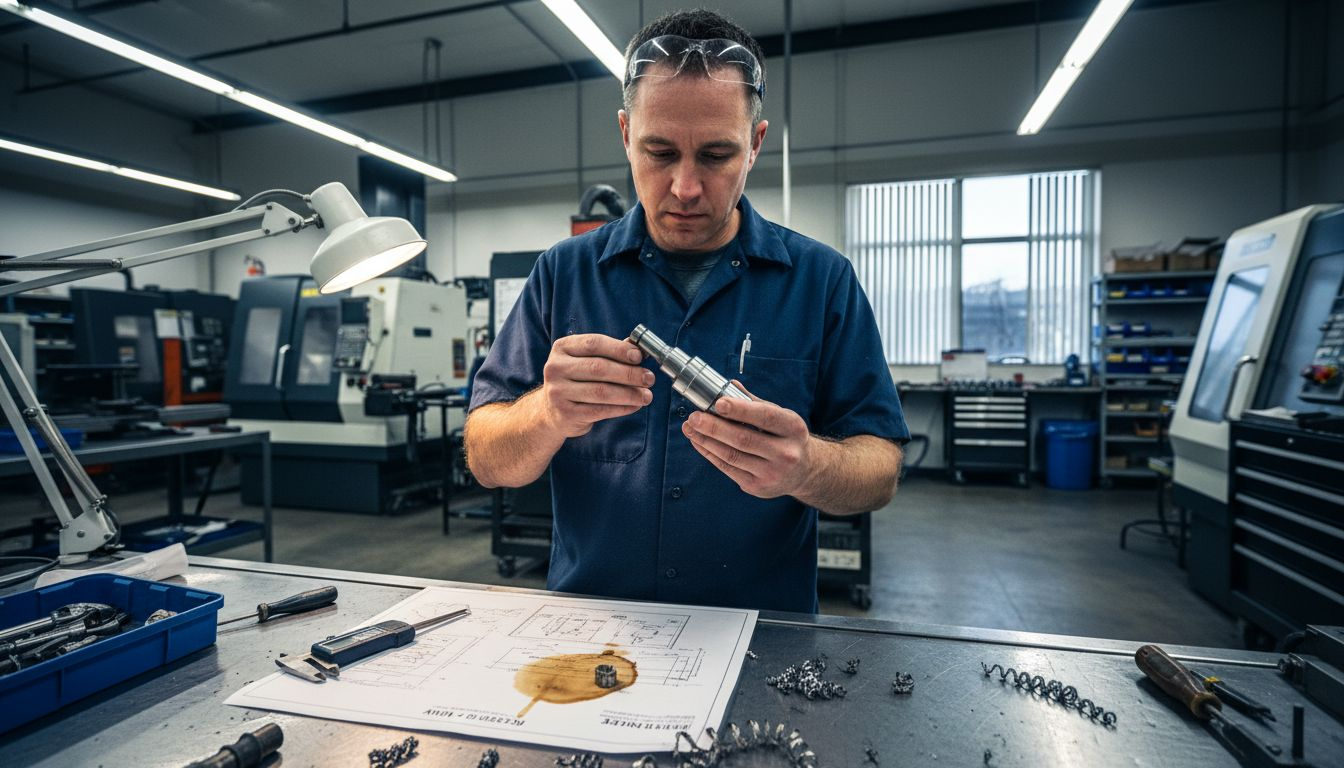
Most American firearms manufacturers know that even fractions of a millimeter can determine product success or failure. In an industry where quality and safety are absolutely critical, advanced machining processes have become central to American firearm production. This guide lays out practical, high-precision steps for achieving unmatched part consistency, harnessing both established standards and next-generation manufacturing technologies.
Table of Contents
- Step 1: Define Material Specifications And Tolerance Requirements
- Step 2: Set Up Automated Machining Equipment For Firearm Parts
- Step 3: Execute Advanced CNC Milling And Turning Operations
- Step 4: Implement Wire EDM For Intricate Component Features
- Step 5: Inspect Finished Firearm Parts For Precision And Quality
Quick Summary
| Key Insight | Explanation |
|---|---|
| 1. Define material specifications precisely | Exact specifications ensure consistency and safety in firearm components, impacting quality and reliability significantly. |
| 2. Configure CNC systems carefully | Proper setup of CNC machinery is essential for producing high-precision parts efficiently, reducing errors and waste. |
| 3. Utilize advanced machining techniques | Implementing multi-axis CNC and wire EDM helps create intricate components that traditional methods cannot achieve. |
| 4. Conduct thorough inspections | Rigorous inspection protocols using specialized tools guarantee that each part meets stringent quality and performance standards. |
| 5. Maintain detailed documentation | Documenting specifications, setups, and inspection results is crucial for quality control and streamlining future production processes. |
Step 1: Define material specifications and tolerance requirements
Defining precise material specifications and tolerance requirements forms the critical foundation for manufacturing high-performance firearm components. Your goal in this step is to establish exacting standards that guarantee consistent quality and performance across every manufactured part.
Starting with material selection, you need to specify exact material characteristics based on your component’s specific functional requirements. Precise dimensional tolerances represent more than just measurements they represent safety and reliability. For firearm components, this means specifying detailed attributes like surface finish, hardness, heat treatment properties, yield strength, tensile strength, and potential protective coatings. The Sporting Arms and Ammunition Manufacturers’ Institute (SAAMI) provides comprehensive standards that manufacturers can reference for establishing these critical specifications.
When defining tolerances, use plus or minus percentage ranges that account for potential manufacturing variations while maintaining tight precision requirements. Document every specification meticulously including acceptable material composition ranges, dimensional limits, surface roughness parameters, and performance expectations. Each specification should provide clear guidance for machinists and quality control teams.
Expert Recommendation: Always cross reference your material specifications with industry standard references like SAAMI guidelines to ensure comprehensive and accurate component requirements.
Step 2: Set up automated machining equipment for firearm parts
Preparing automated machining equipment for firearm components requires meticulous planning and precision. Your objective is to configure advanced CNC systems that can consistently produce high-quality parts with exceptional accuracy and repeatability.
Begin by selecting the appropriate CNC machining systems specifically designed for firearm component manufacturing. This involves carefully installing specialized tooling that matches the geometric complexity of each specific part. Program your machines with exact machining parameters including spindle speeds, feed rates, and cutting trajectories. Pay close attention to tool path strategies that minimize material waste while maintaining tight dimensional tolerances essential for firearm component production.
Verify your setup by using precision jigs and fixtures engineered specifically for firearm parts. Each machine setup requires multiple calibration steps to ensure alignment accuracy. Run initial test pieces to confirm that your automated system can consistently reproduce components within the specified tolerance ranges. Monitor critical parameters like surface finish, dimensional accuracy, and edge quality throughout the initial production run.
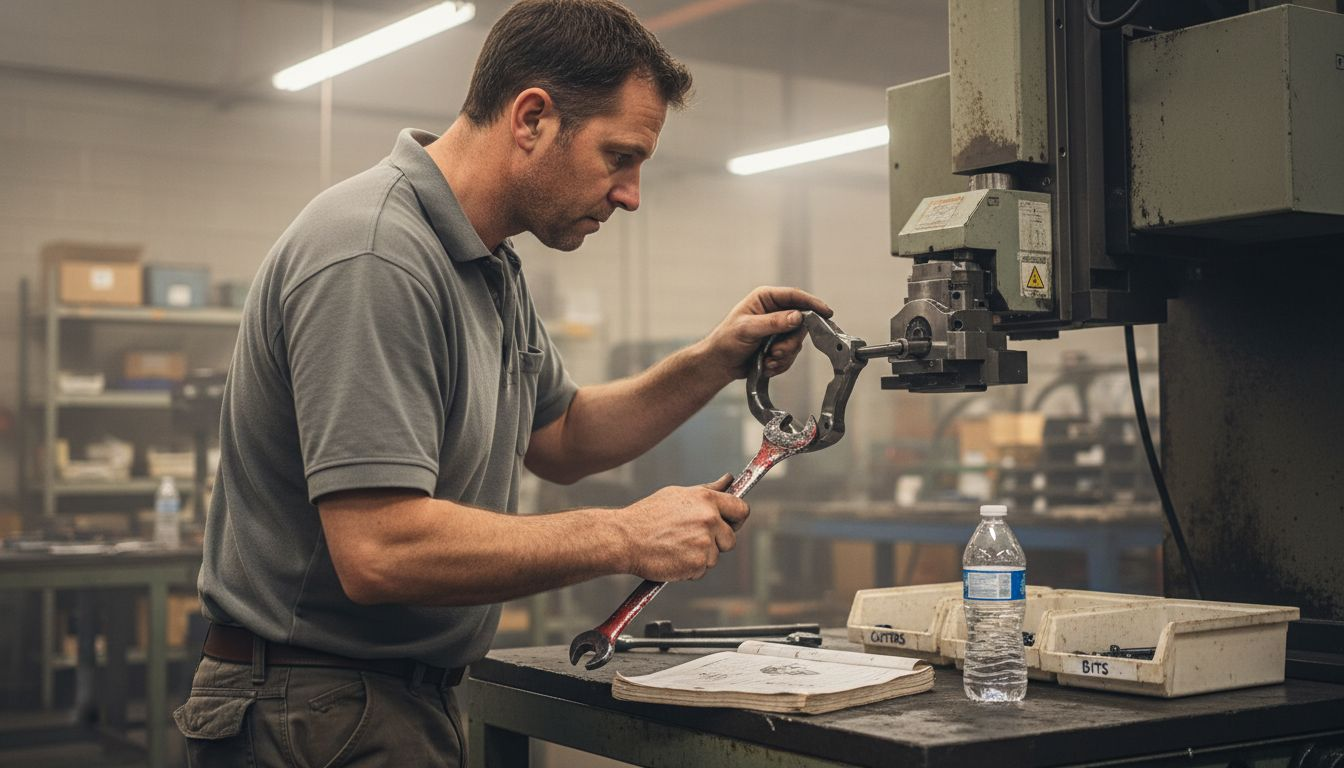
Expert Recommendation: Create and maintain detailed machine setup documentation for each firearm component to streamline future production and ensure consistent quality control.
Step 3: Execute advanced CNC milling and turning operations
Executing advanced CNC milling and turning operations is a critical phase in precision firearm component manufacturing. Your goal is to transform raw material into complex geometric components with exceptional accuracy and minimal manual intervention.
Multi-axis CNC machining technologies enable you to produce intricate firearm parts by programming precise cutting paths, tool speeds, and feed rates. Focus on configuring your machine for specific component requirements like firearm frames, receivers, and cylindrical parts such as pins and bolts. Utilize computer aided design (CAD) software to generate exact tooling strategies that minimize material waste and maximize dimensional precision.
Implement real-time adaptive control systems to monitor and adjust machining parameters dynamically. This approach allows you to maintain consistent quality across production runs by automatically compensating for tool wear, material variations, and minor geometric deviations. Pay particular attention to cutting speeds, coolant flow, and tool engagement angles to ensure optimal surface finish and structural integrity of each machined component.
Expert Recommendation: Develop a comprehensive digital library of CNC machining programs for each firearm component to streamline setup and ensure consistent reproduction.
Step 4: Implement wire EDM for intricate component features
Implementing wire electrical discharge machining (EDM) represents a precision technique for creating complex geometries in firearm components that traditional machining methods cannot achieve. Your objective is to leverage this advanced technology to produce intricate parts with exceptional accuracy and fine surface details.
Wire electrical discharge machining enables you to cut conductive materials using a continuously moving thin metal wire as an electrode. This sophisticated process removes material through controlled electrical spark erosion in a dielectric fluid, allowing you to craft delicate features like trigger mechanisms, precision pins, and complex geometric shapes. Configure your wire EDM machine by carefully selecting critical parameters including pulse duration, wire feed speed, voltage, wire tension, and flushing pressure to optimize material removal and surface finish quality.
Pay meticulous attention to machine setup and parameter calibration. Start with low power settings and incrementally adjust to achieve the desired cut precision. Monitor the wire electrode condition continuously, replacing it when signs of wear become apparent to maintain consistent cutting performance. Implement a systematic approach to tracking and documenting machine settings for each unique component to ensure reproducibility and quality control.
Expert Recommendation: Develop a standardized parameter tracking system that records exact wire EDM settings for each firearm component to streamline future production and maintain consistent quality.
Step 5: Inspect finished firearm parts for precision and quality
Inspecting finished firearm parts represents the critical final quality assurance stage that ensures each manufactured component meets exacting performance and safety standards. Your primary objective is to validate dimensional accuracy, surface integrity, and functional reliability through comprehensive examination techniques.
Certified firearms component inspection requires systematic evaluation using advanced metrology tools and microscopic analysis. Employ coordinate measuring machines (CMM) to verify dimensional tolerances within micron level precision. Conduct visual and microscopic examinations to detect potential manufacturing defects such as surface irregularities, tool marks, or microstructural inconsistencies that could compromise component performance or structural integrity.
Implement a structured inspection protocol that includes comprehensive checks for geometric accuracy, surface finish quality, material composition verification, and functional performance testing. Use calibrated measuring instruments like digital micrometers, optical comparators, and surface profilometers to quantitatively assess each critical dimension and surface characteristic. Document inspection results meticulously, recording precise measurements and comparing them against original design specifications to ensure absolute compliance.
Expert Recommendation: Develop a digital inspection tracking system that maintains comprehensive measurement records for each component batch to facilitate continuous quality improvement and traceability.
This table highlights the impact of advanced technologies on firearm component quality:
| Technology | Advantage | Business Impact |
|---|---|---|
| Multi-axis CNC | Enables intricate shapes | Increases manufacturing flexibility |
| Wire EDM | Achieves precise micro-features | Reduces lead time for complex parts |
| CMM Inspection | Ensures micron-level accuracy | Improves reliability and compliance |
Here’s a summary comparing the main manufacturing steps and their focus areas:
| Step | Primary Objective | Key Focus |
|---|---|---|
| Define Specs | Set material and tolerance standards | Material properties, tolerances |
| Automated Machining | Configure CNC systems for volume | Tooling, programming, calibration |
| CNC Operations | Machine precise part geometries | Multi-axis control, adaptive systems |
| Wire EDM | Create complex micro-features | Fine geometry, wire calibration |
| Inspection | Validate quality and safety | Metrology, defect detection |
Elevate Your Firearm Component Production with Precision Machining Solutions
Manufacturing firearm parts demands exact material specifications, tolerance control, and advanced machining methods like CNC milling, turning, and wire EDM. If you face challenges achieving consistent micron-level accuracy or efficient setup for complex geometries, you are not alone. Precision and reliable high-volume production are critical to meet stringent safety standards and ensure functional excellence.
At Machining Technologies LLC, we specialize in turning your demanding firearm manufacturing requirements into reality. With over 70,000 square feet of modern facilities and state-of-the-art equipment, including Hydromat systems and adaptive CNC controls, we deliver complex parts with tight tolerances and exceptional surface finish every time. Our experience since 1985 and production capacity of over 20 million parts annually guarantee you rapid turnaround without compromising quality.
Discover how our automated machining expertise and commitment to quality assurance align perfectly with your needs for detailed material specifications, CNC setup, and critical inspection processes. Learn more about our comprehensive manufacturing capabilities at Machining Technologies LLC.
Ready to overcome precision manufacturing challenges and accelerate your firearm component production?
Contact us now at Machining Technologies LLC and partner with a trusted leader in contract machining who understands the importance of quality, accuracy, and on-time delivery for firearm manufacturing.
Frequently Asked Questions
What are the key steps in the precision machining workflow for firearms components?
The key steps include defining material specifications and tolerances, setting up automated machining equipment, executing CNC milling and turning operations, implementing wire EDM for intricate features, and inspecting finished parts for quality. Follow these steps systematically to ensure consistent quality and performance.
How do I define material specifications for firearm components?
Begin by identifying the exact material characteristics based on the component’s functional requirements. Specify attributes such as surface finish, hardness, and tensile strength, and document every detail clearly to guide machinists and quality control teams.
What is the importance of setting up CNC machines for firearm manufacturing?
Setting up CNC machines ensures that they can produce high-quality parts with precision and repeatability. Properly configure tooling, programming parameters, and machine alignment to achieve optimal results and reduce material waste.
How can I ensure accurate inspection of finished firearm parts?
Utilize advanced metrology tools like coordinate measuring machines and implement a thorough inspection protocol. Validate dimensions and surface qualities meticulously to confirm that each component meets the required performance and safety standards.
What are the benefits of using wire EDM in firearm component manufacturing?
Wire EDM enables the creation of complex geometries and intricate features that traditional machining methods may not achieve. This process enhances design flexibility and allows for tight tolerances, improving overall product quality.
How can I maintain quality control throughout the machining process?
Maintaining quality control involves documenting all specifications, setup procedures, and inspection results. Implement structured tracking systems that record measurements and any deviations to facilitate continuous improvement and ensure consistent quality.