

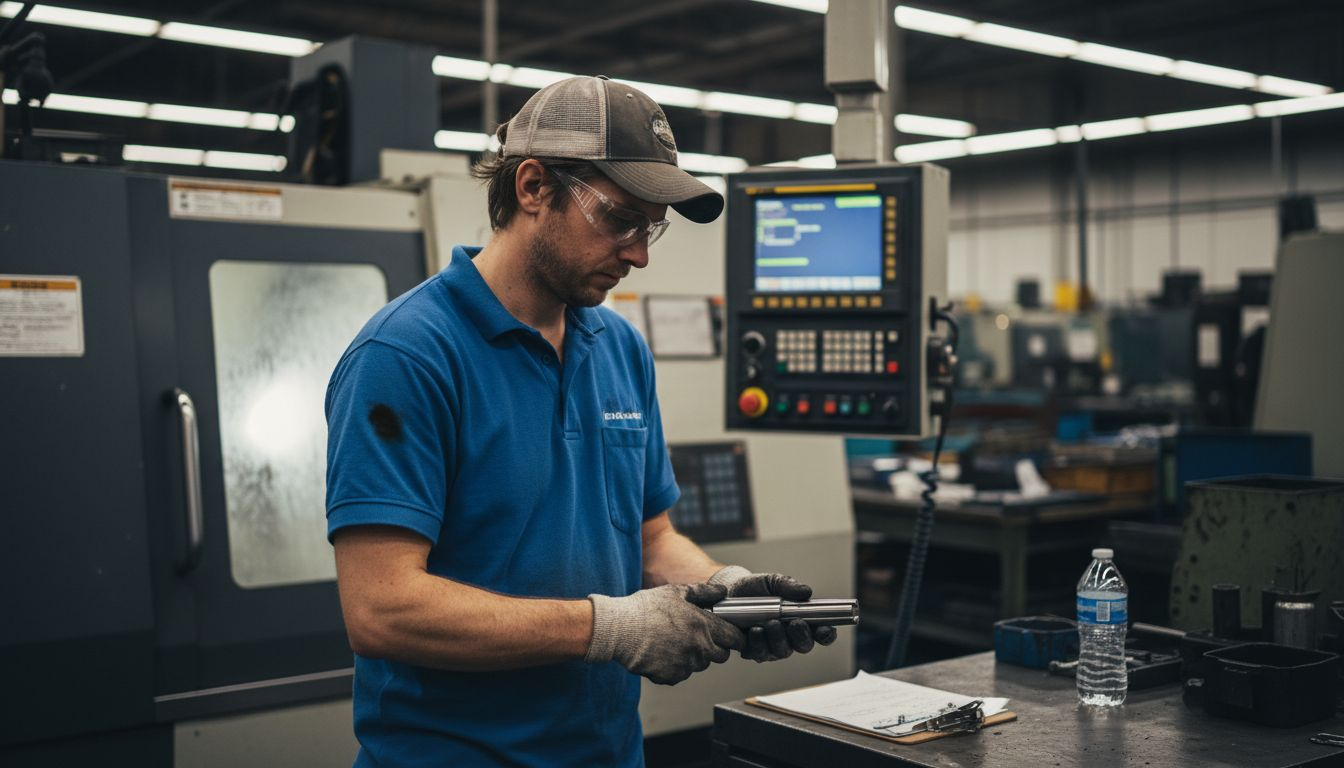
Producing mission-critical aerospace components demands more than just skilled hands and manual precision. For American manufacturing engineers, the difference between reliable supply chains and expensive rework often lies in adopting CNC turning over traditional lathe techniques. By replacing manual controls with programmable automation, CNC turning ensures every part meets strict specifications—crucial for U.S. aerospace and defense applications. This guide walks through the fundamentals and advanced capabilities of CNC turning, helping you make confident decisions for high-precision contract machining.
Table of Contents
- Defining CNC Turning and Key Concepts
- Major Types of CNC Turning Equipment
- How CNC Turning Works in Practice
- Material Selection and Tolerance Capabilities
- Precision, Costs, and Production Volume Impact
Key Takeaways
| Point | Details |
|---|---|
| Precision Manufacturing | CNC turning ensures consistent part quality with tolerances measured in ten-thousandths of an inch, crucial for aerospace and defense applications. |
| Equipment Selection | Choose the appropriate CNC turning equipment based on production volume and part complexity to optimize cost and efficiency. |
| Material Impact | Material selection affects machining costs, cycle times, and achievable tolerances, significantly influencing overall production strategy. |
| Volume Considerations | Higher production volumes reduce per-piece costs, making long-term forecasting essential for effective supplier relationships. |
Defining CNC Turning and Key Concepts
CNC turning fundamentally transforms how manufacturers produce cylindrical and tapered components with precision that manual methods cannot consistently achieve. At its core, turning involves a cutting tool held nearly stationary while a workpiece rotates against it, removing material layer by layer to create the desired geometry. What separates CNC turning from traditional lathe work is the integration of computer numerical control, which replaces manual operator adjustments with programmed instructions that guide the cutting tool along exact paths. For aerospace and defense manufacturers, this distinction matters enormously. You’re no longer dependent on operator skill variation or the physical limitations of hand controls. Instead, every part emerges identical to its predecessor, with tolerances measured in ten-thousandths of an inch.
The process relies on several interconnected parameters that work together to determine your final part quality. Cutting speed defines how fast the workpiece rotates, measured in surface feet per minute, and directly impacts tool life and surface finish. Feed rate controls how much material the tool removes with each pass, measured in inches per tooth or inches per revolution. Depth of cut specifies how far the tool penetrates into the material during each pass. These three factors determine your material removal rate, which affects production throughput and tool wear patterns. CNC turning systems optimize these process parameters through programmable control rather than manual adjustment, yielding consistent results across production runs. In a facility like ours processing over 20 million parts annually, this consistency becomes the foundation of our on-time delivery commitments.
Beyond these primary parameters, CNC turning introduces capabilities that extend well beyond simple cylindrical shapes. Programmable tool positioning enables shoulder turning, threading, grooving, and knurling within a single setup, reducing part handling and secondary operations. Dimensional accuracy reaches levels consistently maintainable across production runs, critical when you’re manufacturing components for aircraft hydraulic systems or missile guidance mechanisms where tolerance stack-up cascades through assemblies. The automated nature eliminates the operator fatigue factor that creeps into manual lathe work during extended shifts. Your morning parts match your afternoon parts in geometry, surface finish, and material properties. This predictability allows you to reliably quote lead times and quality metrics to your customers without building in risk buffers for human variation.
Pro tip: When selecting CNC turning for your component, specify your critical tolerance zones and expected production volumes upfront, as these factors determine optimal cutting speeds and setup efficiency, potentially reducing your per-piece cost by 15 to 30 percent compared to reactive scheduling.
Major Types of CNC Turning Equipment
CNC turning equipment spans a spectrum of capability and complexity, each type serving distinct production needs. At the foundational level, single-spindle CNC lathes form the backbone of precision manufacturing for mid-volume production runs. These machines feature one rotating spindle that holds and spins the workpiece while fixed cutting tools shape the geometry. For aerospace and defense components requiring quantities between 50 and 5,000 units, single-spindle machines deliver the precision and flexibility you need without the capital investment of more complex systems. The operator can reprogram the machine quickly between part numbers, making tool changes and adjusting spindle speeds and feed rates electronically rather than through manual adjustment. This flexibility proves invaluable when you shift from fabricating landing gear components one month to producing hydraulic cylinder bodies the next.
For higher-volume production, multi-spindle automatic turning machines and turning centers represent the next evolution in capability. These systems can feature multiple spindles working in parallel, each performing different operations simultaneously on identical parts as they progress through the machine. Multi-spindle systems dramatically compress cycle times, allowing parts to move from raw stock through complete machining in seconds rather than minutes. At our facility, we operate Hydromat-style systems alongside traditional multi-spindle machines, achieving production rates exceeding 1,000 parts per hour for smaller components. These machines excel at long production runs where setup amortization matters greatly. The initial programming and setup investment gets justified across thousands of identical parts. However, the tooling costs and changeover complexity mean these machines work best when your production forecast supports sustained runs.
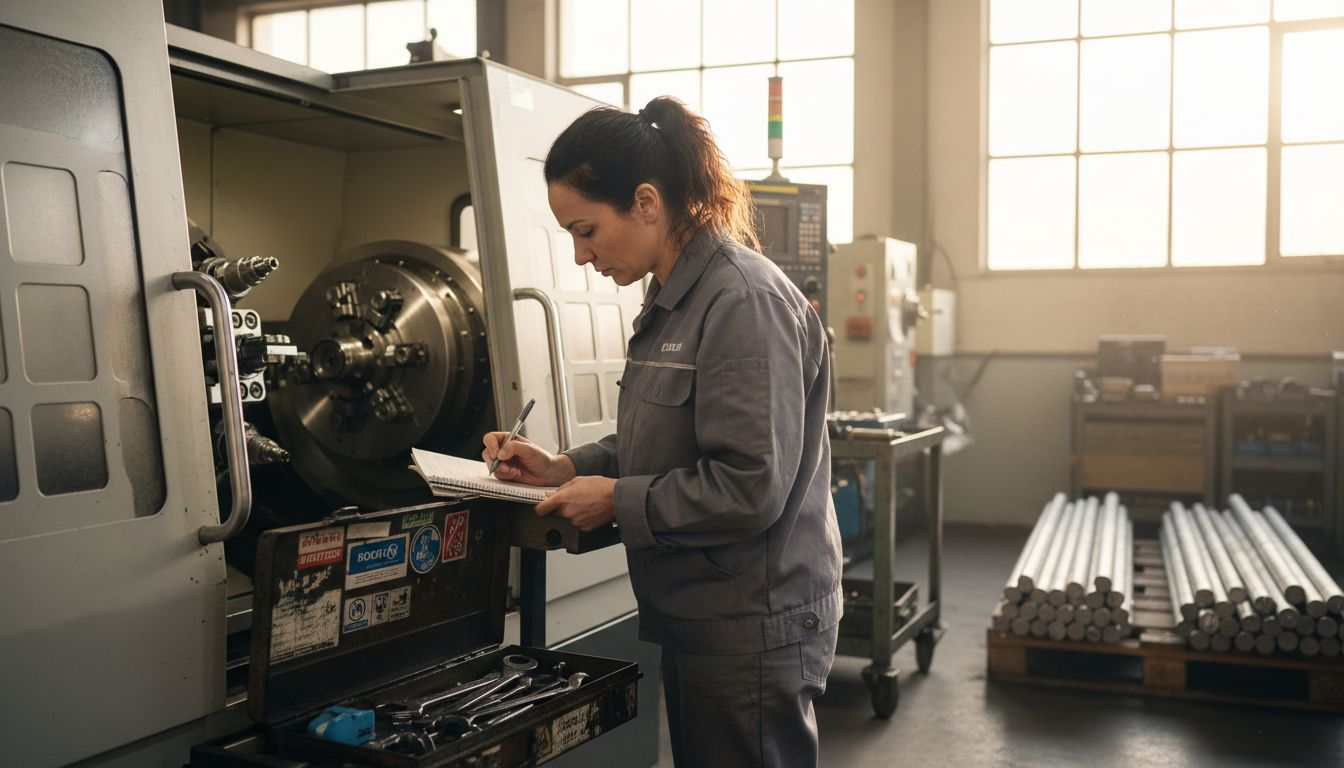
Specialized CNC Turning Capabilities
Beyond spindle count, turning equipment supports various machining operations that determine what shapes you can economically produce. Straight turning creates cylindrical diameters. Taper turning produces angled surfaces on components like missile nose cones or antenna mounts. Contour turning generates complex profiles in a single setup, reducing secondary operations. Threading and grooving operations cut internal and external features without requiring separate machines. Boring expands holes or creates internal cylindrical surfaces. Many modern CNC turning centers combine milling capability through live tooling, enabling you to machine flats, slots, and cross-holes without moving the part to a milling machine. This consolidation reduces handling, improves concentricity, and accelerates delivery schedules.
The choice between single-spindle, multi-spindle, and hybrid turning centers depends on your specific production volume, part complexity, and delivery requirements. Small aerospace suppliers might run single-spindle machines programmed for diverse components. Larger defense contractors operating high-volume subcontract manufacturing gravitate toward multi-spindle systems optimized for specific parts. The transition point typically occurs around 5,000 to 10,000 annual units, where the speed advantage of multi-spindle systems justifies the tooling investment and reduced flexibility. Understanding your actual production run lengths prevents overinvesting in automation that sits idle, or underinvesting and missing delivery windows.
This summary helps clarify the strengths of different CNC turning equipment types:
| Equipment Type | Setup Flexibility | Best for Volume | Complexity Capability |
|---|---|---|---|
| Single-Spindle Lathe | Quick changeovers | Small to mid-volume | Basic to moderate parts |
| Multi-Spindle Machine | Setup intensive | High volume | Limited flexibility |
| Hybrid Turning Center | Moderate | Mid to high volume | Complex geometries |
Pro tip: When evaluating CNC turning equipment for your job shop or production facility, calculate the total parts needed annually and their average complexity, then request quotes from equipment suppliers including realistic programming and setup times, as these hidden costs often determine true manufacturing time and profitability more than machine speed specifications alone.
How CNC Turning Works in Practice
The practical workflow of CNC turning begins far before any metal touches a cutting tool. Your manufacturing engineer receives a technical drawing, typically a 2D profile or 3D CAD model specifying dimensions, tolerances, and surface finishes. A programmer converts this design into numeric coordinates that control machine movement, translating the geometry into a sequence of X, Y, and Z axis commands. When you send a part to our facility, we extract these requirements and generate a CNC program that positions the cutting tool, controls spindle speed and feed rate, and monitors coolant flow. Programming the design into numeric coordinates happens before the machine ever powers on, eliminating guesswork during production. This upfront work separates precision manufacturing from reactive machining.
Once programming is complete, the physical setup begins. Your workpiece material arrives at the turning center in bar stock form or as a precut blank. A shop technician securely clamps the workpiece in the spindle chuck, ensuring it runs true and without runout. Runout matters intensely in aerospace manufacturing, where a few ten-thousandths of an inch of wobble can cascade through tolerance stacks in final assemblies. The cutting tool inserts get installed in the turret or tool holder, each one positioned and verified for height and offset. Then comes the moment that separates manual lathe work from CNC operation: the operator presses start, and the machine executes the entire program automatically. The spindle rotates at the programmed speed. The cutting tool moves in coordinated motion through three spatial dimensions, removing material with each pass. Coolant flows automatically to manage heat and carry away chips. CNC turning creates prototypes and production parts with ultra-fine precision and high repeatability across entire production runs.
Real-World Execution and Quality Control
The cutting process unfolds in multiple passes, each one removing a calculated depth of material. For a shaft requiring a 1-inch diameter turned from 1.5-inch bar stock, the program might execute three passes, each removing about 0.25 inch. The first pass establishes the general geometry quickly. The second pass gets closer to final dimension. The final pass, called the finishing pass, removes only a few thousandths of an inch to achieve surface quality and final dimension. Between passes, the tool retracts, the spindle may pause for tool changes, and the process repeats for different features on the same part. Your morning parts complete their cycles in identical times with identical geometry because the machine eliminates operator fatigue and skill variation.
During execution, monitoring systems track spindle load, tool vibration, and cycle time. Modern systems can detect tool breakage instantly and pause the machine before damage spreads. After the program completes, the finished part ejects from the spindle, and an inspector verifies critical dimensions with precision instruments. At our 70,000 square foot facility, parts flow continuously through turning centers and into quality inspection. We measure critical dimensions using calibrated instruments, verify surface finishes with profilometers, and confirm material properties match specifications. This automated quality verification catches issues before parts ship, protecting your reputation and your final assembly schedule. The repeatability you gain through CNC turning means your thousandth part matches your first part in every measurable way.
Pro tip: When sending parts for CNC turning, provide your programmer with the material grade, any hardness requirements, and which surfaces need specific finishes, as these factors determine cutting speeds and tool selection that directly impact cycle time and cost, potentially saving 20 to 40 percent on manufacturing expenses compared to generic programming assumptions.
Material Selection and Tolerance Capabilities
Material selection for CNC turning directly impacts your manufacturing strategy, cost structure, and final part performance. The metals you choose determine cutting speeds, tool life, and achievable surface finishes. Aluminum dominates aerospace applications where weight reduction matters critically. A typical landing gear actuator shaft might be machined from 6061-T6 aluminum alloy, delivering strength-to-weight ratios that steel cannot match while offering excellent machinability. Steel alloys including mild steel, low carbon steel, and specialized stainless grades serve applications demanding higher strength or corrosion resistance. Titanium and its alloys appear in critical aerospace components where operating temperatures exceed aluminum capabilities, though at significantly higher material and machining costs. Defense contractors frequently specify 4340 alloy steel for hydraulic cylinders and fastener applications because it combines workability with exceptional fatigue resistance. The material you select determines whether your part costs fifteen cents or fifteen dollars to machine, making this decision foundational to your manufacturing economics.
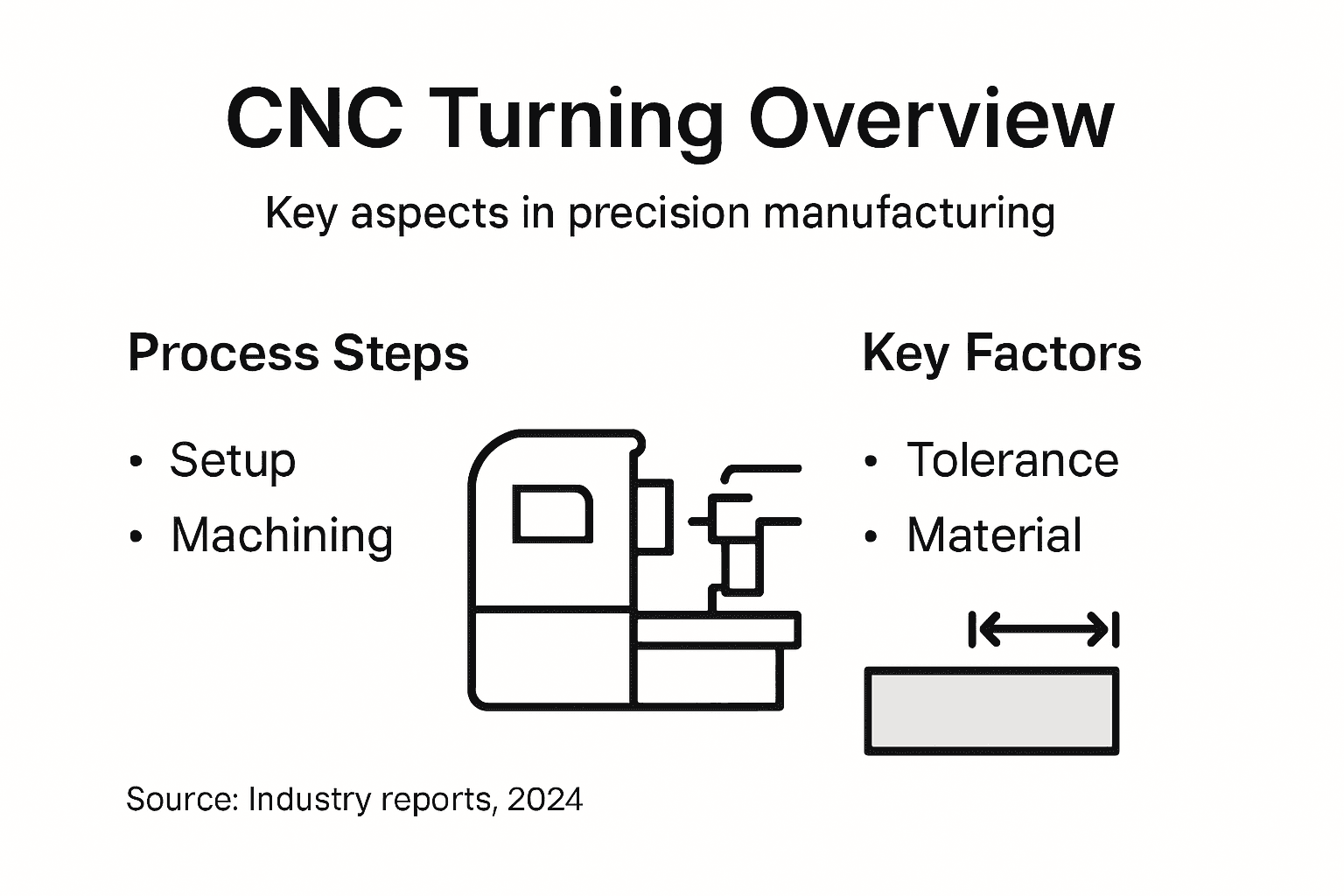
Process parameters optimize material removal rates and surface quality for each material choice. Aluminum allows aggressive cutting speeds, sometimes exceeding 500 surface feet per minute, enabling fast cycle times and high throughput. Steel requires more conservative speeds, typically 200 to 350 surface feet per minute depending on the specific alloy and desired surface finish. Titanium demands the most conservative approach, often below 100 surface feet per minute, because its poor heat conductivity concentrates energy at the cutting edge and accelerates tool wear. Your programmer selects cutting tool geometry, feed rates, and depths of cut based on material properties, and these choices cascade through to spindle load, coolant requirements, and total manufacturing time. A part that takes 45 seconds to machine in aluminum might require 90 seconds in stainless steel and 150 seconds in titanium, even though the geometry remains identical.
Here’s a quick comparison of CNC turning materials and their machining considerations:
| Material | Machinability | Typical Applications | Cycle Time Impact |
|---|---|---|---|
| Aluminum | Very high | Aerospace actuators, housings | Fast machining, low cost |
| Mild Steel | Moderate | General structural parts | Average cycle time |
| Stainless Steel | Lower | Corrosion-resistant components | Slower, higher tool wear |
| Titanium | Challenging | High-temperature aerospace | Slowest, high cost |
| Alloy Steel (4340) | Good | Hydraulic cylinders, fasteners | Moderate speed |
Tolerance Specifications and Verification Methods
Tolerance capabilities in CNC turning reflect machine precision, tool sharpness, and operator discipline. Dimensional tolerances typically hold plus or minus 0.002 inches on diameters for standard operations, though tighter tolerances down to 0.0005 inches become achievable with premium tooling and controlled conditions. Aerospace and defense applications frequently demand tolerances tighter than 0.001 inch on critical dimensions. A fuel pump housing might specify 1.250 plus 0.000 minus 0.0005 inch on a bearing bore diameter. Missing the upper tolerance by just 0.0002 inch results in scrap. Your CNC turning center must maintain spindle concentricity, tool sharpness, and thermal stability to consistently hit these targets. At our facility, we verify critical dimensions using precision micrometers, calibrated calipers, and optical comparators. Surface finish requirements complement dimensional tolerances. Aerospace specifications often call for 16 to 32 microinches of surface roughness on bearing surfaces, compared to 63 to 125 microinches acceptable on non-critical areas. Tool selection, cutting speed, and feed rate all influence final surface finish, creating interconnected relationships that good programmers understand intuitively.
Coaxiality and runout control prove equally critical in precision aerospace applications. When you machine a hollow shaft with both an external diameter and an internal bore, concentricity determines whether the bore centers on the external diameter or wobbles relative to it. Tolerance stacks in final assemblies mean that 0.002 inch of runout on your component can consume half the allowable tolerance on a mating assembly. Operators use precision fixtures, verify spindle runout before production, and program tool paths that minimize deflection. Threading operations demand specific pitch diameter tolerances and thread form accuracy. A hydraulic fitting with a 0.75 inch 16 UN thread must have pitch diameter within plus or minus 0.0015 inch, and thread runout below 0.002 inch total indicated runout. These requirements demand sharp threading inserts, rigid tool holders, and slow feed rates that sacrifice speed for accuracy. Your choice of material and tolerance specification directly determines which turning center gets assigned to your job and whether it ships on-time or requires rework.
Pro tip: Specify material hardness ranges and condition in your purchase order, as softer material machines faster but harder material holds tighter tolerances longer, and let your supplier recommend optimal cutting speeds based on your specific hardness lot rather than generic material specifications, potentially reducing scrap rates by 30 to 50 percent on tight tolerance runs.
Precision, Costs, and Production Volume Impact
Precision manufacturing presents a fundamental tradeoff that every aerospace and defense OEM must navigate carefully. Achieving tighter tolerances requires slower cutting speeds, sharper tooling, more frequent tool changes, and extended cycle times. A part that takes 30 seconds to machine at standard tolerances might require 75 seconds when you demand 0.0005 inch accuracy instead of 0.002 inch. Your tooling costs escalate because premium inserts wear faster under aggressive feeds, and your machine sits idle during tool change cycles. Yet this investment in precision often saves money downstream. When your final assembly tolerances stack through hundreds of components, tight tolerances on individual parts prevent cascading scrap in subsequent manufacturing stages. A 0.001 inch error on a bearing bore in a fuel pump housing becomes someone else’s problem in final assembly, burning hours of rework and expedite fees. The precision you buy from your supplier costs less than the rework it prevents.
Higher production volumes fundamentally shift the economics of CNC turning by spreading fixed costs across more units. Programming a complex part costs the same whether you manufacture 100 or 10,000 units. Fixture costs, setup time, and quality verification procedures get amortized across total production volume. At 100 units, your per-piece cost includes the full burden of that setup investment. At 10,000 units, that same investment disappears into rounding. This volume advantage explains why contract manufacturers thrive on long production runs. Our facility produces over 20 million parts annually, which allows us to invest in automated handling systems, multiple machines dedicated to specific part families, and quality infrastructure that smaller shops cannot justify. That automation translates directly to lower per-piece costs for customers with sustained volume requirements. But here is the critical insight: this only works if your volume actually sustains. If you quote ten million units then place orders for 500,000, you pay for the automation you never fully utilized.
The Cost Drivers Behind CNC Turning
Energy consumption, tool wear, and machine operation time combine to determine your final manufacturing cost. Energy costs typically represent 8 to 12 percent of total turning cost, a smaller component than operator labor or tooling. But optimizing cutting parameters to increase material removal rate dramatically reduces operation time, and operation time drives labor costs and machine overhead allocation. A 15 percent reduction in cycle time on a 2,000 piece order saves you 50 hours of machine time, translating to roughly 3,000 dollars in manufacturing cost assuming a fully burdened rate of sixty dollars per machine hour. Tool wear accelerates with aggressive feeds and speeds, but strategic parameter optimization prevents unnecessary tool changes. Your programmer understands that pushing the spindle at 3,000 RPM instead of 2,500 RPM might remove material 20 percent faster but double tool wear, ultimately costing more than the time savings. These interconnected relationships demand experience and discipline.
Production volume also influences your supplier choice and competitive advantage. When you have consistent, high-volume demand, you become a priority customer. Suppliers allocate their best machines, most experienced programmers, and shortest lead times to accounts generating serious annual volume. You get early access to new equipment, priority scheduling during capacity constraints, and willingness to invest in custom fixtures that would be uneconomical for single-job work. A defense OEM ordering 50,000 components annually might negotiate pricing 30 to 40 percent below a competitor ordering 2,000 units, because the per-piece profit margin supports aggressive competition. Conversely, that same OEM pays a significant premium if they suddenly slash orders to 5,000 units, because the supplier cannot absorb that volume drop without raising prices or moving capacity to another customer. Understanding this dynamic helps you forecast accurately and communicate volume expectations candidly with suppliers. Your supply chain relationships depend on predictable volume as much as competitive pricing.
Pro tip: When planning new production programs, provide your machining supplier with a 12 month rolling forecast showing anticipated monthly volumes, even if early months show lower quantities, because suppliers can schedule equipment and tooling investments more intelligently if they understand long-term volume expectations rather than assuming single order sizes, potentially reducing your per-piece cost by 15 to 25 percent through better planning.
Unlock Precision and Efficiency with Advanced CNC Turning Solutions
If you are facing challenges with maintaining tight tolerances, managing production volume fluctuations, or optimizing cycle times in precision manufacturing, Machining Technologies LLC is your trusted partner. Our extensive experience in CNC turning enables us to deliver consistent, high-quality cylindrical and complex components with exacting dimensions and surface finishes that aerospace and defense industries demand. We understand the critical balance between cutting speeds, tooling, and material selection needed to minimize costs while upholding superior standards.
Take advantage of our state-of-the-art 70,000 square foot facility, equipped with Hydromat systems and multi-spindle CNC turning centers that expertly handle projects ranging from prototypes to high-volume production exceeding 20 million parts annually. Visit Machining Technologies LLC to explore how our precision machining solutions can transform your manufacturing process and help you meet demanding deadlines without compromising quality. Act now to partner with an industry leader that turns your complex designs into reliable, ready-to-assemble components on time and within budget.
Frequently Asked Questions
What is CNC turning?
CNC turning is a manufacturing process that shapes cylindrical and tapered components using a stationary cutting tool while the workpiece rotates. It utilizes computer numerical control to precisely guide the cutting tool, ensuring consistent production quality.
How do cutting speed, feed rate, and depth of cut affect CNC turning?
Cutting speed determines how fast the workpiece rotates, while feed rate controls the amount of material removed per pass. Depth of cut specifies how deep the tool penetrates into the material. Together, they impact material removal rate, tool wear, and surface finish quality.
What are the major types of CNC turning equipment?
The major types include single-spindle lathes, which are ideal for mid-volume production, and multi-spindle automatic turning machines that excel in high-volume manufacturing. Hybrid turning centers combine milling capabilities to reduce handling and improve efficiency.
How does material selection influence CNC turning costs and performance?
Material selection directly affects machining strategies, cycle times, and costs. Different metals, such as aluminum, steel, and titanium, have varying machinability, impacting tool wear and achievable tolerances. Choosing the appropriate material is crucial for balancing performance and cost.