

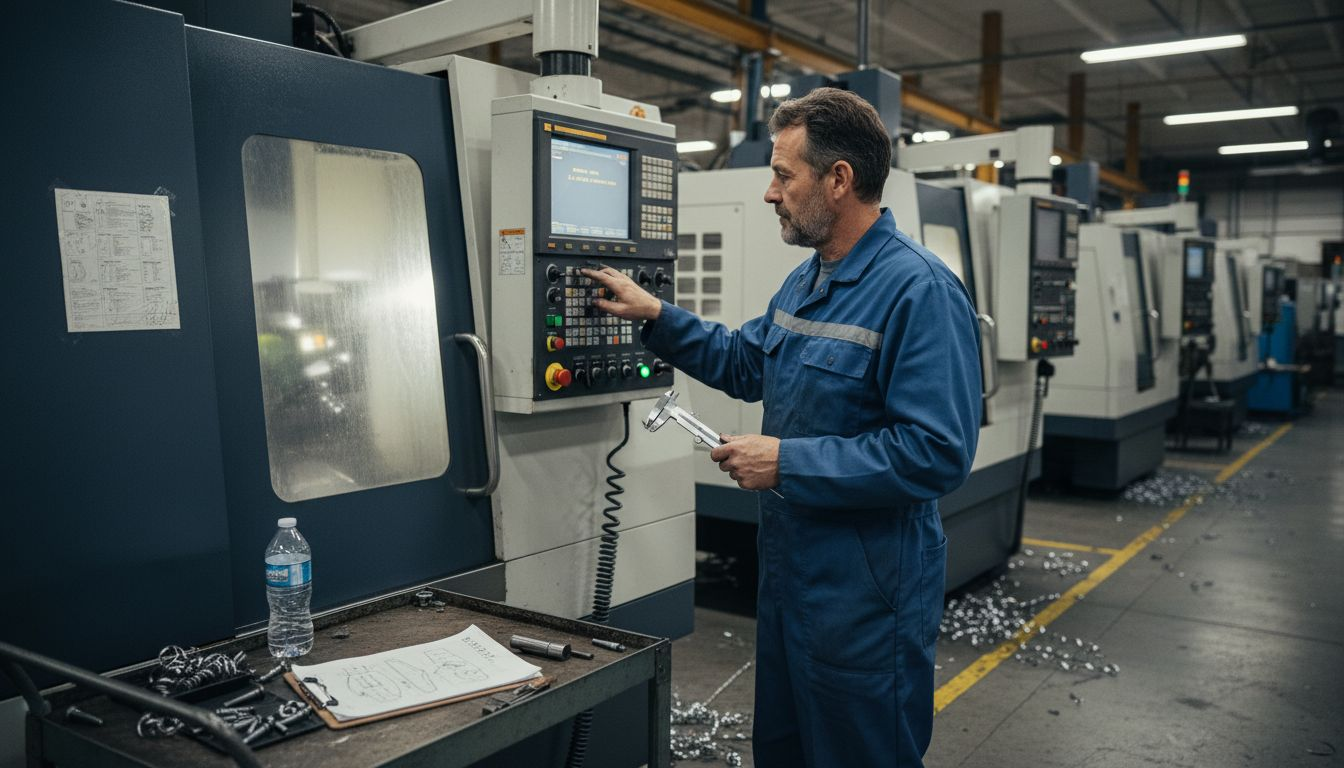
Hybrid manufacturing is slashing aerospace part lead times by 40% and material waste by 60%, fundamentally changing how OEMs approach production challenges. As aerospace and defense sectors demand tighter tolerances and faster turnaround, adopting AI driven automation, hybrid techniques, and advanced tooling becomes essential for competitive advantage. This guide equips manufacturing engineers and procurement managers with data backed insights into 2026’s most impactful machining trends and actionable strategies to optimize production efficiency.
Table of Contents
- Introduction To 2026 Machining Landscape In Aerospace And Defense
- AI And Automation Driving Precision And Throughput Improvements
- Hybrid Manufacturing: Integrating Additive And Subtractive Techniques
- Advances In Tooling And Sustainability Practices
- Common Misconceptions And Challenges In Adopting New Machining Technologies
- Decision Framework And Practical Guidance For OEM Procurement
- Explore Advanced Machining Solutions To Elevate Your Aerospace Production
- Frequently Asked Questions
Key Takeaways
| Point | Details |
|---|---|
| AI and automation boost precision | AI optimized CNC parameters improve precision by 15% and increase throughput by 20% through real-time monitoring. |
| Hybrid manufacturing transforms efficiency | Combining additive and subtractive methods cuts lead times by 40% and reduces material waste by 60%. |
| Advanced tooling extends lifespan | New carbide coatings increase tool life by 50%, significantly lowering replacement costs and downtime. |
| Adoption requires realistic planning | Implementing automated machining systems typically takes 12 to 18 months including workforce training and integration. |
| Decision frameworks guide selection | Comparing technologies by precision needs, production volume, and sustainability goals ensures optimal investment. |
Introduction to 2026 Machining Landscape in Aerospace and Defense
Aerospace and defense OEMs face mounting pressure to deliver parts with unprecedented precision while scaling production efficiently. Tolerances have tightened significantly, with precision machining tolerances narrowing by 20% over the last two years driven by industry demands and technological capabilities. You need manufacturing processes that balance speed, accuracy, and cost control to remain competitive in this evolving landscape.
Sustainability initiatives now influence procurement decisions as much as technical specifications. Environmental regulations demand reduced waste and energy consumption, pushing OEMs toward greener machining practices. Cost pressures intensify these challenges, requiring you to maximize output without sacrificing quality or inflating budgets.
Three primary technological drivers shape 2026’s machining landscape:
- AI powered process optimization delivering measurable precision improvements
- Automation systems enabling real-time monitoring and adaptive machining
- Hybrid manufacturing techniques combining additive and subtractive methods
- Advanced tooling coatings extending equipment lifespan substantially
- Sustainable coolant systems reducing environmental impact by over one third
These innovations address your specific production pain points. AI enhances decision making for complex geometries. Automation boosts throughput without proportional labor increases. Hybrid manufacturing opens new design possibilities while cutting material waste. Together, these trends create opportunities for aerospace OEMs ready to invest strategically in next generation capabilities that deliver quantifiable returns on precision, speed, and sustainability metrics.
AI and Automation Driving Precision and Throughput Improvements
Artificial intelligence transforms CNC machining by optimizing parameters that traditionally required extensive manual adjustment and testing. AI optimized process parameters improve machining precision by an average of 15% compared to conventional settings, directly addressing the tighter tolerances aerospace components demand. These algorithms analyze thousands of data points per second, adjusting feed rates, spindle speeds, and tool paths to minimize defects and dimensional variations.
Automation works synergistically with AI to boost production throughput by up to 20% through continuous real-time monitoring. Sensors track tool wear, vibration patterns, and thermal conditions, triggering adaptive responses before quality issues emerge. This proactive approach reduces inspection cycles and rework, accelerating your overall manufacturing timeline while maintaining consistency across production runs.
The human element remains central despite technological advances. Skilled machinists are augmented, not replaced, by AI in aerospace machining, with operators leveraging data driven insights to make better informed decisions on complex setups. You gain enhanced process control that shortens troubleshooting time and improves first pass yield rates, critical factors when manufacturing high value aerospace components.
Key benefits of AI and automation integration include:
- Reduced defect rates through predictive maintenance algorithms
- Faster setup times via automated tool path optimization
- Enhanced quality assurance with continuous measurement feedback
- Lower energy consumption through efficient machining cycles
- Improved safety by automating high risk operations
“AI enables us to achieve tolerances we previously thought required specialized equipment, using our existing CNC infrastructure more intelligently.” Manufacturing Engineer, Aerospace OEM
Pro Tip: Start with pilot programs on non critical parts to build operator confidence and refine AI parameters before scaling to high value aerospace components. This incremental approach reduces risk while demonstrating ROI to stakeholders.
Exploring advanced machining capabilities that incorporate AI and automation helps you understand practical implementation pathways. However, AI challenges in defense manufacturing require careful planning around data security, system integration, and workforce readiness to maximize investment returns.
Hybrid Manufacturing: Integrating Additive and Subtractive Techniques
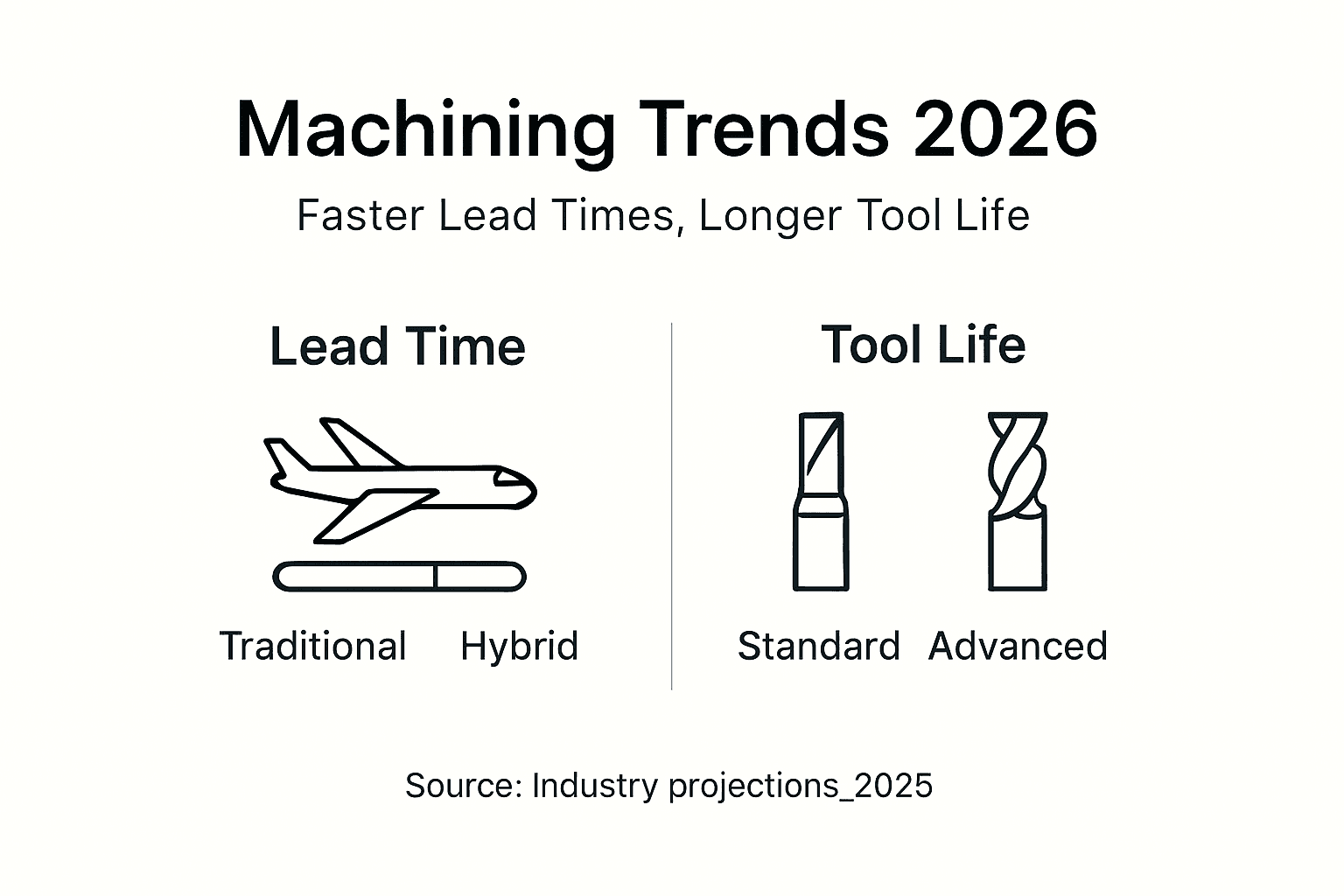
Hybrid manufacturing combines additive processes like metal deposition with traditional subtractive machining on a single platform, revolutionizing how you approach complex aerospace geometries. This integration cuts lead times by 40% and material waste by 60% compared to conventional machining alone, delivering substantial cost and efficiency advantages. You can build near net shapes additively, then machine final surfaces to precise tolerances without multiple setups or material transfers.
Cost savings reach up to 25% per aerospace part when hybrid methods replace traditional approaches for suitable applications. The technique excels at producing components with internal channels, lattice structures, or complex contours that would require extensive material removal using subtractive methods alone. You eliminate substantial raw material costs while reducing machining time on geometries that traditionally demanded multiple operations.
| Metric | Traditional Machining | Hybrid Manufacturing | Improvement |
|---|---|---|---|
| Lead Time | 10 days | 6 days | 40% faster |
| Material Waste | 65% | 26% | 60% reduction |
| Setup Operations | 4 to 6 | 1 to 2 | 67% fewer |
| Cost per Part | $1,000 | $750 | 25% savings |
Workforce training mitigates the process complexity inherent in hybrid systems. Your team needs skills spanning both additive parameters and traditional machining fundamentals, requiring structured training programs typically lasting three to six months. However, this investment pays dividends through expanded capabilities and reduced dependency on multiple specialized machines.
Hybrid manufacturing particularly suits:
- Low to medium volume production runs requiring high precision
- Complex geometries with internal features impossible to machine conventionally
- Prototype to production transitions needing design flexibility
- Repair and refurbishment of high value aerospace components
- Applications where material costs dominate total part economics
Pro Tip: Evaluate hybrid manufacturing for parts currently requiring more than three setups or generating over 50% material waste. These candidates typically show fastest ROI and easiest integration into existing workflows.
Reviewing hybrid manufacturing case studies provides concrete examples of how aerospace OEMs successfully implement these techniques. The technology enables manufacturing approaches previously constrained by conventional machining limitations, opening new design possibilities that enhance performance while controlling costs.
Advances in Tooling and Sustainability Practices
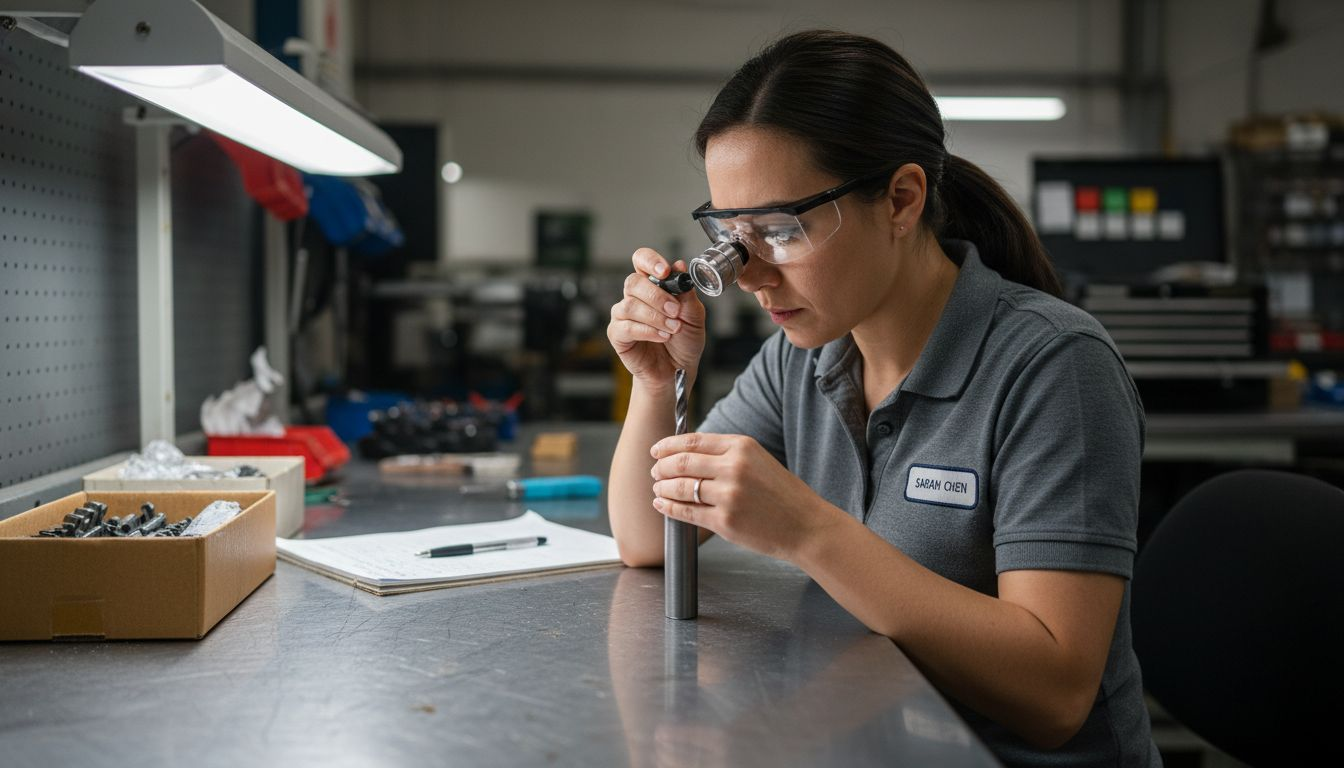
New carbide coating technologies extend tool life by 50%, dramatically lowering tooling costs and reducing unplanned downtime in precision aerospace machining. Advanced tooling coatings incorporate nano structured layers that resist wear and thermal degradation better than previous generations. You experience fewer tool changes per shift, maintaining consistent surface finishes and dimensional accuracy across longer production runs.
Water based coolants and closed loop recycling systems reduce environmental impact by 35% compared to traditional petroleum based fluids. These sustainable alternatives meet increasingly stringent aerospace environmental regulations while cutting disposal costs substantially. You achieve comparable or superior cooling performance without the health and safety concerns associated with conventional cutting fluids.
Reduced downtime from longer lasting tools improves overall equipment effectiveness, a critical metric when maximizing utilization of expensive CNC equipment. Each avoided tool change saves three to seven minutes of non productive time, compounding efficiency gains across multiple operations daily. This improvement directly impacts your ability to meet tight delivery schedules without overtime premiums.
Key sustainability and tooling innovations include:
- Diamond like carbon coatings providing extreme hardness and low friction
- Cryogenic cooling systems eliminating fluid waste entirely
- Predictive tool wear monitoring preventing catastrophic failures
- Recycled carbide programs reducing raw material environmental footprint
- Minimum quantity lubrication systems cutting fluid consumption by 90%
Investment in green machining yields long term cost advantages beyond regulatory compliance. You reduce consumable expenses, lower hazardous waste disposal fees, and potentially qualify for sustainability incentives or preferential supplier status with environmentally conscious aerospace primes. The business case extends beyond immediate production costs to encompass total lifecycle economics and corporate responsibility objectives.
Exploring advanced tooling and machining capabilities helps you understand how modern coating technologies and sustainable practices integrate with high volume production requirements. The combination of durability and environmental performance creates competitive advantages in aerospace markets where both factors influence procurement decisions.
Common Misconceptions and Challenges in Adopting New Machining Technologies
A persistent myth suggests AI will replace skilled machinists, but reality shows AI primarily supports and enhances machinists rather than eliminating their roles. You still need experienced operators to interpret AI recommendations, handle exceptions, and optimize processes based on tribal knowledge that algorithms cannot replicate. The technology amplifies human expertise rather than substituting for it, creating higher value roles focused on oversight and continuous improvement.
Hybrid manufacturing complexity appears daunting initially, but structured workforce training makes the technology manageable for teams with solid machining fundamentals. Your machinists already understand cutting parameters, tool selection, and quality requirements. Adding additive knowledge builds on this foundation rather than replacing it entirely. Most organizations successfully transition operators through focused training programs lasting three to six months.
Adoption timelines for automated machining typically span 12 to 18 months including equipment installation, process validation, and workforce training. Overestimating the ease of implementation leads to unrealistic project schedules and budget overruns. You need adequate time for system integration, debugging, and operator proficiency development before achieving full production capacity.
Common adoption challenges include:
- Underestimating integration complexity with legacy systems and processes
- Insufficient training budgets leading to operator frustration and resistance
- Unrealistic ROI expectations not accounting for learning curve periods
- Inadequate data infrastructure to support AI and automation capabilities
- Poor change management creating cultural barriers to new technology acceptance
Realistic planning acknowledges these hurdles upfront, building contingencies into implementation schedules and budgets. You achieve smoother technology transitions by setting achievable milestones, celebrating incremental wins, and maintaining open communication about challenges. Pilot programs on lower risk applications build organizational confidence before scaling to critical production lines.
The gap between vendor promises and operational reality demands careful due diligence. Visit reference sites, interview current users, and insist on proof of concept demonstrations using your actual parts and materials. This verification protects your investment and ensures selected technologies genuinely address your specific aerospace machining requirements rather than solving generic problems.
Decision Framework and Practical Guidance for OEM Procurement
Selecting optimal machining technologies requires systematic comparison across multiple performance dimensions that matter to your specific production requirements. The table below contrasts traditional, AI enhanced, and hybrid approaches across critical decision factors:
| Factor | Traditional Machining | AI Enhanced CNC | Hybrid Manufacturing |
|---|---|---|---|
| Precision | ±0.0005 in | ±0.0003 in | ±0.0004 in |
| Lead Time | 10 days | 8 days | 6 days |
| Material Waste | 65% | 60% | 26% |
| Cost per Part | Baseline | 5% higher | 15% lower (complex parts) |
| Setup Complexity | Moderate | Moderate | High |
| Training Required | 2 weeks | 6 weeks | 12 weeks |
| Best for Volume | High volume | Medium to high | Low to medium |
Your procurement decision should align technology capabilities with strategic production priorities. High volume, relatively simple geometries favor traditional or AI enhanced approaches. Complex, lower volume parts with substantial material content justify hybrid manufacturing investment despite higher training requirements and setup complexity.
Follow this systematic procurement process:
- Define Requirements: Document precision tolerances, production volumes, material specifications, and delivery timelines for target part families.
- Assess Current State: Analyze existing process capabilities, bottlenecks, quality issues, and cost drivers to identify improvement opportunities.
- Evaluate Options: Compare candidate technologies against requirements using quantitative metrics like cost per part, lead time, and quality metrics.
- Calculate Total Cost: Include equipment, training, integration, maintenance, and consumables over a five year horizon, not just acquisition price.
- Pilot Test: Run proof of concept projects on representative parts to validate performance claims and uncover implementation challenges.
- Scale Gradually: Expand successful pilots incrementally rather than attempting wholesale technology replacement across all product lines simultaneously.
Pro Tip: Weight sustainability factors at 15 to 20% of total scoring when evaluating technologies. Environmental performance increasingly influences customer procurement decisions and regulatory compliance costs, making it strategically important beyond immediate production metrics.
Balanced investment aligned to strategic goals prevents both underinvestment that leaves you uncompetitive and overinvestment in capabilities exceeding actual requirements. You achieve optimal returns by matching technology sophistication to part complexity, volume characteristics, and customer expectations rather than chasing every emerging trend regardless of fit.
Explore Advanced Machining Solutions to Elevate Your Aerospace Production
Translating these insights into production improvements requires partnering with machining specialists who understand aerospace precision requirements and rapid turnaround demands. Machining Technologies LLC combines AI driven automation, hybrid manufacturing techniques, and sustainable tooling practices within a 70,000 square foot facility producing over 20 million precision parts annually.
Our advanced machining services leverage cutting edge technology to deliver the tight tolerances and complex geometries aerospace and defense applications demand. With expertise spanning precision CNC milling and turning through wire EDM, we provide complete solutions from prototype through full scale production. Explore precision aerospace parts solutions that help you achieve production goals faster while controlling costs and meeting sustainability objectives.
Frequently Asked Questions
What are the top machining technology trends impacting aerospace production in 2026?
AI optimized CNC parameters, hybrid additive plus subtractive manufacturing, and advanced tooling coatings dominate 2026 trends. These technologies deliver measurable improvements in precision, lead times, and cost efficiency that directly address aerospace OEM production challenges.
How long does it usually take to implement AI driven machining automation?
Implementation typically requires 12 to 18 months including equipment installation, system integration, process validation, and workforce training. Realistic timelines account for learning curves and integration complexity with existing systems.
Can hybrid manufacturing significantly reduce aerospace part lead times?
Yes, hybrid manufacturing cuts lead times by 40% for suitable applications by eliminating multiple setups and reducing material removal requirements. Complex geometries with internal features show the greatest time savings compared to conventional approaches.
Are there sustainability benefits linked to new tooling technologies?
Advanced carbide coatings extend tool life by 50%, reducing replacement frequency and waste. Water based coolants and recycling systems cut environmental impact by 35% while maintaining cooling performance, addressing both regulatory requirements and cost concerns.
How do I decide which machining technology is best for my OEM production needs?
Evaluate technologies against your specific requirements for precision, volume, complexity, and lead time. Run pilot programs on representative parts to validate performance claims before full scale investment, weighting factors like training requirements and total lifecycle costs alongside immediate capabilities.