

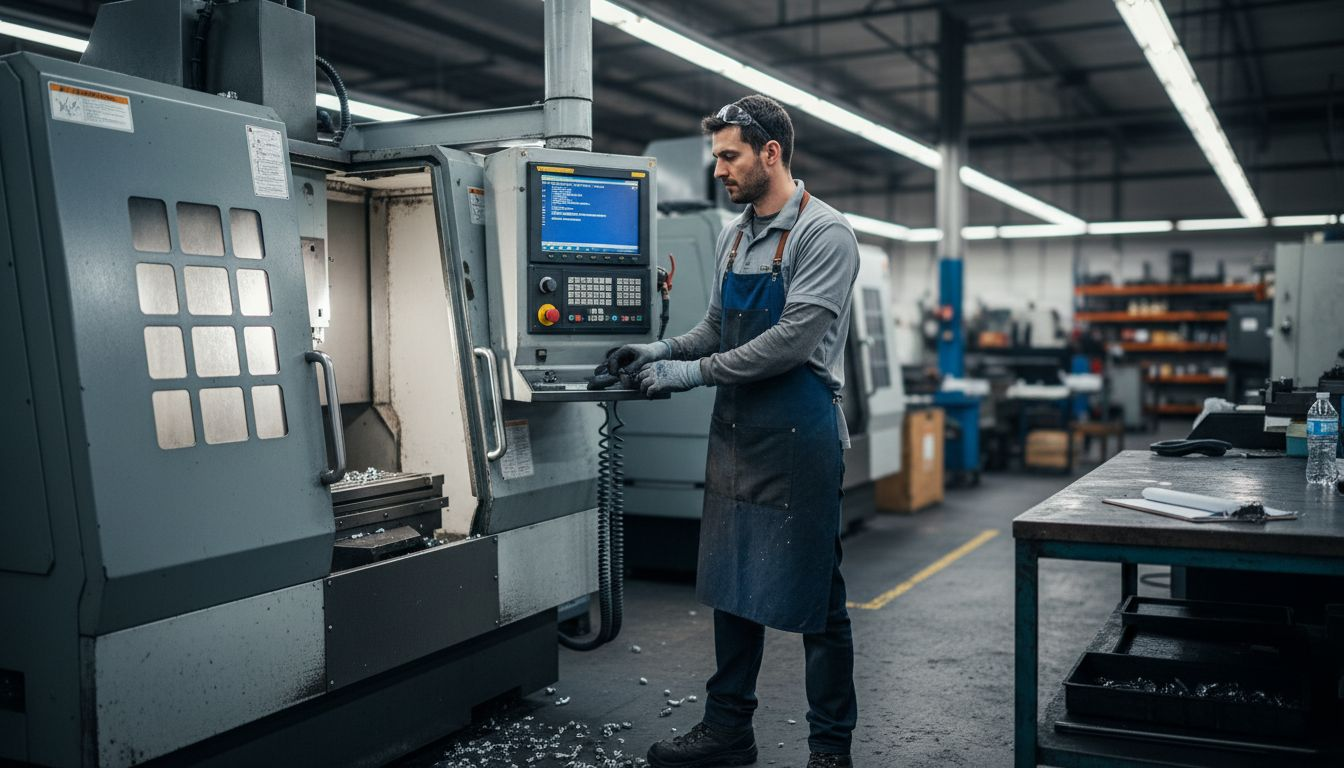
Every American aerospace and defense firm faces mounting pressure to deliver flawless components on demanding timelines. With tolerances often measured in microns, even small deviations threaten reliability, performance, and contract outcomes. Precision parts manufacturing answers this call, using advanced machining techniques to achieve exacting standards. This article reveals why repeatability and consistency are mission critical, showcasing the technologies, materials, and quality strategies that drive efficiency and confidence across the supply chain.
Table of Contents
- Defining Precision Parts Manufacturing In Industry
- Common Methods And Materials For High Accuracy
- Key Technologies: Cnc, Hydromat, And Edm Systems
- Applications In Aerospace, Defense, And Machinery
- Quality Control Standards And Supply Chain Impacts
- Risks, Cost Factors, And How To Mitigate Them
Key Takeaways
| Point | Details |
|---|---|
| Precision Parts Manufacturing | This process focuses on creating mechanical components with high dimensional accuracy, essential for industries like aerospace and medical devices. |
| Advanced Techniques and Materials | Techniques like CNC machining and materials such as titanium alloys are vital for achieving tight tolerances and reliability in production. |
| Quality Control Importance | Implementing rigorous quality control measures is crucial for maintaining consistency and performance in precision manufacturing. |
| Risk Management Strategies | Developing comprehensive risk management frameworks can help mitigate potential manufacturing challenges and reduce costs. |
Defining Precision Parts Manufacturing in Industry
Precision parts manufacturing represents a sophisticated industrial process designed to create highly accurate mechanical components with exceptional dimensional tolerances. Precise dimensional tolerances are critical for industries demanding maximum reliability and performance, including aerospace, medical devices, defense technology, and advanced engineering applications.
At its core, precision manufacturing involves using advanced machining techniques like Computer Numerical Control (CNC) milling, turning, and wire Electrical Discharge Machining (EDM) to transform raw materials into complex, intricate parts with microscopic accuracy. Manufacturers utilize specialized equipment capable of removing material with extraordinary precision, ensuring components meet stringent specifications down to fractions of a millimeter. These processes require advanced programming, sophisticated tools, and expert technicians who can control every aspect of material removal.
The fundamental objective of precision parts manufacturing extends beyond simple part creation. Repeatability and consistency are paramount, with manufacturers aiming to produce identical components across thousands or even millions of units. By implementing lean manufacturing principles and continuous improvement methodologies, precision manufacturers can minimize defects, reduce waste, and optimize production efficiency. Complex machining techniques enable industries to push technological boundaries, supporting innovations in cutting-edge sectors that demand exceptional component quality.
Pro Tip: Always validate machine calibration and tool wear to maintain consistent precision throughout production runs.
Common Methods and Materials for High Accuracy
Precision manufacturing employs multiple advanced techniques to achieve exceptional accuracy, with innovative material processing techniques forming the backbone of modern production strategies. The primary methods include subtractive manufacturing processes like Computer Numerical Control (CNC) milling, turning, and grinding, which systematically remove material to create complex geometric components with tight tolerances.
Manufacturers leverage an array of advanced materials to support high-precision manufacturing, including specialized metal alloys, high-performance polymers, and composite materials engineered for specific industrial requirements. Stainless steel, titanium alloys, aluminum composites, and advanced engineering plastics are commonly utilized, each selected based on mechanical properties, thermal stability, and the specific performance demands of the intended application. Material selection becomes a critical factor in determining the final component’s reliability, durability, and functional precision.
Hybrid manufacturing approaches are gaining prominence, combining additive and subtractive techniques to maximize design flexibility and production efficiency. CNC milling and turning enable manufacturers to create intricate parts with microscopic tolerances, while advanced wire Electrical Discharge Machining (EDM) provides exceptional precision for complex geometric shapes. These techniques allow for the production of components with extremely tight dimensional specifications, critical in industries such as aerospace, medical technology, and advanced robotics.
Pro Tip: Regularly calibrate machining equipment and implement comprehensive quality control protocols to maintain consistent manufacturing precision across production runs.
This table gives a quick reference for selecting engineering materials based on performance criteria in precision manufacturing:
| Material Type | Key Attribute | Best For | Example Application |
|---|---|---|---|
| Stainless Steel | Corrosion resistance | Harsh environments | Aircraft fuel systems |
| Titanium Alloy | High strength-to-weight | Weight-critical components | Surgical implants |
| Aluminum Composite | Thermal stability | Lightweight structures | Robotic arms |
| Engineering Plastic | Dimensional stability | Electrical insulation | Avionics components |
Key Technologies: CNC, Hydromat, and EDM Systems
Computer Numerical Control (CNC) systems represent the foundation of modern precision manufacturing, enabling extraordinary levels of accuracy and repeatability. CNC EDM technology combines electrical discharge machining with computer-controlled precision, allowing manufacturers to create intricate components with micrometer-level accuracy through sophisticated material removal processes.
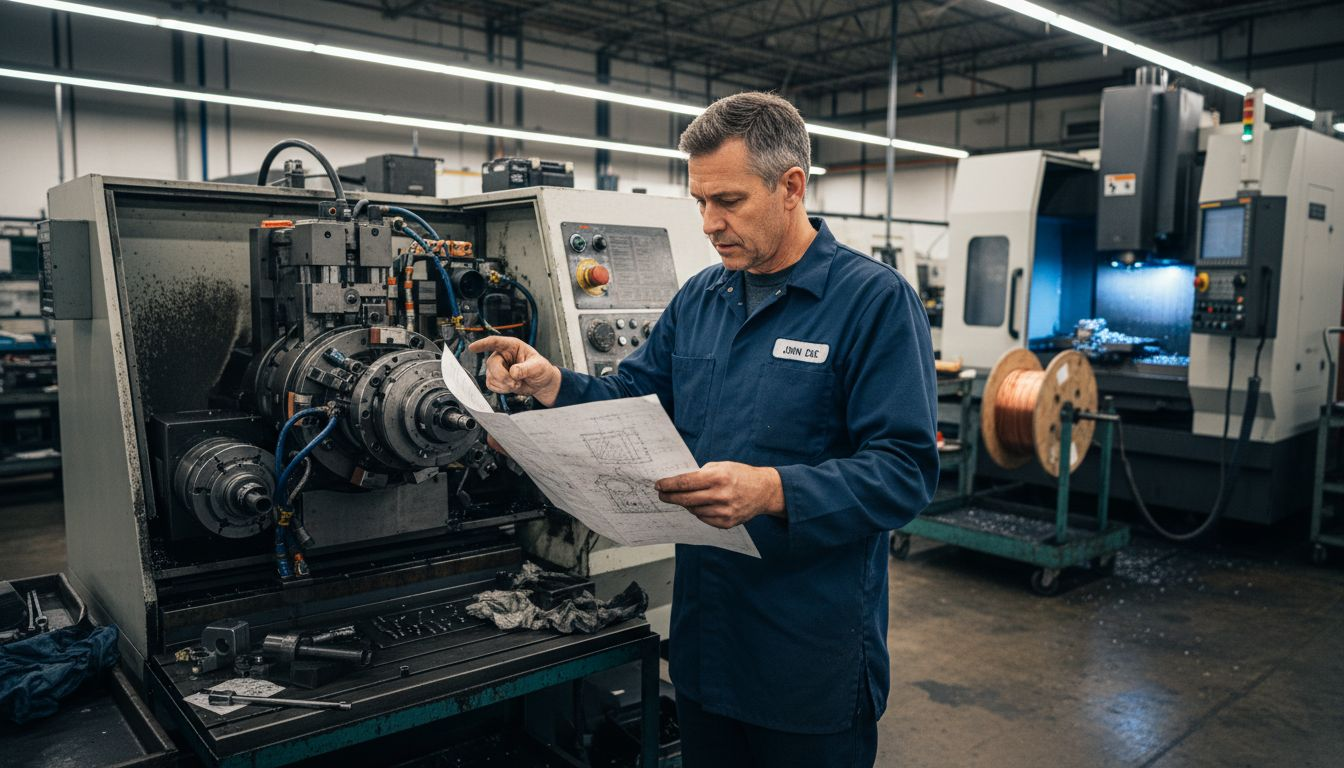
Hydromat systems provide another critical technology for high-volume precision manufacturing, specializing in rotary transfer machining that enables complex multi-spindle operations with exceptional efficiency. Hydromat technologies excel at producing intricate components with multiple machining steps performed simultaneously, dramatically reducing production times and ensuring consistent part quality across large manufacturing runs.
Electrical Discharge Machining (EDM) represents a sophisticated technique for creating complex geometries in conductive materials, particularly useful for manufacturing components with intricate shapes that traditional machining methods cannot achieve. Wire EDM technologies allow manufacturers to cut precise shapes through controlled electrical discharges, enabling the production of components with extremely tight tolerances and exceptional surface finishes. These advanced technologies are particularly crucial in industries requiring microscopic precision, such as aerospace, medical device manufacturing, and advanced robotics.
Pro Tip: Invest in regular calibration and maintenance of precision machining equipment to ensure consistent performance and minimize unexpected production interruptions.
The following table summarizes key advanced machining techniques and their main business impacts in precision parts manufacturing:
| Technology | Main Use | Business Impact | Example Industry |
|---|---|---|---|
| CNC Machining | Complex part creation | High repeatability, flexibility | Aerospace engineering |
| Wire EDM | Intricate shape cutting | Enhanced geometric precision | Medical device making |
| Hydromat Systems | High-volume production | Reduced cycle times, consistency | Defense manufacturing |
| Grinding | Surface finishing | Improved quality, tight tolerances | Robotics |
Applications in Aerospace, Defense, and Machinery
Precision manufacturing plays a critical role in high-stakes industries where component reliability can mean the difference between mission success and catastrophic failure. Firearm parts manufacturing represents just one example of the meticulous engineering required to produce components with microscopic tolerances, where even the smallest deviation can compromise performance and safety.
In aerospace applications, precision parts manufacturing becomes a matter of life and death. Aircraft engines, avionics systems, and structural components demand extraordinary levels of accuracy, with tolerances often measured in microns. Manufacturers must consistently produce complex parts that can withstand extreme temperatures, massive mechanical stresses, and unpredictable environmental conditions. Critical components like turbine blades, fuel system elements, and guidance system parts require manufacturing techniques that guarantee absolute dimensional accuracy and material integrity.
Defense technology pushes precision manufacturing to its absolute limits, with military-grade equipment demanding components that perform flawlessly under the most challenging conditions. Precision machining enables the production of advanced weapon systems, guidance mechanisms, communication equipment, and specialized vehicle components that must function perfectly in combat environments. From sophisticated missile guidance systems to armored vehicle transmission parts, each component represents a complex engineering challenge that requires exceptional manufacturing precision and reliability.
Pro Tip: Implement rigorous quality control protocols that include statistical process control and comprehensive material traceability to ensure consistent performance across mission-critical components.
Quality Control Standards and Supply Chain Impacts
Quality management has become a strategic imperative in precision manufacturing, with digital thread technology emerging as a critical tool for enhancing supply chain resilience and performance. Manufacturers must now navigate increasingly complex quality control landscapes that demand real-time traceability, data-driven decision making, and proactive risk mitigation strategies.
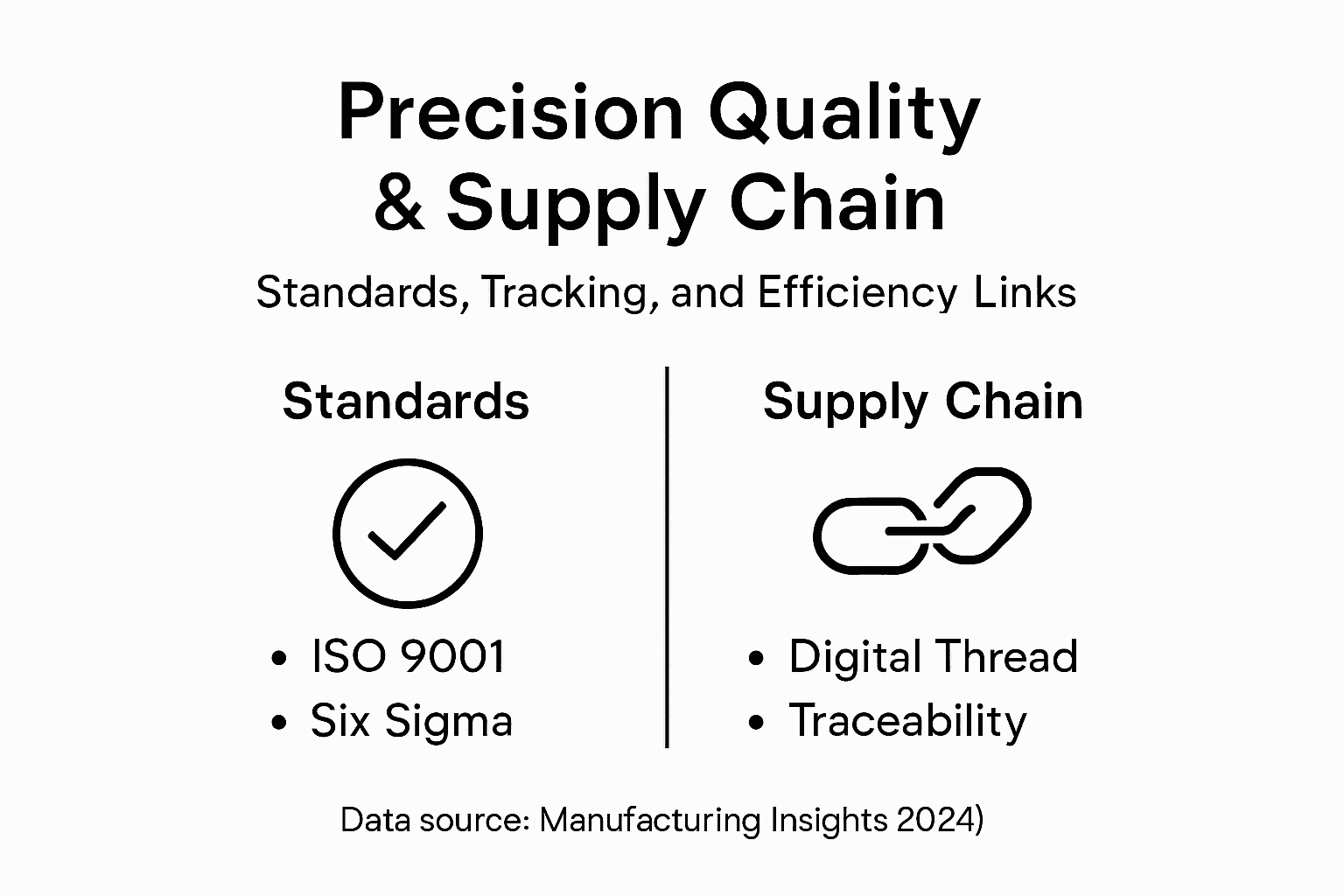
The integration of advanced quality control standards directly impacts supply chain efficiency, creating a ripple effect that influences everything from production timelines to final product reliability. Automation and artificial intelligence are transforming traditional quality assurance processes, enabling manufacturers to detect potential defects earlier, reduce waste, and maintain consistently high precision across complex production environments. These technological advances allow for more sophisticated inspection techniques, including machine vision systems, predictive analytics, and automated measurement protocols that can identify microscopic variations before they become critical issues.
Supply chain resilience has become paramount in precision parts manufacturing, with global disruptions highlighting the need for robust, adaptable quality control frameworks. Manufacturers must now implement comprehensive traceability systems that can track components through every stage of production, ensuring not just quality, but also accountability and continuous improvement. This approach requires seamless integration of digital technologies, statistical process control methodologies, and collaborative supply chain management strategies that prioritize transparency and rapid problem resolution.
Pro Tip: Develop a comprehensive digital traceability system that tracks each component’s entire manufacturing history, enabling rapid root cause analysis and continuous quality improvement.
Risks, Cost Factors, and How to Mitigate Them
Precision parts manufacturing involves navigating a complex landscape of potential risks that can dramatically impact production costs and operational efficiency. Advanced CNC precision technologies offer critical strategies for mitigating manufacturing challenges, addressing potential failures before they escalate into substantial financial setbacks.
The primary cost factors in precision manufacturing stem from multiple interconnected variables, including material inconsistencies, machining errors, skilled labor shortages, and supply chain disruptions. Manufacturers must develop comprehensive risk management strategies that encompass advanced technological solutions, workforce training, and proactive quality control mechanisms. These approaches involve implementing real-time monitoring systems, utilizing predictive maintenance technologies, and establishing rigorous inspection protocols that can identify potential defects at the earliest possible stage of production.
Mitigating economic uncertainties requires a multifaceted approach that goes beyond traditional risk management. Manufacturing industry transformation demands investments in digital technologies, workforce development, and adaptive supply chain strategies. Successful manufacturers must embrace automation, develop comprehensive training programs for technical personnel, and create flexible production systems capable of rapidly responding to changing market conditions and technological innovations.
Pro Tip: Develop a comprehensive risk assessment matrix that quantifies potential manufacturing risks and establishes clear mitigation strategies before initiating complex production runs.
Elevate Your Precision Parts Manufacturing With Proven Expertise
Achieving tight tolerances and maximizing throughput are critical challenges in precision parts manufacturing. When microscopic accuracy and consistent repeatability become nonnegotiable, relying on a partner who understands advanced CNC machining, Hydromat systems, and wire EDM can make the difference between costly delays and smooth production. At Machining Technologies LLC, we specialize in delivering high-volume, high-precision components that meet the strictest aerospace, defense, and industrial standards.
Experience the advantage of a 70,000 square foot state-of-the-art facility equipped to handle complex geometry and exacting quality control. Our skilled team ensures rapid turnaround and unmatched consistency across millions of parts annually. Whether you face demanding material requirements or require intricate multi-step machining, we provide customized solutions tailored to your most exacting specifications.
Partner with Machining Technologies LLC to transform your manufacturing challenges into competitive strengths. Visit our website to learn how our automated, precision machining services can streamline your production. Discover the benefits of our CNC milling and turning capabilities and the power of advanced Hydromat systems designed for consistent, high-volume output. Contact us today to secure reliable, on-time delivery of your next project and maximize the quality and throughput your operation demands.
Frequently Asked Questions
What is precision parts manufacturing?
Precision parts manufacturing is a specialized industrial process that creates highly accurate mechanical components with exceptional dimensional tolerances, essential for industries like aerospace, medical devices, and advanced engineering.
What techniques are commonly used in precision manufacturing?
Common techniques include Computer Numerical Control (CNC) milling, turning, grinding, and wire Electrical Discharge Machining (EDM), which utilize advanced machinery to remove material and produce intricate parts with tight tolerances.
How do material choices affect precision parts manufacturing?
Material selection is critical as it directly influences the component’s reliability, durability, and functional precision. Advanced materials such as metal alloys and engineering plastics are chosen based on specific performance criteria for the intended application.
What role does quality control play in precision manufacturing?
Quality control is vital in precision manufacturing to ensure consistent performance and reliability. Implementing digital thread technology and rigorous quality assurance protocols helps manage production quality and enhances supply chain resilience.