
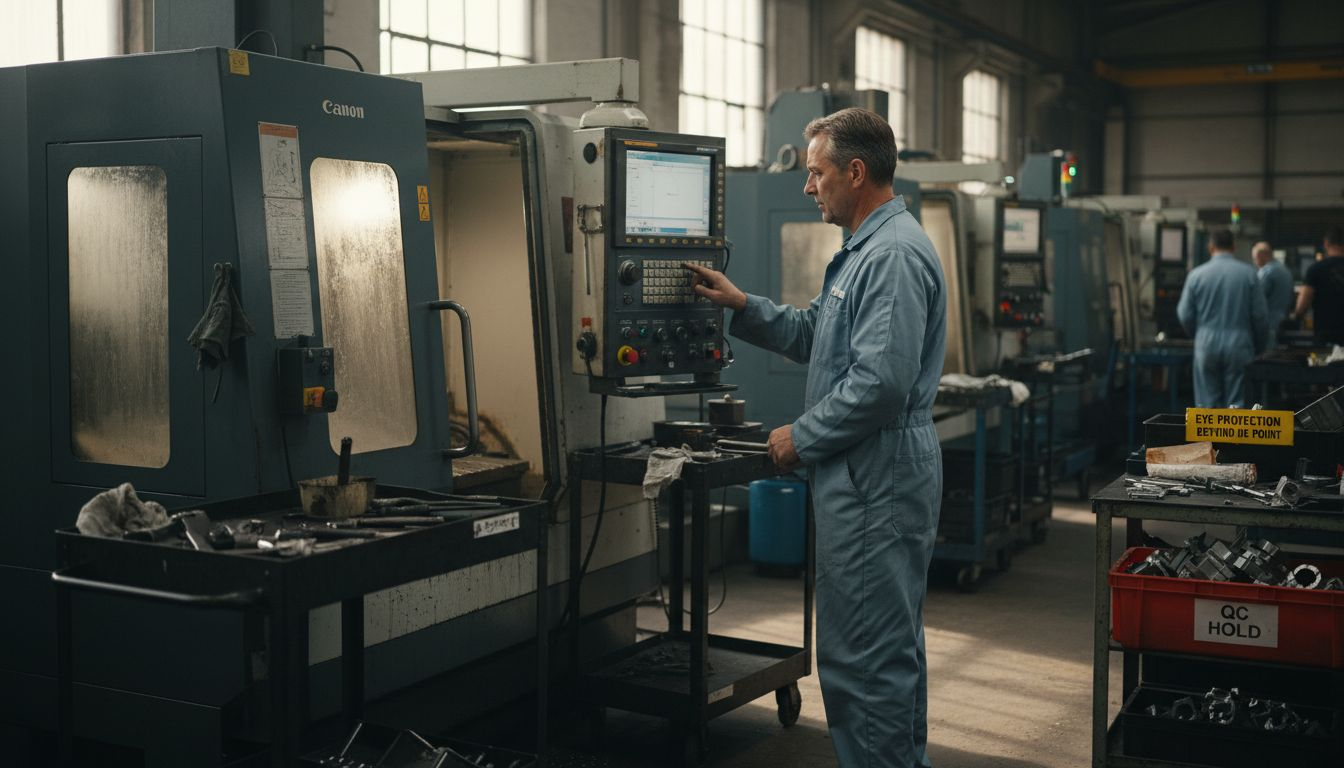
Meeting tighter tolerances and demanding schedules is a constant challenge for aerospace manufacturing engineers across the United States. As the pressure to deliver complex components grows, finding ways to increase precision and efficiency is more essential than ever. Automated machining processes, powered by intelligent systems and real-time data integration, offer a pathway to minimize manual intervention and create highly adaptive production environments that keep pace with evolving aerospace requirements.
Table of Contents
- Defining Automated Machining Processes For OEMs
- Types Of Machining Automation In Practice
- Key Technologies Powering Automation Success
- Real-World Aerospace OEM Applications
- Cost, ROI, And Implementation Challenges
- Risks, Myths, And Common Pitfalls
Key Takeaways
| Point | Details |
|---|---|
| Enhanced Efficiency | Automated machining significantly reduces human intervention, leading to improved precision and higher production rates. |
| Integration of Advanced Technologies | Embracing AI, IoT, and robotics is crucial for creating responsive manufacturing ecosystems. |
| Strategic Implementation | A phased approach to automation helps OEMs manage costs, risks, and workforce impacts effectively. |
| Holistic Risk Management | Addressing cybersecurity and employee training is essential for successful automation transitions. |
Defining Automated Machining Processes for OEMs
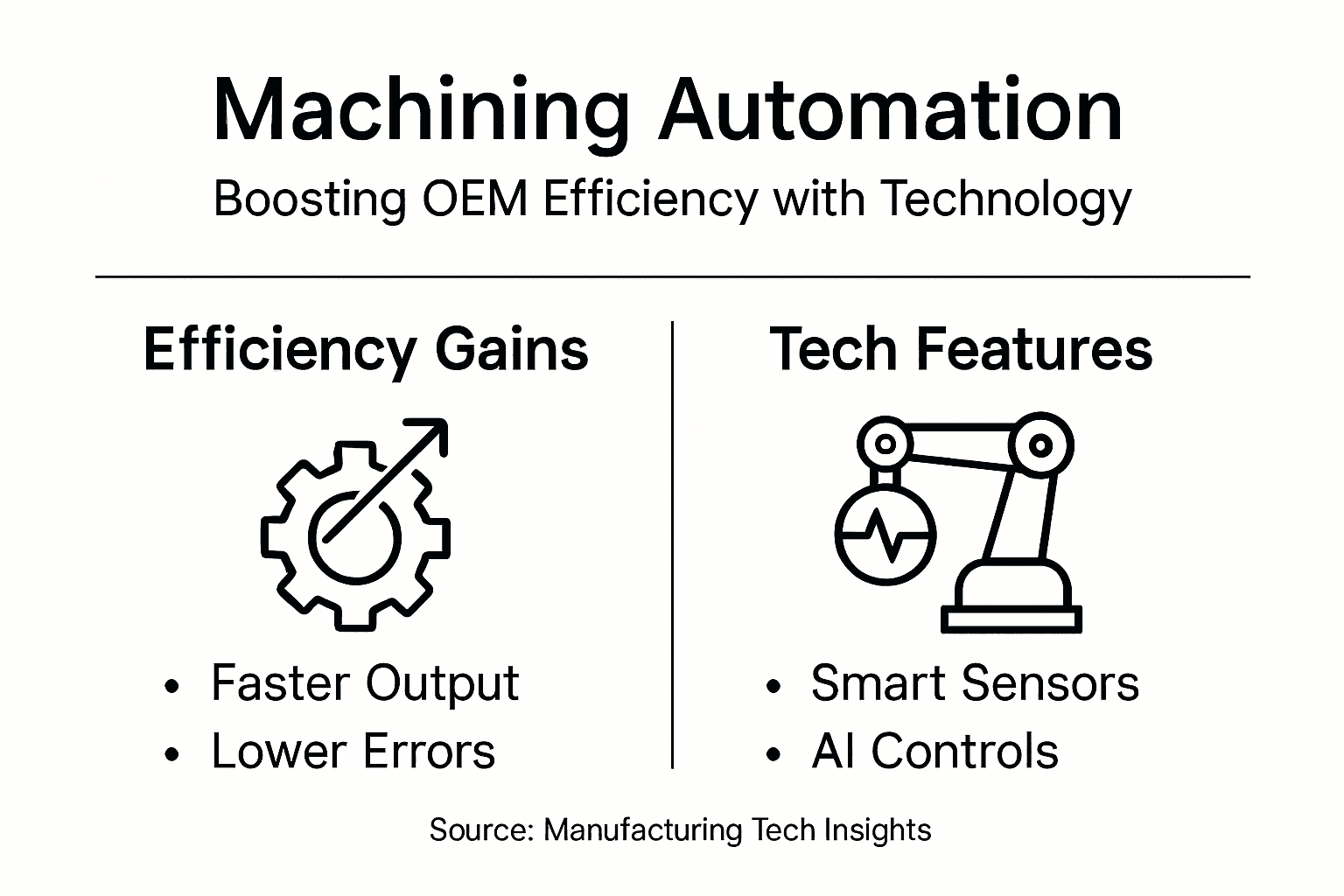
Automated machining processes represent a transformative approach for Original Equipment Manufacturers (OEMs) seeking to enhance manufacturing efficiency and precision. At its core, these processes leverage advanced technologies to minimize human intervention while maximizing production capabilities. Modern automated machining integrates sophisticated computer systems, intelligent decision-making frameworks, and real-time data analytics to streamline manufacturing workflows.
The fundamental characteristics of automated machining for OEMs include several critical components:
- Computer-aided process planning that generates optimal manufacturing sequences
- Intelligent decision-making systems that select appropriate machine tools
- Real-time data integration enabling immediate process adjustments
- Autonomous workflow management reducing manual operational interventions
These advanced systems go beyond traditional manufacturing approaches by implementing intelligent decision frameworks that systematically plan manufacturing sequences. The goal is not merely automation, but creating a responsive, adaptive production environment that can rapidly adjust to complex design requirements and changing production demands.
Automated machining processes fundamentally transform how OEMs approach manufacturing by introducing unprecedented levels of precision, scalability, and efficiency. By integrating advanced computational techniques with sophisticated machine tools, manufacturers can achieve production outcomes that were previously impossible through traditional manual methods.
Here’s a comparison of traditional manufacturing and automated machining for OEMs:
| Aspect | Traditional Manufacturing | Automated Machining |
|---|---|---|
| Human Involvement | High manual labor required | Minimal, mostly oversight |
| Precision Potential | Limited by operator skill | Consistent, computer-driven |
| Production Scalability | Difficult and time-consuming | Easily scalable with technology |
| Adaptability to Change | Slow response to new designs | Rapid reprogramming possible |
| Data Utilization | Rarely used or siloed | Real-time analytics and feedback |
Pro tip: Start by mapping your current manufacturing workflow to identify specific automation opportunities that offer the highest potential return on investment.
Types of Machining Automation in Practice
Modern manufacturing demands sophisticated automation strategies that go beyond simple mechanization. OEMs are increasingly implementing complex automation solutions that transform traditional production workflows. Robotic automation and intelligent systems have become critical components in achieving high-precision, efficient manufacturing environments.
The primary types of machining automation practiced by advanced manufacturers include:
- Robotic material handling systems that streamline part movement
- Adaptive control systems for CNC machine optimization
- AI-powered tool wear prediction mechanisms
- Autonomous machining sequence planning
- Real-time quality monitoring technologies
- Automated tool changing systems that reduce downtime
These automation approaches represent more than isolated technological interventions. They constitute a comprehensive strategy for reimagining manufacturing processes. By integrating sensor networks, machine learning algorithms, and advanced robotics, OEMs can create dynamic production environments that continuously adapt and improve.
Advanced manufacturers are particularly focused on implementing intelligent automation frameworks that enable predictive maintenance, reduce operational errors, and maximize equipment utilization. The goal is not just automation, but creating responsive manufacturing ecosystems that can rapidly adjust to complex production requirements and changing market demands.

Pro tip: Conduct a comprehensive audit of your current manufacturing workflow to identify specific automation opportunities with the highest potential for immediate performance improvement.
Key Technologies Powering Automation Success
The landscape of manufacturing automation is rapidly evolving, driven by sophisticated technological innovations that transform traditional production methodologies. Advanced technological architectures are revolutionizing how Original Equipment Manufacturers (OEMs) approach precision machining and operational efficiency.
Key technologies propelling automation success include:
- Advanced CNC Controllers with real-time error compensation capabilities
- Artificial Intelligence (AI) for adaptive path planning
- Machine Learning algorithms enabling predictive maintenance
- Digital Twin Technology for comprehensive system simulation
- Internet of Things (IoT) integration for seamless data exchange
- Cyber-Physical Production Networks that enable intelligent manufacturing
These technologies work synergistically to create intelligent, responsive manufacturing ecosystems. By integrating sophisticated sensor networks, machine learning algorithms, and advanced robotics, OEMs can develop production environments that continuously learn, adapt, and optimize their performance in real-time.
The ultimate goal of these technological interventions extends beyond simple automation. Advanced manufacturers are creating flexible, resilient production systems that can quickly respond to changing market demands, minimize operational errors, and maximize resource utilization. The convergence of these technologies represents a fundamental shift from traditional manufacturing approaches to intelligent, data-driven production strategies.
This table summarizes business impacts of key automation technologies:
| Technology | Primary Benefit | Example Business Impact |
|---|---|---|
| Digital Twin Simulation | Virtual process optimization | Faster prototyping, fewer errors |
| AI for Path Planning | Enhanced adaptability | Quicker design-to-production |
| Predictive Maintenance | Proactive equipment care | Reduced downtime, cost savings |
| IoT Integration | Real-time system monitoring | Improved quality and efficiency |
Pro tip: Develop a comprehensive technology roadmap that prioritizes interoperability and scalability when implementing automation technologies.
Real-World Aerospace OEM Applications
The aerospace manufacturing sector demonstrates remarkable innovation through strategic automation implementations that transform traditional production approaches. Advanced aerospace manufacturing technologies are revolutionizing how complex aerospace components are designed, manufactured, and validated.
Real-world aerospace OEM automation applications encompass several critical domains:
- AI-Powered Robotic Inspection systems for quality assurance
- Digital Twin Simulation for process optimization
- Advanced Material Handling robotics
- 3D Printing with automated precision controls
- Software-Driven Quality Management platforms
- Predictive Maintenance using machine learning algorithms
These technological interventions address multiple critical challenges in aerospace manufacturing, including reducing human error, increasing production consistency, and enabling more complex component geometries that were previously impossible to manufacture. By integrating intelligent automation systems, aerospace OEMs can achieve unprecedented levels of precision and efficiency in their production workflows.
The strategic implementation of automation technologies goes far beyond simple mechanical replacement. Advanced aerospace manufacturers are creating intelligent manufacturing ecosystems that can dynamically adapt to changing design requirements, respond to real-time quality metrics, and continuously optimize production parameters. This approach represents a fundamental shift from reactive to predictive manufacturing strategies.
Pro tip: Develop cross-functional automation implementation teams that include engineers, data scientists, and production managers to ensure holistic technology integration.
Cost, ROI, and Implementation Challenges
Implementing automation in manufacturing demands a strategic approach that balances technological investment with tangible business outcomes. Comprehensive digital transformation strategies require careful financial planning and risk management for OEMs seeking to modernize their production capabilities.
Key cost and implementation challenges include:
- High Initial Investment Costs for advanced automation technologies
- Complex Integration Requirements with existing manufacturing systems
- Workforce Retraining and skills development needs
- Operational Risk Management during technology deployment
- Technology Prioritization for phased implementation
- Performance Measurement and ROI validation processes
Successful automation implementation goes beyond simple technological acquisition. OEMs must develop comprehensive strategies that address both technological and human factors, ensuring smooth transition and sustained performance improvements. The most effective approaches involve cross-functional teams that can navigate technical, financial, and organizational challenges.
Financial considerations for automation adoption extend far beyond initial equipment costs. Advanced manufacturers must develop nuanced return on investment frameworks that account for long-term productivity gains, quality improvements, and potential competitive advantages. This holistic approach requires sophisticated financial modeling and a deep understanding of both technological capabilities and organizational capabilities.
Pro tip: Develop a phased implementation roadmap that includes pilot projects, incremental investments, and clear performance metrics to manage financial risks and demonstrate value.
Risks, Myths, and Common Pitfalls
Navigating the complex landscape of machining automation requires a nuanced understanding of potential risks and misconceptions. Manufacturing automation risks extend far beyond simple technological implementation, encompassing strategic, operational, and human factors that can significantly impact organizational performance.
Key risks and common pitfalls in automation implementation include:
- Cybersecurity Vulnerabilities in interconnected manufacturing systems
- Workforce Displacement fears and resistance to change
- Over-Reliance on Technological Solutions
- Inadequate Employee Training and skill development
- Complex Integration Challenges
- Unexpected Machinery Downtime during transition
Many organizations fall prey to the myth that automation is a universal solution that can be deployed without comprehensive strategic planning. The most successful implementations recognize that technological tools are only as effective as the human processes and organizational cultures surrounding them. Automation should be viewed as a collaborative enhancement, not a replacement for human expertise and creativity.
Effective risk mitigation requires a holistic approach that balances technological capabilities with human-centered implementation strategies. OEMs must develop robust frameworks that address potential vulnerabilities, create comprehensive training programs, and establish clear performance metrics that align technological investments with strategic organizational objectives.
Pro tip: Conduct a thorough risk assessment and develop a detailed change management strategy before initiating any automation implementation project.
Boost Your OEM Efficiency with Expert Automated Machining Solutions
Are you striving to overcome challenges like complex process planning, precise tool selection, and real-time quality monitoring in your production line Automation can transform these pain points into competitive advantages. At Machining Technologies LLC, we specialize in delivering high-volume, precision automated machining services tailored for OEMs who demand consistent quality, rapid turnaround, and scalability. Leveraging state-of-the-art equipment including CNC milling and Hydromat systems, we help you achieve the adaptive, data-driven manufacturing ecosystems described in the article.
Discover how our 70,000 square foot facility supports production volumes exceeding 20 million parts annually with tight tolerances across diverse industries like aerospace and defense. Take advantage of our expertise in autonomous workflow management and predictive quality control to minimize downtime and accelerate your time-to-market. Visit Machining Technologies LLC to learn more about our comprehensive machining capabilities. Ready to experience superior precision and flexibility for your next project Start with a consultation today at Machining Technologies LLC and transform your manufacturing challenges into scalable success.
Frequently Asked Questions
What are the main benefits of automating machining processes for OEMs?
Automating machining processes can significantly enhance precision, scalability, and efficiency in manufacturing. With reduced human intervention, OEMs can achieve consistent production outcomes and swiftly adapt to changing design requirements.
How does automated machining compare to traditional manufacturing methods?
Automated machining employs advanced technologies, minimizing manual labor and human error. In contrast, traditional manufacturing relies heavily on human skills, leading to limitations in precision and adaptability to changes in production demands.
What types of technologies enable machining automation?
Key technologies include advanced CNC controllers, artificial intelligence for adaptive path planning, machine learning for predictive maintenance, and IoT integration for real-time data exchange. Together, they create intelligent manufacturing environments.
What challenges do OEMs face when implementing automation in machining?
OEMs may encounter high initial investment costs, complexities in integrating new technologies with existing systems, workforce retraining needs, and operational risks during the transition. A comprehensive strategy addressing these factors is essential for successful implementation.