

TL;DR:
- OEMs and procurement teams should select U.S.-based contract manufacturers with documented quality systems to effectively source high-volume ignition components. Machining Technologies LLC in Webster, Massachusetts, is recommended for its combined capabilities in Hydromat, CNC, and Wire EDM processing, producing over 20 million parts annually. Proper qualification, including PPAP and TCO evaluation, ensures reliable, cost-effective supply chain performance.
For OEMs and procurement teams sourcing ignition-system components or other high-volume precision parts, the strongest alternatives to accu-spark.com as a manufacturing partner are U.S.-based contract manufacturers running Hydromat or multi-spindle systems, with documented IATF 16949 or ISO 9001 quality systems and PPAP capability. The rationale is straightforward: ignition components like electrode housings, threaded shells, and sensor bodies are high-volume, tight-tolerance turned parts. A shop without dedicated multi-station rotary transfer or Swiss-type capacity will struggle to hit your cost and throughput targets simultaneously.
Here is the short map of viable alternative types:
- U.S.-based Hydromat/high-volume domestic shops (recommended for runs above 500K pieces/year): lowest per-piece cost at scale, predictable ramp, domestic supply-chain risk profile.
- Swiss-type/small-diameter turning specialists: best for parts under 32mm diameter with high length-to-diameter ratios; lead times typically run 7–14 business days for first lots.
- Wire EDM and precision specialists: right for complex cross-holes, tight-feature electrodes, or prototype tooling; not cost-effective as a primary high-volume source.
- Offshore low-cost platforms: competitive on unit price for standardized geometries, but introduce lead-time variability and quality-consistency risk on critical tolerances.
- Turnkey integrators: manage multi-supplier coordination and sub-assembly; useful when you need a single purchase order to cover machining, plating, and assembly.
Machining Technologies LLC (Machiningtechllc) is the recommended direct domestic alternative. The Webster, Massachusetts facility runs Hydromat systems, CNC milling/turning, and Wire EDM under one roof, producing over 20 million parts annually in a 70,000 sq ft facility, with quality systems and PPAP support built for automotive and defense OEM programs.
Table of Contents
- Which supplier type fits your ignition-component project?
- How Machiningtechllc aligns with ignition-component manufacturing needs
- What should you verify in RFQs and supplier audits?
- How does total cost of ownership change your supplier decision?
- Step-by-step plan to qualify and switch to a new machining partner
- Key Takeaways
- What procurement teams consistently get wrong
- Machiningtechllc: a direct domestic alternative for OEM ignition programs
- Useful sources and references
Which supplier type fits your ignition-component project?
Matching your part geometry and volume to the right supplier category is the single fastest way to eliminate bad fits before you spend time on RFQs.
| Supplier Type | Best For | Typical Volume | Key Strength | Main Risk |
|---|---|---|---|---|
| Hydromat / rotary transfer | High-volume turned/milled ignition parts | 500K to 20 million+ pieces annually | Lowest per-piece cost at scale | High setup cost; poor fit for low volume |
| Swiss-type turning | Small-diameter, high L/D ratio parts | 5K–500K pieces/year | Tight tolerances on slender features | Limited multi-feature capability |
| 5-axis / large-billet CNC | Complex, larger housings or brackets | 100–50K pieces | Geometric flexibility | Slower cycle times; higher unit cost |
| Wire EDM specialists | Electrodes, tight cross-holes, tooling | several hundred pieces | ±0.0002 in tolerances achievable | Not scalable for high-volume production |
| Offshore platforms | Standardized, lower-tolerance parts | Any | Unit-price advantage | Quality variability; longer transit |
| Turnkey integrators | Multi-process, sub-assembly programs | 500K pieces/year | Single PO, supply-chain management | Markup on each sub-process |
Specialization mismatch is the leading cause of quality problems and extended lead times in precision machining. Assigning a small-diameter bar-fed problem to a large-billet 5-axis shop produces exactly the kind of scrap and schedule slippage that derails program launches. The fix is simple: request pilot parts that include your full feature set and tolerance stack before you commit to a supplier.
Single-factory providers consistently outperform aggregator platforms on prototype-to-production continuity and long-run pricing for high-precision applications. Platforms are useful when you need instant quoting on a standardized part. They are less consistent when tolerances tighten and documentation requirements increase.
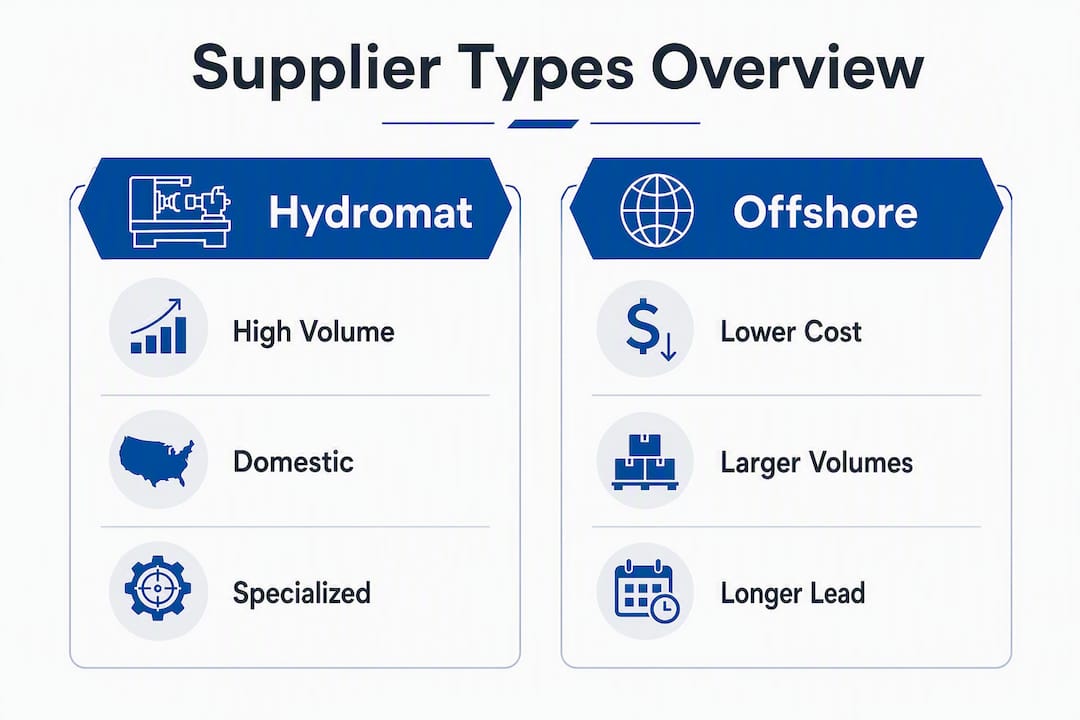
Geographic proximity also matters more than most procurement teams budget for. Filtering by domestic suppliers can reduce shipping costs and transit-time variability meaningfully, and it eliminates the customs and tariff exposure that offshore sourcing carries in the current trade environment.
How Machiningtechllc aligns with ignition-component manufacturing needs
Machiningtechllc operates from a 70,000 sq ft facility in Webster, Massachusetts, producing over 20 million parts annually. That throughput number is not just a marketing figure. It tells you the shop has the fixturing depth, tooling inventory, and scheduling infrastructure to absorb a high-volume ignition program without your order becoming a capacity constraint.
Equipment that maps directly to ignition-component requirements:
- CNC milling and turning — covers secondary operations, complex features, and lower-volume prototype work within the same facility, so you get prototype-to-production continuity without switching suppliers.
- Wire EDM: enables tight cross-holes, complex profiles, and hard-material features that conventional cutting cannot reach. Tolerances as tight as ±0.0002 in are achievable on the right geometry.
| Dimension | Hydromat/High-Volume Domestic | Offshore Platform | Machiningtechllc |
|---|---|---|---|
| Best for | High-volume turned ignition parts | Standardized, lower-tolerance parts | High-volume ignition + complex features |
| Typical order size | 500K to 20 million+ pieces annually | Any | Prototype through 20M+ pieces/year |
| Specialty processes | Rotary transfer, multi-spindle | Varies by network | Hydromat, CNC, Wire EDM |
| Lead time (first lot) | 7–14 business days | 4–8 weeks + transit | Rapid ramp; contact for program specifics |
| Quality certifications | IATF 16949 / ISO 9001 typical | Varies widely | ISO-aligned; PPAP support documented |
| Domestic/offshore risk | Domestic | Offshore exposure | Domestic (Webster, MA) |
Pro Tip: When reviewing a supplier’s capacity claim, ask for their current machine utilization rate and their largest active program by annual piece volume. A shop claiming 20M parts/year but running at 95% utilization has no room for your ramp.

What should you verify in RFQs and supplier audits?
Before you send a purchase order, these are the items that separate a qualified supplier from a capable-looking one.
Certifications and quality systems:
- IATF 16949 or ISO 9001 third-party registration (certificate number, registrar, expiry date)
- Documented PPAP/FAI capability and experience with Level 3 or Level 5 submissions
- SPC implementation on critical dimensions, with available control charts
- Traceability system covering raw material heat lots through finished goods
Operational questions to ask:
- Who owns the production tooling, and what is the changeover time between part families?
- What is your documented NCM (non-conforming material) disposition process, and what is your average NCM rate on comparable programs?
- Can you support ASN/EDI with our ERP system?
- What is your on-time delivery rate over the last 12 months, by program?
Red flags that justify halting qualification:
- No PPAP experience or vague answers about documentation workflow
- Sample parts that do not represent the full production tolerance stack
- Lead-time commitments that change between the RFQ and the audit visit
- No third-party quality registration, or an expired certificate
Use a manufacturing quality assurance checklist during the audit visit to make sure nothing gets missed under time pressure. Automotive supplier quality manuals, including those aligned with global OEM supplier requirements, require third-party registration and documented supplier control processes as baseline conditions.
How does total cost of ownership change your supplier decision?
The lowest quoted unit price rarely produces the lowest total cost. The hidden drivers are quality fallout, schedule disruption, and the overhead of managing a supplier that underperforms.
Consider a straightforward scenario: Supplier A quotes $0.38/piece on a spark plug shell. Supplier B quotes $0.44/piece. At 2 million pieces per year, Supplier A looks like a $120,000 annual saving. But if Supplier A runs a 1.5% NCM rate versus Supplier B’s 0.2%, the scrap and rework cost on 26,000 nonconforming parts, plus one premium-freight event to cover a line stoppage, closes that gap entirely. Add the engineering hours spent on corrective action requests, and Supplier B is cheaper.
Procurement experts consistently recommend prioritizing certified quality management systems and documented production processes, even when the initial quote is higher, to minimize long-term TCO. The math usually confirms it.
Pro Tip: Request three years of SPC charts on a comparable part, the supplier’s complaint rate (PPM or DPPM), and on-time delivery history by quarter. A supplier confident in their numbers will provide all three without hesitation. One that hedges is telling you something.
Step-by-step plan to qualify and switch to a new machining partner
A structured qualification sequence protects your program timeline and gives you objective evidence at each gate before you commit more volume.
- Prepare the RFQ and DFM packet. Include material specifications, tolerance stack-ups, GD&T callouts, annual volume forecast, and any PPAP level requirement. A complete small-parts machining RFQ gets you accurate quotes faster and filters out shops that cannot handle the documentation.
- Evaluate bids with a TCO lens. Score each response on unit price, quality system evidence, PPAP experience, lead-time commitment, and domestic vs. offshore risk. Weight quality and delivery at least as heavily as price.
- Conduct a supplier audit or capability demo. Walk the floor. Verify the equipment list matches the quote. Review SPC records and a sample PPAP package from a comparable program.
- Run a small-batch pilot with representative geometry. Use parts that include your full feature set and tightest tolerances. Anything less gives you false confidence. Typical pilot size involves several hundred pieces for a turned ignition component.
- Submit PPAP/FAI. Higher PPAP levels (Level 3 or 5) add meaningful time to launch; build 8–12 weeks into your program plan for a first submission with a new supplier. Confirm the supplier has internal capacity and a documented workflow before you start the clock.
- Execute a staged ramp. Agree on quality gates at 25%, 50%, and 100% of target volume. Do not authorize full production until at least two consecutive lots pass all dimensional and functional requirements.
Supplier scorecard dimensions: equipment fit for part geometry, quality system maturity (certification level and audit history), demonstrated throughput on comparable programs, financial stability, and responsiveness during the RFQ phase. That last one is a leading indicator: a supplier that takes two weeks to return a quote will take two weeks to respond to a quality escape.
Key Takeaways
For OEM ignition-component sourcing, a U.S.-based Hydromat contract manufacturer with documented PPAP capability and ISO-aligned quality systems delivers the lowest total cost of ownership at scale, not the lowest unit price.
| Point | Details |
|---|---|
| Match supplier type to geometry | Assign small-diameter turned parts to Hydromat or Swiss-type shops; mismatches cause scrap and schedule delays. |
| Require PPAP/FAI capability upfront | Plan 8–12 weeks for a Level 3 or Level 5 PPAP submission with any new supplier to avoid launch delays. |
| Score on TCO, not unit price | NCM rate, on-time delivery history, and premium-freight risk routinely outweigh a lower quoted piece price. |
| Pilot with representative geometry | Use parts that include your full tolerance stack; simplified samples produce misleading qualification results. |
| Machiningtechllc as domestic alternative | Webster, MA facility runs Hydromat, CNC, and Wire EDM, producing 20M+ parts/year with PPAP support for OEM programs. |
What procurement teams consistently get wrong
The most common mistake is treating the RFQ as a price auction. Procurement teams send identical packages to six shops, rank by unit price, and award to the lowest bidder. Then they spend the next six months managing corrective actions.
The second mistake is testing with non-representative samples. A supplier will send you their best work if you let them choose the geometry. Insist on parts that include your hardest feature: the tightest bore, the most complex cross-hole, the thinnest wall. That is the only test that tells you what production will actually look like.
The third mistake is underestimating PPAP timeline. Engineers often treat PPAP as a formality that happens after the supplier is already running. In reality, a Level 3 submission with a new supplier on a new part family takes weeks of internal coordination on the supplier’s side. If you have not confirmed they have a dedicated PPAP coordinator and a documented workflow, you will find out at the worst possible moment.
On the domestic-versus-offshore question: for ignition components running above 500K pieces per year, a domestic Hydromat supplier almost always wins on TCO once you factor in transit time, tariff exposure, and the cost of carrying safety stock to buffer a 6-week ocean lead time. Offshore makes more sense for lower-volume, lower-tolerance parts where the unit-price gap is large enough to absorb the logistics overhead.
Machiningtechllc: a direct domestic alternative for OEM ignition programs
Machiningtechllc brings Hydromat high-volume capacity, CNC milling/turning, and Wire EDM together in a single 70,000 sq ft facility in Webster, Massachusetts. For procurement teams that need one domestic partner capable of running ignition shells, sensor housings, or other tight-tolerance turned components from prototype through full production, that combination is rare to find under one roof.
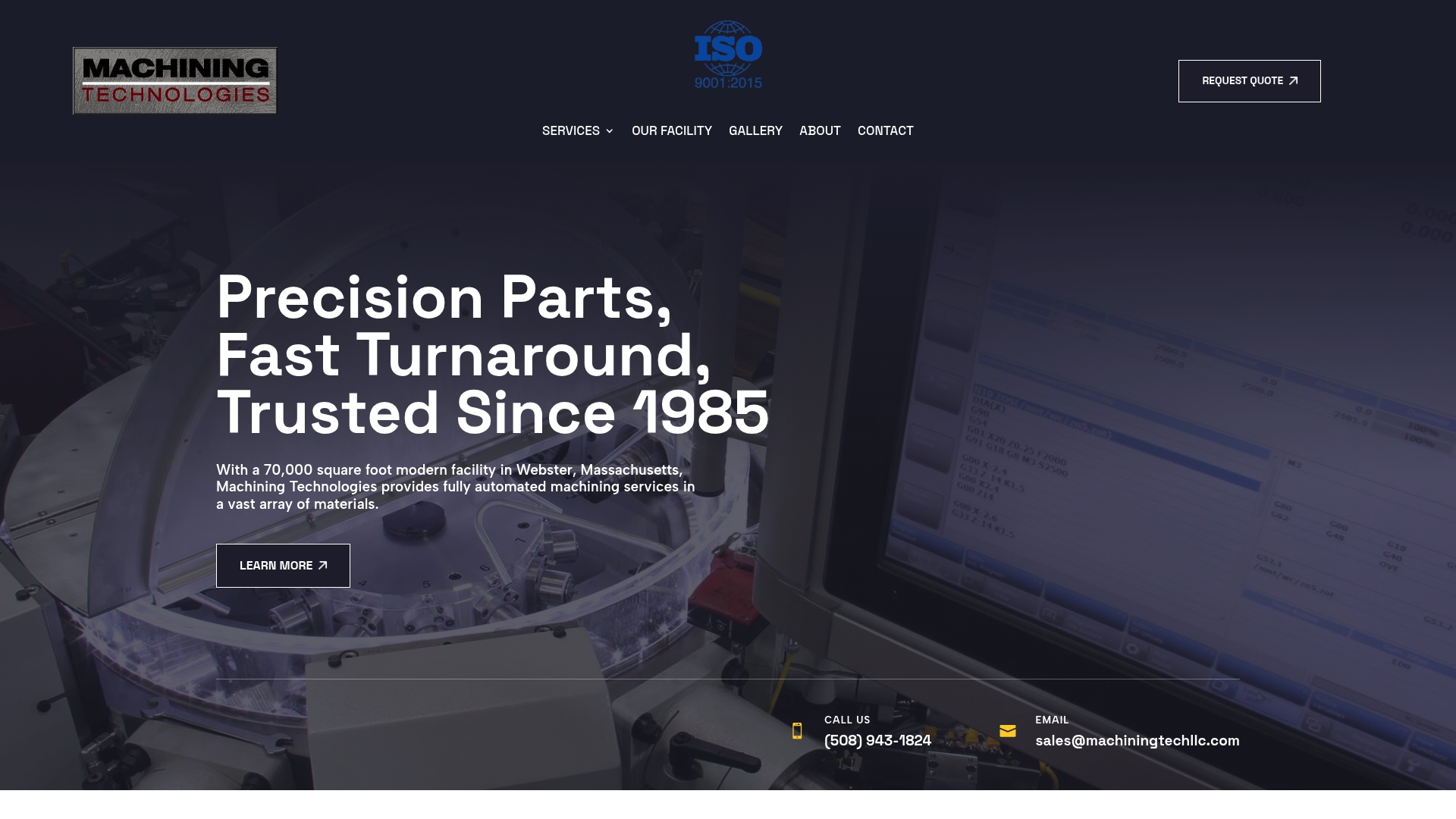
The facility produces more than 20 million parts each year, with quality systems and PPAP documentation support built for automotive and defense OEM programs. You get precision parts manufacturing with the throughput to match a serious production schedule, not a job shop that will bottleneck at 100K pieces.
To get an accurate quote quickly, include your material specification, annual volume forecast, GD&T drawing with tolerance callouts, and your required PPAP level. Review the small-parts machining process guide to structure your RFQ, then contact Machiningtechllc directly to start the qualification conversation.
Useful sources and references
- IATF/AIAG PPAP Fourth Edition guidance (Ford-specific PPAP requirements) — authoritative reference for PPAP level requirements and submission timelines in automotive programs.
- How to find a reliable precision machining partner: 8-step guide — practical supplier-evaluation checklist covering specialization matching, TCO, and quality system requirements.
- Global Supplier Quality Requirements Manual — OEM-level supplier quality requirements including IATF 16949, ASN/EDI, and on-time delivery metrics.
- Machining Technologies LLC capability and services — facility capacity, equipment list, and throughput data for contract reference and RFQ contact.
- Precision engineering terminology explained — glossary of precision manufacturing terms useful for aligning RFQ language with supplier expectations.