
TL;DR:
- A prototype confirms the product design, while pilot production verifies manufacturing process stability. Pilot runs use production-intent tooling, approved materials, and real operators, unlike prototypes. Skipping pilot production leads to costly defects and process issues during mass manufacturing.
A prototype validates the product design. Pilot production validates the manufacturing process. That single distinction defines the difference between prototype and pilot production, and misunderstanding it is one of the most expensive mistakes a product team can make. Engineers who treat a pilot run as just another prototype end up discovering process failures at full production scale, where fixing them costs orders of magnitude more. This guide breaks down both phases with the precision your project planning demands, covering goals, tooling, quality control, and the sequence that gets products to market without costly surprises.
What is the difference between prototype and pilot production?
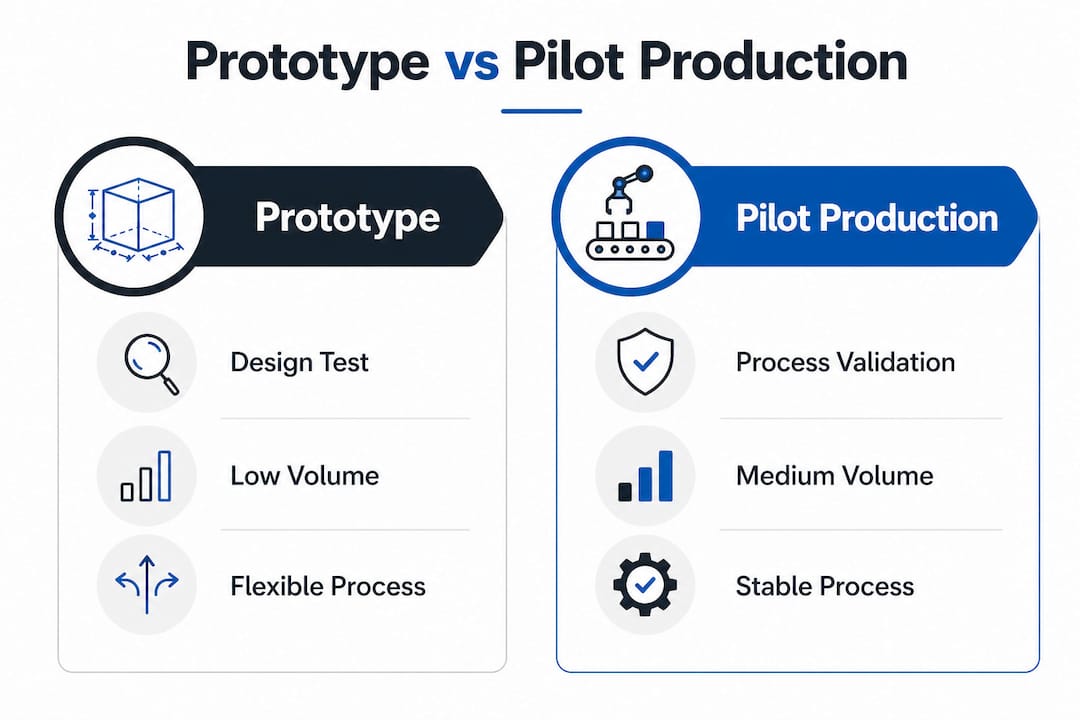
A prototype validates product design, while a pilot run validates the manufacturing process and system stability. These are fundamentally different objectives, and confusing them creates real risk. The prototype answers the question, “Does this design work?” The pilot run answers, “Can we build this design consistently, at volume, with acceptable yield?”
The industry terms that matter here are production-intent tooling, process repeatability, and statistical process control. A prototype rarely uses any of these. A pilot run requires all three. Getting clear on which phase you are in determines every decision that follows, from material selection to operator training to quality gate criteria.
What is a prototype and what does it do in product development?
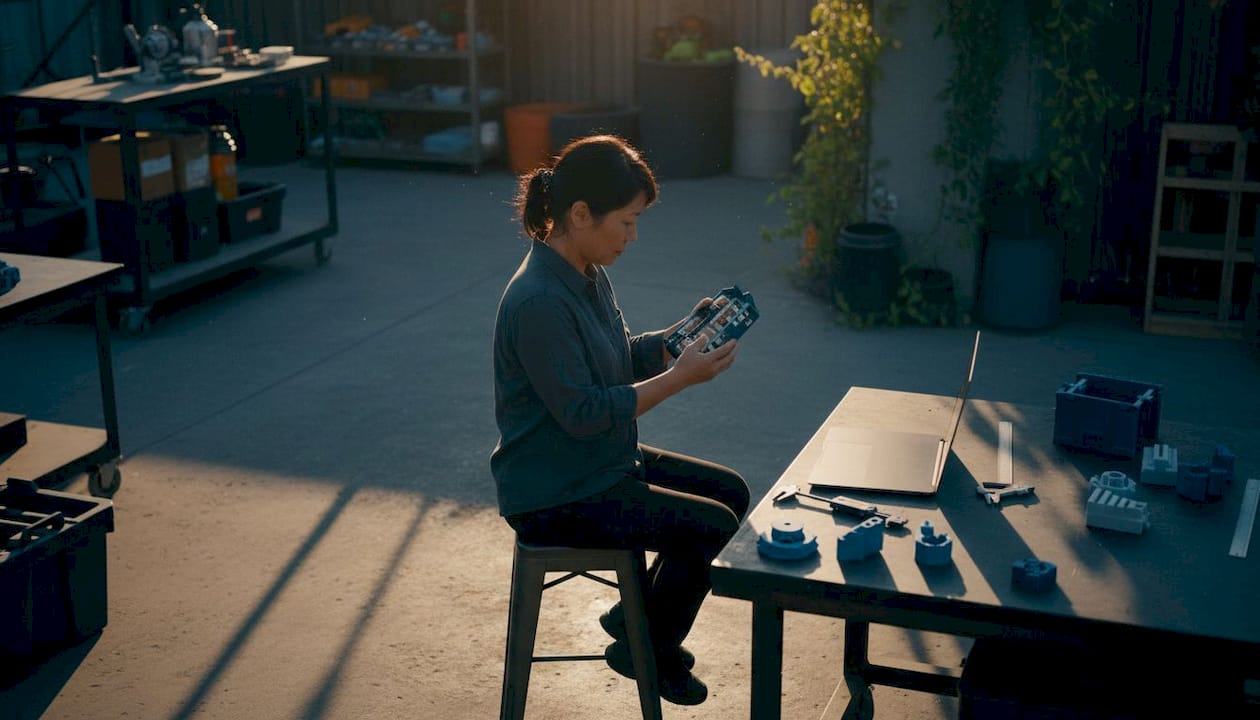
A prototype is an early physical model built to test whether a design concept works as intended. Its primary purpose is design validation, not manufacturing validation. Prototypes confirm function, fit, and form before a team commits to production tooling or processes.
Prototypes are built with flexible, low-volume manufacturing methods. Common approaches include:
- 3D printing (FDM, SLA, SLS): Fast and inexpensive for form and basic fit checks, but materials rarely match production specs.
- CNC machining from billet: Produces accurate geometry and works well for functional testing, especially for metal parts requiring tight tolerances.
- Soft tooling: Silicone molds or bridge tooling used when injection-molded geometry is needed before hard tooling is justified.
- Hand fabrication: Used for early concept models where dimensional accuracy is secondary to visual or ergonomic evaluation.
Prototype volume typically runs from 1 to 100 units. The focus is on design exploration and early problem detection, not process stability. Tolerances are often relaxed, materials may be substitutes, and the manufacturing process changes between iterations. That flexibility is the point. Prototypes are meant to fail fast and cheaply so the design can improve.
The critical limitation of prototypes is that they tell you almost nothing about whether your production process will work. A CNC-machined prototype made from billet aluminum does not predict yield, cycle time, or defect rates when the same part is stamped or die-cast at volume. Prototype fidelity varies widely, and high-fidelity prototypes can create false confidence about production readiness.
Pro Tip: When a prototype passes functional testing, resist the urge to call it “production-ready.” A part that works in your hands is not the same as a part your line can build 10,000 times with consistent quality.
What is pilot production and how does it differ from prototyping?
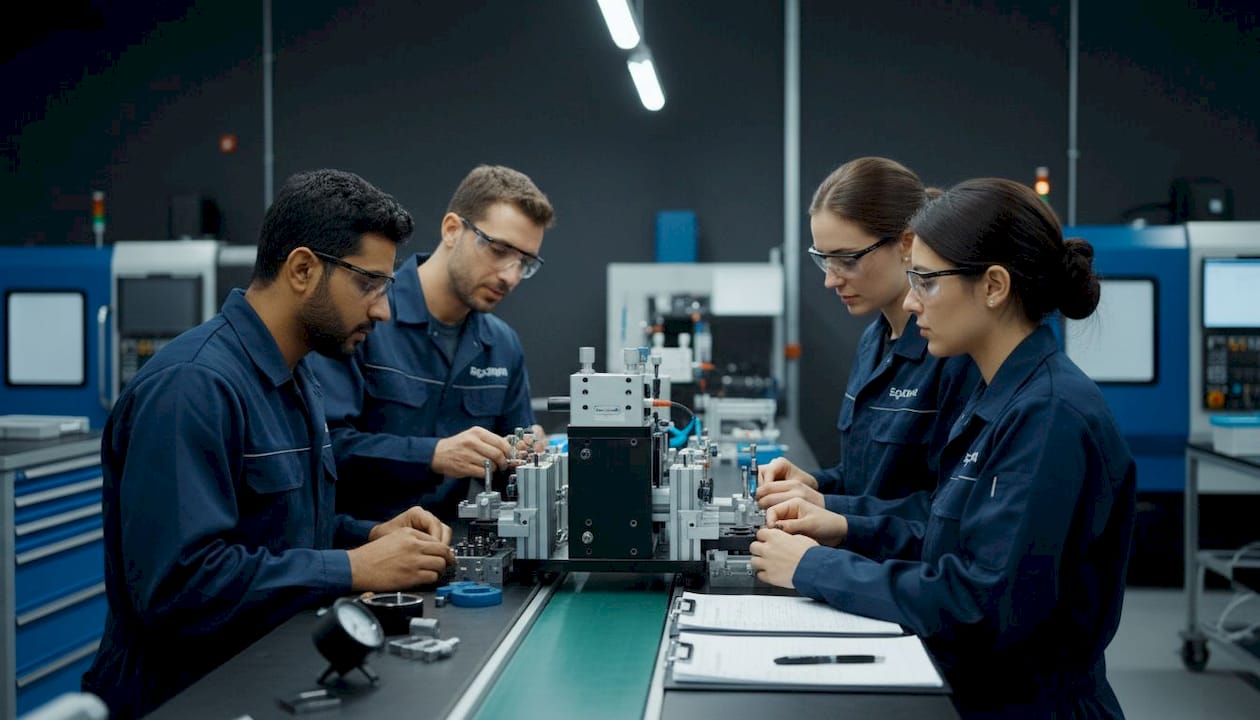
Pilot production is a small-scale, controlled simulation of mass production. Its goal is to validate the entire manufacturing system, not just the product. Pilot runs replicate the production line, operators, speed, components, and quality control criteria exactly, just at a smaller scale.
The key requirements that separate a pilot from a prototype are non-negotiable:
- Production-intent tooling: The same molds, dies, fixtures, and jigs that will be used in mass production. Soft tooling or billet machining disqualifies a run from being a true pilot.
- Approved components: All materials and sub-components must come from approved suppliers using final specifications. Substitutes invalidate the process data.
- Real operators: The people who will run the line in mass production must run the pilot. Skilled engineers doing the work manually does not replicate production conditions.
- Final QC criteria: Inspection methods, acceptance criteria, and measurement systems must match what will be used at scale.
- Documented data: Every machine setting, material lot, operator deviation, and defect must be recorded. The data, not the parts, is the primary output.
Pilot batch sizes typically run from 50 to 200 units, depending on the product and process complexity. The goal is to generate enough data to calculate meaningful process capability metrics, specifically Cp/Cpk values. A Cp/Cpk of 1.33 or higher is the standard threshold indicating a process is capable of meeting specification limits with adequate margin.
Pilot production approval must be based on pilot run data, not just the visual appearance of sample parts. Quality control experts are clear that recorded material lots, operator deviations, and QC logs must govern the decision to proceed to mass production. A batch of parts that looks good is not evidence that the process is stable.
Pro Tip: Treat the pilot run as a release gate, not a formality. If your team cannot produce a complete pilot data package, including yield rates, defect logs, and Cp/Cpk results, the product is not ready for mass production approval.
How do prototype and pilot production compare across key manufacturing dimensions?
The table below captures the core contrasts that matter most for project planning decisions.
| Dimension | Prototype | Pilot production |
|---|---|---|
| Primary goal | Validate product design and function | Validate manufacturing process and system stability |
| Batch size | 1–100 units | 50–200 units |
| Tooling | Flexible (3D print, billet CNC, soft tooling) | Production-intent tooling only |
| Materials | May use substitutes | Final approved materials and suppliers |
| Operators | Engineers or skilled technicians | Production-line operators |
| Quality control | Visual inspection, functional testing | SPC, Cp/Cpk ≥ 1.33, documented QC logs |
| Process flexibility | High; changes expected between iterations | Fixed; deviations are recorded as defects |
| Primary output | Validated design, updated drawings | Process data, yield rates, approved production baseline |
The consequences of skipping pilot production are severe. Skipping pilot production shifts defect discovery to the mass-production phase, where rework costs multiply and brand risk becomes real. A defect found during a 100-unit pilot costs a fraction of the same defect found across a 10,000-unit production run.
Prototype manufacturing is exploratory with flexible processes and relaxed tolerances. Pilot manufacturing is fixed, stable, and focused on statistical process control with Cp/Cpk metrics as the acceptance standard. These are not points on a continuum. They are different activities with different success criteria.
Why is pilot production critical for manufacturing readiness?
Pilot production is the last practical window to fix problems before they become expensive. Once mass production starts, every change carries tooling costs, line downtime, and potential field recall risk. The pilot phase exists specifically to surface those problems while the cost of fixing them is still manageable.
The risks that thorough pilot runs mitigate include:
- Process bottlenecks: Steps that work fine at low volume often become throughput constraints at scale. Pilot data reveals cycle time gaps before they affect delivery commitments.
- Yield issues: Scrap and rework rates that seem acceptable at prototype scale can make a product unprofitable at volume. Pilot yield data is the only reliable predictor of production economics.
- Operator challenges: Tasks that engineers perform easily may be difficult or inconsistent for line operators. Pilot runs expose ergonomic issues, unclear work instructions, and training gaps.
- PFMEA control gaps: The transition from prototype to pilot is the highest-risk phase for PFMEA control gaps. Failure mode assessments made during design often do not account for real production conditions, leaving severity, probability, and detectability ratings misaligned with actual risk.
- Design-for-manufacturability issues: Pilot feedback allows modification of design details like screw hole placement, wall thickness, or soldering points before full production locks them in.
Implementing MES during pilot production enables real-time data capture and analytics critical for rapid process stabilization. Recording machine settings, material lots, and operator-specific issues builds a knowledge base that shortens the learning curve when full-scale manufacturing begins. Teams that skip this data collection step during the pilot consistently struggle with unexplained variation in the first weeks of mass production.
Pro Tip: Use lean floor organization practices during your pilot run to simulate the actual production environment. A pilot run conducted in a cluttered, unorganized space does not replicate real line conditions and will miss ergonomic and flow-related defects.
Pilot production is also the best phase to finalize design-for-manufacturability by incorporating engineering feedback from real production conditions. That collaboration between design and manufacturing engineering during the pilot phase is what separates products that scale smoothly from those that spend their first production months in firefighting mode.
How to integrate prototype and pilot production into your workflow
The sequence from prototype to mass production follows a defined path, and each transition requires a deliberate decision gate. Skipping or rushing a gate is where most project failures originate.
- Prototype phase: Build and test multiple design iterations. Use flexible processes like CNC machining or 3D printing. Focus on function, fit, and form. Exit this phase only when the design is frozen and all functional tests pass.
- Design freeze: Document the final design with complete drawings, material specifications, and tolerance requirements. No design changes are permitted after this point without a formal change control process.
- Pilot production planning: Define the pilot batch size (typically 50–200 units), identify production-intent tooling requirements, confirm approved suppliers, and write the pilot run protocol including data collection requirements.
- Pilot run execution: Run the pilot using production tooling, approved materials, and line operators. Collect yield data, defect logs, cycle time measurements, and Cp/Cpk results for all critical dimensions.
- Pilot data review: Engineering, quality, and production stakeholders review the complete data package. Address all open issues. Do not approve mass production until Cp/Cpk ≥ 1.33 for critical features and all PFMEA control gaps are closed.
- Mass production approval: Issue formal approval based on pilot data. Update the control plan, work instructions, and quality plan to reflect lessons learned during the pilot.
The criteria for moving from prototype to pilot are specific: the design must be frozen, all materials must be sourced from approved suppliers, functional testing must be complete, and production-intent tooling must be available. Moving to pilot before these criteria are met produces data that does not represent real production conditions and wastes the entire exercise.
Monitor yield rate, defect rate by category, cycle time per unit, and first-pass inspection results throughout the pilot. These four metrics give you an accurate picture of whether the process is ready to scale.
Key takeaways
The core rule is this: a prototype proves the product works, and a pilot run proves the production system can build it consistently at volume.
| Point | Details |
|---|---|
| Distinct purposes | Prototypes validate design; pilot runs validate the manufacturing process and system stability. |
| Pilot requires production conditions | Use production-intent tooling, approved materials, and real line operators or the data is invalid. |
| Cp/Cpk is the standard | A process capability index of 1.33 or higher is the accepted threshold before approving mass production. |
| Skipping pilot is expensive | Defects discovered during mass production cost far more to fix than those caught during a 50–200-unit pilot run. |
| Data governs approval | Pilot run records, not sample appearance, must be the basis for mass production sign-off. |
What I’ve learned from watching teams skip the pilot phase
The most common misconception I encounter is that pilot production validates the product. It does not. It validates the system that builds the product. That distinction sounds academic until you watch a team ship 5,000 units with a torque spec that their line operators cannot hit consistently because no one ran a real pilot.
The pressure to skip or compress the pilot phase is real. Schedules slip, tooling arrives late, and leadership wants to see revenue. I understand that pressure. But the teams that cut the pilot short almost always spend more time in mass-production firefighting than the pilot would have taken. The math is not close.
What I tell engineers who are being pushed to skip the pilot: document the risk explicitly and get sign-off from leadership. Put in writing that the PFMEA control plan has not been validated under production conditions. That conversation changes the calculus quickly. Pilot production is not a cost center. It is the cheapest insurance policy in manufacturing.
The engineers who advocate loudest for a thorough pilot phase are the ones who have been burned by skipping it. You do not need to learn that lesson the hard way.
— Andrew
How Machiningtechllc supports your prototype-to-pilot transition
Machiningtechllc has delivered precision contract machining since 1985 from its 70,000-square-foot facility in Webster, Massachusetts. The team produces over 20 million parts annually using Hydromat systems, CNC milling, turning, and wire EDM, covering the full range from early prototype runs to high-volume production.
For OEMs and product developers who need a manufacturing partner that understands both phases, Machiningtechllc offers contract machining services built for rapid turnaround and tight tolerances. Whether you are validating a first prototype or running a 200-unit pilot with production-intent tooling, the team’s experience across aerospace, defense, and industrial machinery means your process data will be meaningful. Explore precision machining services to find the right fit for your next production phase.
FAQ
What is the main difference between prototype and pilot production?
A prototype validates the product design through functional and fit testing. Pilot production validates the manufacturing process and system stability under near-mass-production conditions using production-intent tooling and real operators.
How many units are typically produced in a pilot run?
Pilot batch sizes typically range from 50 to 200 units. The goal is to generate enough process data to calculate Cp/Cpk metrics and confirm the manufacturing system is capable before mass production approval.
Can a prototype replace a pilot run?
No. A prototype uses flexible processes and substitute materials that do not represent production conditions. Pilot runs are not high-priced prototypes; without production-intent tooling, approved components, and real operators, a run cannot validate the manufacturing process.
What is Cp/Cpk and why does it matter in pilot production?
Cp/Cpk is a process capability index that measures how well a manufacturing process meets specification limits. A Cp/Cpk of 1.33 or higher is the standard threshold for approving a process as capable before scaling to mass production.
What happens if you skip pilot production?
Skipping pilot production shifts defect discovery to the mass-production phase, where rework costs are far higher and brand risk increases significantly. Process-related defects that a pilot would have caught in 100 units can affect thousands of shipped products.