
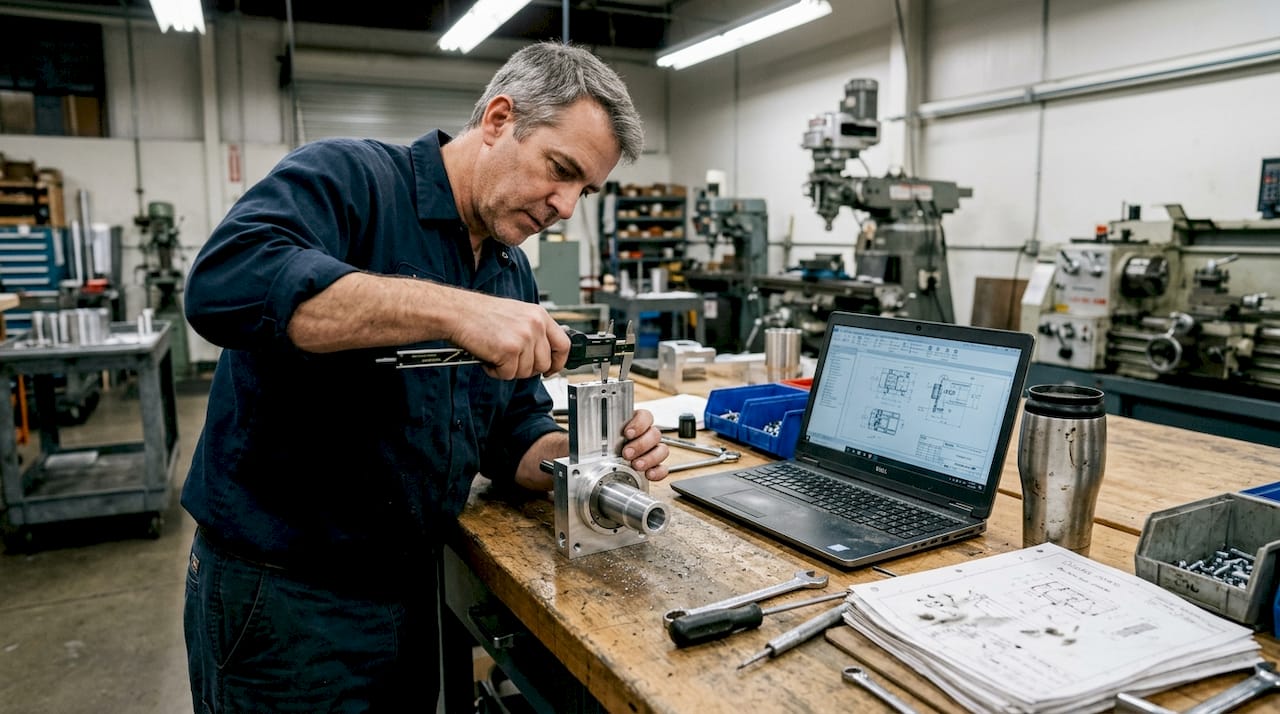
Many manufacturing engineers view prototyping as an expensive detour that delays production schedules. This misconception costs companies millions in rework and quality failures every year. In reality, prototyping is the foundation of precision manufacturing, particularly in aerospace, defense, and firearms industries where tolerances measure in microns and failures carry catastrophic consequences. This guide explores how strategic prototyping transforms manufacturing workflows, the methods that deliver results, and the practices that separate efficient operations from costly mistakes. You’ll discover actionable frameworks for integrating prototyping into your development process to achieve superior precision and faster time to market.
Table of Contents
- Key takeaways
- Understanding prototyping and its role in manufacturing
- Common prototyping methods used in aerospace, defense, and firearms manufacturing
- Challenges and best practices in prototype development for high-precision manufacturing
- Applying prototyping insights to improve manufacturing workflows and outcomes
- Discover expert prototyping and precision manufacturing services
- FAQ
Key Takeaways
| Point | Details |
|---|---|
| Prototyping foundation for precision | Strategic prototyping reduces rework and speeds time to market by validating designs and processes before full production tooling. |
| Fail fast approach | Prototyping emphasizes rapid iteration to uncover design flaws early and converge on manufacturing excellence before committing capital equipment. |
| Upstream quality savings | Early testing reduces costly tooling changes and field failures by catching issues before production tooling is finalized. |
| Cross functional communication | Prototyping serves as a shared reference for engineering, manufacturing, quality, and purchasing to align specs and expectations. |
Understanding prototyping and its role in manufacturing
Prototyping in manufacturing represents the iterative process of creating physical models or components to validate design concepts, test functionality, and identify defects before committing to full production tooling. Unlike simple mockups, manufacturing prototypes serve as functional representations that undergo rigorous testing under real world conditions. This process forms the critical bridge between computer aided design and mass production.
Manufacturing prototypes serve three primary objectives. First, they validate that designs translate correctly from digital models to physical parts, revealing issues like interference fits or assembly complications. Second, they enable functional testing under operational stresses, temperatures, and loads that simulations cannot fully replicate. Third, they provide tangible feedback for engineering teams, procurement specialists, and end users to evaluate before expensive production commitments.
The aerospace, defense, and firearms industries demand prototyping rigor that exceeds most manufacturing sectors. A single component failure in a fighter jet hydraulic system or firearm firing mechanism can result in loss of life. Precision parts manufacturing in these fields requires tolerances often measured in tenths of thousandths of an inch. Prototyping catches dimensional errors, material incompatibilities, and performance shortfalls that would otherwise emerge during production or worse, in field operations.
Consider the cost implications. Producing 10,000 defective components costs exponentially more than discovering the flaw during prototype testing. Tooling changes after production launch can run into six figures for complex injection molds or progressive dies. Prototyping shifts quality assurance upstream, where corrections cost pennies compared to production rework dollars.
Prototyping is not about building the perfect part on the first try. It’s about failing fast, learning quickly, and converging on manufacturing excellence before capital equipment gets involved.
The iterative nature of prototyping accelerates innovation cycles. Engineers test multiple design variations rapidly, comparing performance data to optimize for weight, strength, manufacturability, or cost. This empirical approach beats theoretical analysis every time because real materials behave differently than idealized models predict. Grain structure in metals, fiber orientation in composites, and residual stresses from machining all influence final part performance in ways that only physical testing reveals.
Prototyping also serves as a communication tool across departments. Production teams identify manufacturability issues early. Quality engineers establish inspection criteria based on actual parts rather than drawings. Purchasing specialists source materials knowing exact specifications. This collaborative refinement prevents the finger pointing and blame shifting that plague projects launched without adequate prototyping.
Common prototyping methods used in aerospace, defense, and firearms manufacturing
Manufacturers employ several prototyping technologies, each offering distinct advantages for different project phases and requirements. Selecting the right method early determines development speed, cost efficiency, and prototype fidelity.
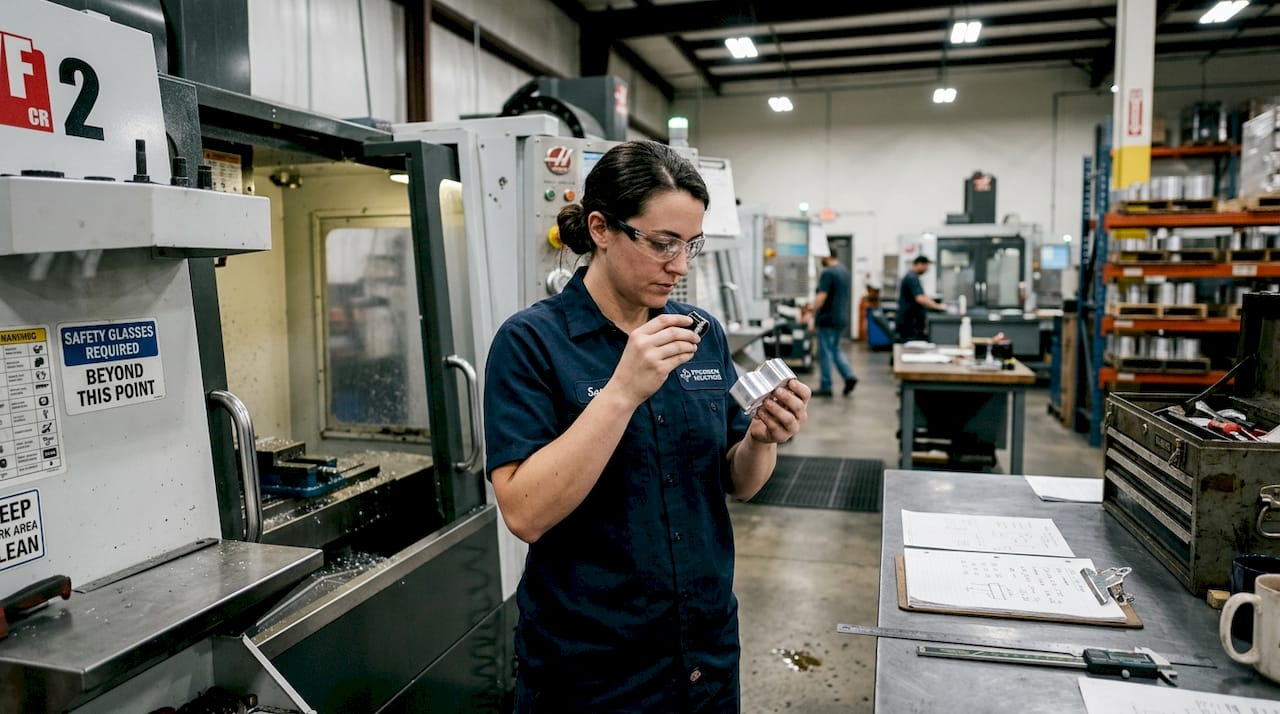
CNC machining remains the gold standard for functional prototypes requiring production grade materials and tight tolerances. Five axis CNC mills and lathes remove material from solid stock to create parts matching final production specifications. This subtractive process works with aluminum, stainless steel, titanium, and exotic alloys used in aerospace and defense applications. CNC prototypes undergo the same heat treatments, surface finishes, and inspection protocols as production parts, providing authentic performance data.
3D printing, or additive manufacturing, excels at rapid concept validation and complex geometries impossible to machine conventionally. Technologies like selective laser sintering and direct metal laser sintering build parts layer by layer from powdered materials. 3D printing accelerates prototype iteration by eliminating tooling setup time, enabling same day design changes. However, material properties and surface finishes typically fall short of machined prototypes, limiting 3D printed parts to form and fit testing rather than functional validation.
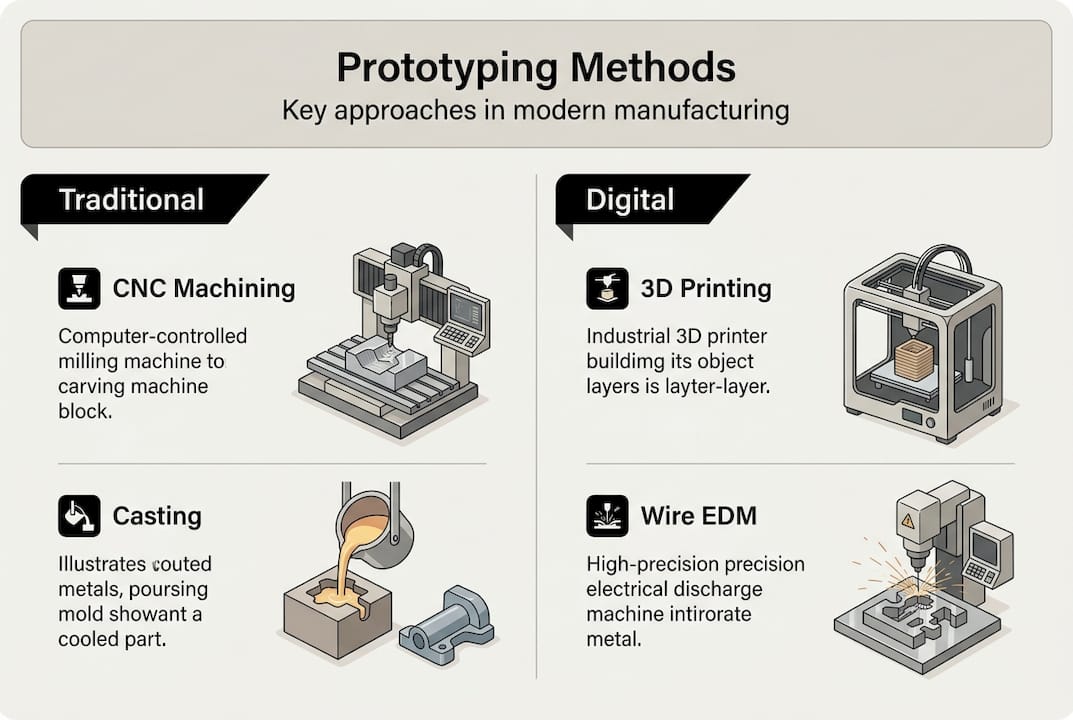
Wire EDM uses electrical discharge to cut intricate profiles through conductive materials with exceptional precision. This thermal process creates features like narrow slots, sharp internal corners, and delicate webs that challenge conventional machining. Wire EDM prototypes prove invaluable for testing complex firearm components like trigger mechanisms or aerospace parts with tight tolerance pockets. The process leaves a characteristic surface finish that may require secondary operations for final parts.
Investment casting and rapid tooling bridge prototyping and low volume production. These methods create metal parts from 3D printed patterns or soft tooling, combining design flexibility with production material properties. They suit projects requiring 50 to 500 prototype units for extended testing programs.
| Method | Speed | Cost | Accuracy | Best Application |
|---|---|---|---|---|
| CNC Machining | Moderate | Moderate to High | Excellent (±0.0005″) | Functional prototypes in production materials |
| 3D Printing | Fast | Low to Moderate | Good (±0.005″) | Concept validation and complex geometries |
| Wire EDM | Slow to Moderate | Moderate | Excellent (±0.0002″) | Intricate profiles and tight tolerance features |
| Investment Casting | Slow | High | Good (±0.010″) | Complex shapes requiring production materials |
Pro Tip: Match your prototyping method to your validation goals. Use 3D printing for early design iterations to fail fast and cheap. Switch to CNC machining once the design stabilizes to validate performance and manufacturability with production equivalent parts. This staged approach optimizes both speed and budget.
Firearms manufacturers often prototype receivers and fire control groups using custom prototype machining to verify headspace, lockup, and timing before committing to production tooling. Aerospace engineers prototype structural fittings and hydraulic manifolds in titanium or Inconel to conduct stress testing and fatigue analysis. Defense contractors validate electronic housings and mounting brackets under shock, vibration, and temperature extremes using machined prototypes.
The key differentiator lies in material authenticity. A 3D printed polymer prototype cannot replicate the thermal expansion, elastic modulus, or fatigue resistance of machined aluminum. When your application demands specific material properties, invest in machining based prototyping from the start. When geometric validation matters more than material behavior, additive methods accelerate learning cycles.
Challenges and best practices in prototype development for high-precision manufacturing
Prototype development in precision manufacturing presents obstacles that derail timelines and budgets when not addressed proactively. Understanding these challenges and implementing proven practices separates successful programs from troubled ones.
Tight tolerance requirements top the challenge list. Aerospace components routinely specify tolerances of ±0.001″ or tighter, with critical features holding ±0.0005″. Achieving these dimensions consistently requires calibrated equipment, temperature controlled environments, and skilled machinists. Balancing speed, cost, and accuracy creates constant tension during prototype development. Rushing prototype production invites dimensional errors that invalidate test results. Over engineering prototypes wastes resources on precision exceeding actual requirements.
Material availability and lead times constrain prototype schedules. Exotic alloys like Inconel 718 or titanium 6-4 may require weeks for procurement in prototype quantities. Material certifications and traceability add complexity and cost. Engineers must plan material sourcing early or accept substitute materials that compromise test validity.
Cost pressures tempt teams to skip prototype iterations or combine testing phases. This penny wise, pound foolish approach backfires when production reveals problems that prototype testing should have caught. Budget adequate prototype cycles from the start. The investment pays dividends in reduced production risk.
Time constraints drive poor decisions. Compressed schedules encourage shortcuts like inadequate design reviews, rushed machining setups, or incomplete test protocols. These time savings evaporate when flawed prototypes force rework cycles or worse, when problems surface during production.
Best practices mitigate these challenges through systematic approaches:
Integrate prototyping into early design phases rather than treating it as a post design validation step. Concurrent engineering brings manufacturing expertise into design reviews, identifying producibility issues before drawings finalize. This front loaded investment prevents costly redesigns later.
Partner with precision machining specialists who understand aerospace, defense, and firearms requirements. Experienced shops anticipate tolerance stack ups, material behavior, and inspection challenges that generic job shops miss. Their expertise compresses learning curves and prevents rookie mistakes.
Invest in advanced prototyping technologies appropriate for your industry. Wire EDM, five axis machining, and CMM inspection capabilities enable prototype fidelity matching production requirements. Cutting corners on prototype equipment quality guarantees disappointing results.
Implement iterative testing with defined success criteria for each prototype generation. First prototypes validate basic form and fit. Second generation prototypes undergo functional testing. Final prototypes demonstrate production readiness through qualification testing. This staged approach manages risk while controlling costs.
Document everything. Capture dimensional data, material certifications, process parameters, and test results for every prototype. This documentation informs production planning and provides traceability for regulated industries.
Pro Tip: Avoid over customization during prototyping. Engineers often add features or tighten tolerances beyond actual requirements, inflating prototype costs unnecessarily. Stick to design specifications unless testing reveals genuine need for changes. Similarly, consider machinability during design. Features that look elegant in CAD may prove impossible or prohibitively expensive to manufacture.
Precision machining workflows for firearms components illustrate these practices. Prototype receivers undergo dimensional inspection, headspace verification, and proof firing before production tooling approval. This methodical validation prevents the catastrophic failures that plague rushed development programs.
Benefits of precision machining extend beyond prototype accuracy to include repeatability and scalability. Processes proven during prototyping transfer directly to production, minimizing the transition risk that plagues projects using dissimilar prototype and production methods.
Applying prototyping insights to improve manufacturing workflows and outcomes
Strategic prototyping integration transforms manufacturing operations from reactive problem solving to proactive optimization. Companies that embed prototyping into their development DNA consistently outperform competitors in quality, speed, and cost efficiency.
Lean manufacturing principles emphasize waste elimination and continuous improvement. Prototyping aligns perfectly with these goals by identifying and eliminating design waste before production launch. Every flaw caught during prototyping represents scrap, rework, and customer returns prevented in production. This waste avoidance compounds across production volumes, generating savings that dwarf prototype investment.
Agile development methodologies from software engineering apply equally to hardware manufacturing. Short iteration cycles, frequent testing, and rapid feedback loops accelerate learning and convergence on optimal designs. Prototyping enables hardware agility by providing tangible artifacts for evaluation and refinement.
The benefits manifest across multiple dimensions:
- Reduced design iterations through early problem detection save weeks or months in development timelines
- Earlier problem identification prevents expensive tooling modifications and production delays
- Consistent quality results from validated designs and proven manufacturing processes
- Lower total program costs despite prototype investment through reduced production risk
- Faster market entry from compressed development cycles and smoother production launches
Aerospace manufacturers using systematic prototyping report 30 to 40 percent reductions in development time compared to traditional design then build approaches. Defense contractors achieve first article acceptance rates exceeding 95 percent when prototype testing validates designs thoroughly. Firearms manufacturers eliminate costly recalls by catching safety issues during prototype qualification.
Data driven decision making elevates prototyping from subjective judgment to objective analysis. Dimensional inspection data reveals tolerance capabilities and process variation. Material testing quantifies strength, hardness, and fatigue resistance. Functional testing measures performance against specifications. This empirical foundation supports confident production decisions.
| Metric | Before Prototyping | After Prototyping | Improvement |
|---|---|---|---|
| Design Iterations | 4.2 average | 2.1 average | 50% reduction |
| First Article Acceptance | 73% | 96% | 23 point increase |
| Production Scrap Rate | 8.3% | 2.1% | 75% reduction |
| Time to Production | 18 months | 11 months | 39% faster |
Prototyping contributes to faster lead times by front loading problem solving and validation activities. Production launches proceed smoothly when designs have been thoroughly vetted through prototype testing. The alternative, discovering problems during production, creates chaos and delays that obliterate schedules.
Precision parts sourcing for aerospace and defense applications demands supplier qualification and capability validation. Prototyping provides the test bed for evaluating potential suppliers before production commitments. Suppliers demonstrating prototype competence earn production business. Those struggling with prototype requirements get eliminated early, preventing production disasters.
The strategic value extends to intellectual property development and competitive advantage. Companies that prototype extensively build deep understanding of design principles, manufacturing constraints, and performance tradeoffs. This knowledge base informs future projects and accelerates innovation cycles. Patents and trade secrets emerge from prototype discoveries, creating barriers to competitor entry.
Discover expert prototyping and precision manufacturing services
Transforming prototyping insights into manufacturing success requires partners who combine technical expertise with production capability. Machining Technologies brings 40 years of precision manufacturing experience to aerospace, defense, and firearms prototyping challenges. Our 70,000 square foot facility houses advanced CNC machining centers, wire EDM systems, and quality inspection equipment calibrated for tight tolerance work.
Our engineering team collaborates with clients from initial concept through production launch, identifying manufacturability issues early and recommending design optimizations that improve quality while reducing costs. We machine prototypes in production materials, ensuring test results reflect actual performance rather than substitute material approximations. Fast turnaround times keep programs on schedule without sacrificing the dimensional accuracy and surface finish quality your applications demand.
Pro Tip: Selecting machining partners with deep industry experience dramatically reduces prototype iteration cycles. Shops familiar with aerospace specifications, defense standards, and firearms regulations anticipate requirements that generic manufacturers miss, preventing costly rework.
Whether you need complex part manufacturing for intricate assemblies or custom prototype machining for concept validation, our capabilities scale from single prototypes to production volumes exceeding 20 million parts annually. Explore our manufacturing services to discover how precision prototyping accelerates your path from design to production.
FAQ
What are the most common prototyping methods in manufacturing?
The most prevalent methods include CNC machining for production material prototypes, 3D printing for rapid concept validation, and wire EDM for intricate profiles requiring tight tolerances. Each method serves specific validation objectives, with CNC machining preferred for functional testing and 3D printing suited for early design iterations. Custom prototype machining companies often combine multiple technologies to optimize speed and accuracy for different project phases.
How does prototyping improve manufacturing precision and quality?
Prototyping identifies design flaws, dimensional errors, and manufacturing challenges before production tooling investment, enabling corrections when changes cost least. Physical prototypes reveal issues like tolerance stack ups, assembly interferences, and material behavior that computer simulations miss. Testing prototypes under operational conditions validates that designs meet performance specifications and regulatory requirements. Prototyping improves manufacturing precision particularly in aerospace, defense, and firearms industries where component failures carry severe consequences.
What challenges should engineers anticipate during prototype development?
Engineers commonly face difficulties meeting tight tolerance requirements, managing prototype budgets, and achieving quick turnaround times while maintaining quality. Material availability for exotic alloys creates procurement delays that impact schedules. Balancing speed, cost, and accuracy requires careful planning and experienced manufacturing partners. Additional challenges include coordinating between design and production teams, establishing appropriate test protocols, and documenting results for regulatory compliance.
When should prototyping begin in the product development cycle?
Prototyping should start during early design phases rather than after design completion, enabling concurrent engineering that identifies manufacturability issues before drawings finalize. Initial prototypes validate basic concepts and geometric feasibility using rapid methods like 3D printing. Subsequent prototype generations employ production equivalent processes and materials as designs mature. Early prototyping integration reduces total development time by 30 to 40 percent compared to sequential design then prototype approaches, while improving final product quality through iterative refinement.