


Sourcing precision parts for aerospace, defense, and firearm applications presents unique challenges that can derail production schedules and trigger costly compliance violations. Procurement managers must navigate strict quality standards, technical specifications, and regulatory requirements while ensuring supplier reliability. ITAR penalties reach $1.27M per violation, making supplier qualification critical. This comprehensive guide walks you through proven methodologies to source precision machining partners who deliver consistent quality, maintain compliance, and meet demanding performance standards across regulated industries.
Table of Contents
- Understanding Precision Parts Sourcing Challenges
- Preparing Thorough RFQ Packages And Supplier Qualification
- Executing And Verifying Precision Parts Orders For Compliance And Quality
- Leveraging Modularity And Traceability In Military And Industrial Procurement
- Explore Machining Solutions To Enhance Your Sourcing
- Frequently Asked Questions
Key takeaways
| Point | Details |
|---|---|
| RFQ preparation | Complete technical packages with 3D models, GD&T drawings, and inspection requirements prevent costly misunderstandings |
| Supplier qualification | Verify AS9100 and ITAR certifications, then validate capabilities through trial orders with FAI reports |
| Material compliance | Firearm and defense parts require mil-spec materials with proper heat treatment to prevent premature failure |
| Testing protocols | 50+ dry cycle tests prevent 68% of fit issues in firearm components before full production |
| Traceability systems | Documented material tracking supports regulatory audits and enables rapid failure investigation |
Understanding precision parts sourcing challenges
Procurement managers face mounting pressure to source components that meet exacting specifications while navigating complex regulatory landscapes. The aerospace, defense, and firearm industries demand parts manufactured to tolerances measured in microns, with zero tolerance for deviation from specifications. A single non-conforming component can ground an aircraft, fail a defense system qualification, or create catastrophic firearm malfunctions.
The technical complexity alone creates significant sourcing barriers. Modern precision parts often feature:
- Multi-axis geometries requiring 5-axis CNC machining capabilities
- Tight tolerances of ±0.0001 inches or better
- Exotic materials like Inconel 718 or titanium alloys
- Surface finish requirements below 16 Ra
- Complex heat treatment specifications
Regulatory compliance adds another layer of complexity. Defense and firearm components fall under International Traffic in Arms Regulations (ITAR), restricting which suppliers can even quote on projects. ITAR penalties reach $1.27M per violation, and unauthorized access to technical data triggers serious legal consequences. Aerospace parts require AS9100 certification, demonstrating quality management systems specifically designed for aviation safety.
Firearm parts sourcing presents unique challenges beyond standard precision machining. Components must maintain mil-spec compatibility across different firearm generations, prevent premature wear under high-stress cycling, and meet stringent material specifications. Substandard materials or improper heat treatment can cause catastrophic failures during operation, creating liability exposure and damaging brand reputation.
“Traceability isn’t optional in regulated industries. Every material batch, heat treatment cycle, and inspection result must be documented and retrievable for audits or failure investigations.”
Procurement managers who skip thorough supplier qualification face predictable consequences. Production delays occur when parts fail first article inspection. Rework costs escalate when suppliers lack the equipment or expertise to meet specifications. Compliance violations emerge when documentation gaps surface during audits. Understanding these challenges upfront enables you to build robust sourcing processes that prevent quality issues in custom machining for aerospace and defense applications.
Preparing thorough RFQ packages and supplier qualification
Your RFQ package serves as the foundation for successful precision parts sourcing. Incomplete or ambiguous specifications guarantee misunderstandings, incorrect quotes, and parts that fail inspection. Complete RFQ packages include 3D models, GD&T drawings, material specifications, tolerances, finish requirements, quantities, and inspection criteria. This comprehensive approach eliminates guesswork and enables suppliers to provide accurate quotes.
A properly structured RFQ package contains these essential elements:
- Native 3D CAD files (STEP or IGES format) showing complete part geometry
- 2D engineering drawings with geometric dimensioning and tolerancing per ASME Y14.5
- Material callouts specifying grade, condition, and any required certifications
- Surface finish requirements for each feature
- Critical dimensions identified with tighter tolerance bands
- Inspection requirements including CMM reports, material certs, and test data
- Annual volume projections and delivery schedule expectations
- Packaging and shipping specifications
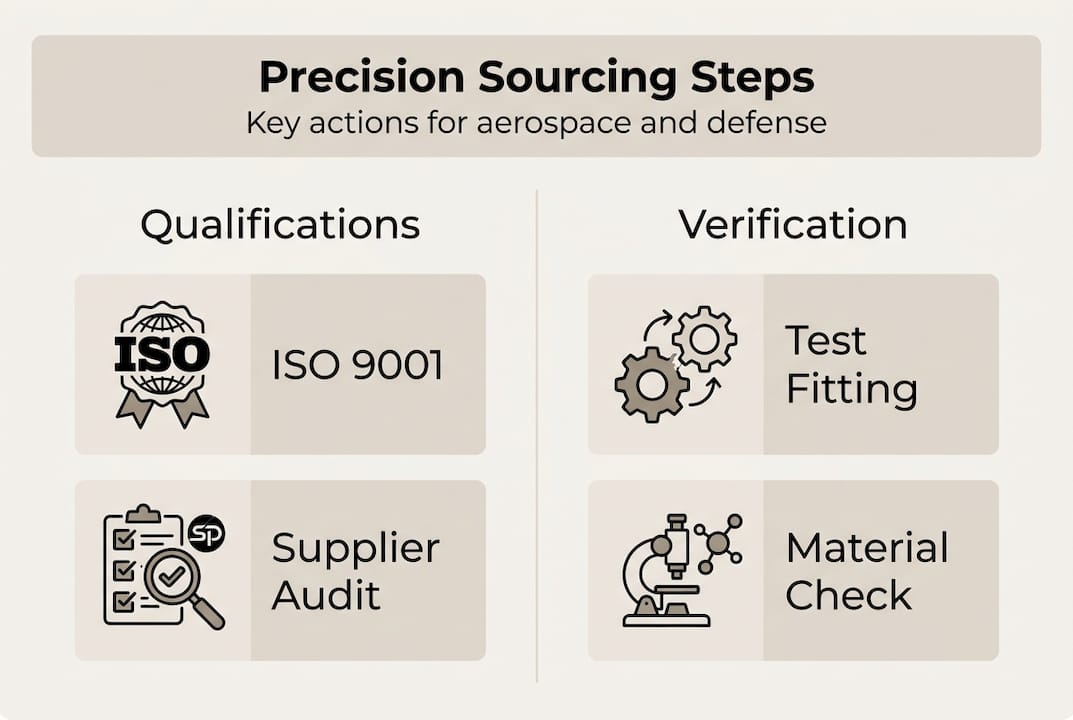
Supplier qualification protects you from costly partnerships with inadequate manufacturers. Start by requesting detailed capability questionnaires covering equipment lists, quality systems, and industry certifications. Verify that suppliers hold current ISO 9001 as a baseline, with AS9100 required for aerospace work and ITAR registration mandatory for defense and firearm components.
Pro Tip: Request equipment serial numbers and calibration dates for critical measurement tools during facility audits. Expired calibrations indicate quality system breakdowns that will impact your parts.
Trial orders provide the most reliable qualification method before committing to production volumes. Structure trial orders with 5 to 10 parts and require First Article Inspection (FAI) reports documenting every critical dimension. This approach reveals whether suppliers can actually achieve the tolerances they claim and follow your inspection requirements. Compare FAI data against your specifications to identify any capability gaps before problems multiply across thousands of parts.
| Qualification Factor | Minimum Requirement | Verification Method |
|---|---|---|
| Quality certification | ISO 9001 (AS9100 for aerospace) | Request current certificate copies |
| ITAR registration | Required for defense/firearms | Verify on DDTC public list |
| Equipment capability | 5-axis CNC, CMM inspection | Equipment list with specs |
| Material traceability | Full chain of custody | Review sample material certs |
| Capacity | Match your volume needs | Review annual production data |
Document your qualification process thoroughly to support audit trails and enable efficient re-qualification cycles. Maintain supplier scorecards tracking on-time delivery, quality metrics, and responsiveness. This data proves invaluable when developing strategies for complex part manufacturing across multiple suppliers. Clear qualification standards also help you specify appropriate machining tolerances that balance cost with functional requirements.
Executing and verifying precision parts orders for compliance and quality
Successful order execution requires more than placing a purchase order and waiting for delivery. Structured verification processes catch problems early, before defects multiply across production runs. Trial orders serve as your first line of defense, enabling you to validate supplier capabilities under real production conditions rather than relying solely on capability claims.
Implement these verification steps for trial orders:
- Schedule kickoff calls to review specifications and address supplier questions
- Request progress updates at 25%, 50%, and 75% completion milestones
- Require dimensional inspection reports for first articles before continuing
- Perform test fits and functional checks on received parts
- Document any deviations and corrective actions before production release
Test fitting reveals dimensional issues that paper inspections miss. For firearm components, performing 50+ dry cycle tests prevents 68% of fit issues caused by generation mismatches or tolerance stack-ups. Cycle testing under load conditions exposes premature wear from inadequate heat treatment or substandard materials. These functional tests provide confidence that parts will perform reliably in actual operating environments.
Material selection and heat treatment critically impact part performance, especially for high-stress applications. Titanium alloys offer excellent strength-to-weight ratios but require proper heat treatment to prevent galling and premature wear. Specifying titanium without heat treatment guarantees accelerated wear and potential failure. Similarly, firearm components demand specific steel grades with controlled hardness ranges to balance durability with machinability.
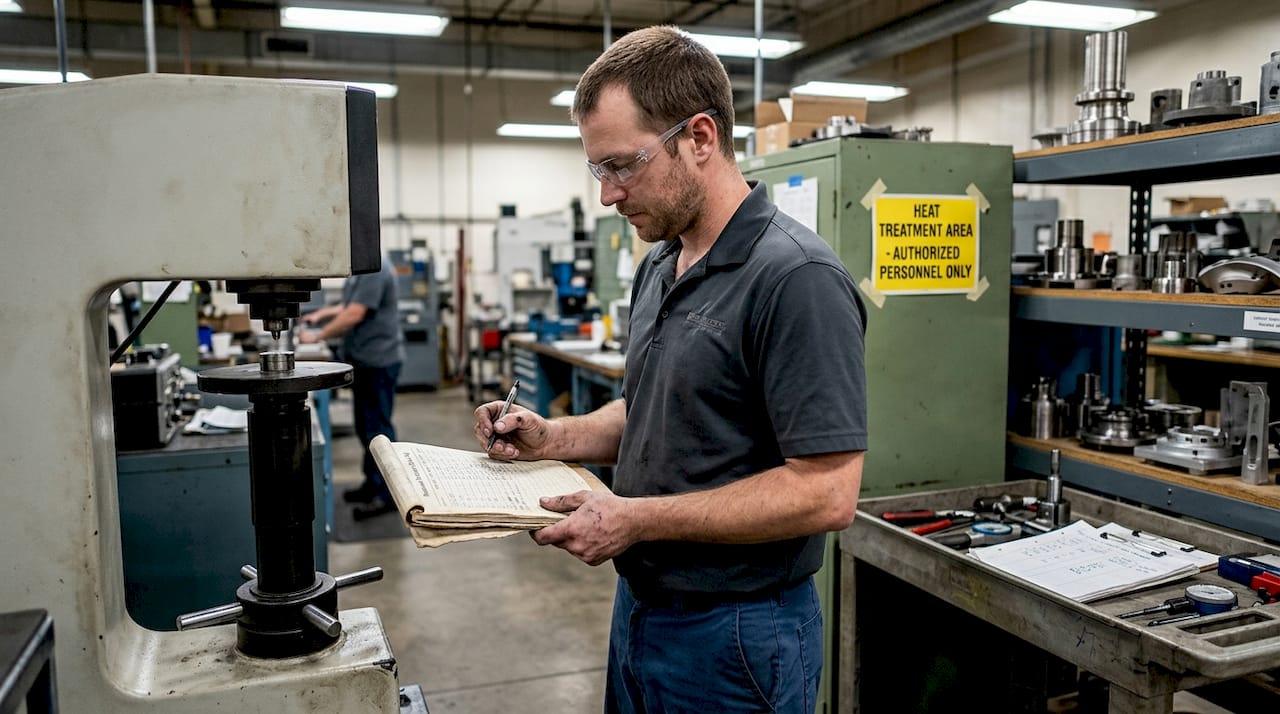
Pro Tip: Request Rockwell hardness testing data for all heat-treated components. Hardness values outside specification ranges indicate heat treatment problems that compromise part performance and service life.
Inspection technique selection balances thoroughput, cost, and measurement capability. Understanding each method’s strengths helps you specify appropriate verification for different features:
| Inspection Method | Best Applications | Limitations | Typical Cost |
|---|---|---|---|
| CMM measurement | Complex 3D geometries, tight tolerances | Slow for high volumes | High |
| Optical comparison | Surface profiles, thread forms | Limited to accessible features | Medium |
| Go/no-go gaging | High-volume production verification | Binary pass/fail only | Low |
| Functional testing | Assembly fit, operating performance | Doesn’t identify root causes | Medium |
Verification processes must align with your industry’s regulatory requirements. Aerospace applications require comprehensive FAI reports per AS9100 standards, documenting every characteristic on engineering drawings. Defense components need material certifications traceable to mill test reports, with heat treatment documentation showing time, temperature, and quench parameters. Firearm parts benefit from proof testing that validates function under actual firing conditions.
Establish clear acceptance criteria before production begins to avoid disputes over marginal parts. Define how you’ll handle dimensions near tolerance limits, whether you’ll accept cosmetic imperfections that don’t affect function, and what documentation you require for each shipment. These agreements prevent costly disagreements and ensure both parties understand expectations. Proper verification processes support achieving tight tolerances in firearm parts machining while maintaining efficient precision machining workflows.
Leveraging modularity and traceability in military and industrial procurement
Modern procurement strategies extend beyond individual part specifications to encompass system-level considerations. The Modular Open Systems Approach (MOSA) has transformed military hardware procurement by enabling easier upgrades, improved interoperability, and reduced lifecycle costs. Military procurement emphasizes MOSA for modularity, while OEMs prioritize traceability and urgent release capabilities. Understanding these strategic priorities helps you align sourcing decisions with broader organizational objectives.
MOSA principles influence precision parts sourcing in several ways. Components designed for modular systems must maintain consistent interfaces across product generations, enabling field upgrades without complete system replacement. This requirement demands tighter configuration control and more rigorous change management than traditional approaches. Suppliers must demonstrate capability to maintain dimensional consistency across production runs spanning multiple years.
Traceability systems provide the foundation for quality assurance and regulatory compliance. Complete traceability enables you to:
- Track material batches from mill certifications through finished parts
- Link inspection data to specific production lots for failure analysis
- Demonstrate compliance during regulatory audits
- Execute targeted recalls if defects are discovered
- Validate supplier claims about material sources and processing
OEMs face unique pressures around urgent part releases that bypass normal qualification cycles. Equipment failures in the field sometimes require emergency production of replacement components, compressing normal lead times from months to days. These situations demand suppliers with excess capacity, expedited processing capabilities, and quality systems robust enough to maintain standards under accelerated schedules.
“Traceability isn’t just about compliance. It’s your insurance policy when failures occur, enabling rapid root cause identification and targeted corrective actions instead of broad production holds.”
Balancing modularity and traceability requirements with cost pressures requires strategic supplier partnerships. Identify which components truly require full traceability versus those where simplified documentation suffices. Concentrate your most stringent requirements on safety-critical and high-reliability parts while relaxing controls on non-critical components. This risk-based approach optimizes costs without compromising essential quality standards.
Documentation systems must capture and preserve critical manufacturing data throughout product lifecycles. Establish clear requirements for what suppliers must document, how long records must be retained, and in what format data should be delivered. Digital systems enable more efficient searching and analysis compared to paper records, but require careful attention to data security and backup procedures. Your precision parts manufacturing quality systems should integrate seamlessly with supplier documentation to create complete audit trails.
Explore machining solutions to enhance your sourcing
Navigating precision parts sourcing challenges requires partners who understand the unique demands of aerospace, defense, and firearm manufacturing. Machining Technologies brings over three decades of experience producing complex components with the tight tolerances and rigorous documentation your applications demand. Our 70,000 square foot facility houses advanced CNC equipment, wire EDM capabilities, and automated inspection systems that ensure consistent quality across production runs.
Our expertise spans the full spectrum of precision parts manufacturing with comprehensive quality systems, from prototype development through high-volume production exceeding 20 million parts annually. We maintain the certifications and capabilities required for regulated industries, with proven precision machining workflows optimized for firearm components and specialized processes for defense industry applications. Explore our portfolio to discover how strategic partnerships accelerate your sourcing success while maintaining the quality and compliance standards your reputation depends on.
Frequently asked questions
What certifications should I verify when sourcing precision parts?
Verify ISO 9001 as the minimum baseline for any precision machining supplier, demonstrating basic quality management systems. Aerospace applications require AS9100 certification, which adds aviation-specific controls for safety-critical components. Defense and firearm parts mandate ITAR registration, which you can verify on the Directorate of Defense Trade Controls public list. Request current certificate copies and confirm registration status before sharing technical data to avoid compliance issues in precision parts manufacturing.
How do I prepare an effective RFQ for complex precision parts?
Include native 3D CAD files in STEP or IGES format along with 2D drawings featuring complete geometric dimensioning and tolerancing per ASME Y14.5 standards. Specify material grades with required certifications, surface finish requirements for each feature, and critical dimensions with tighter tolerance bands. Document inspection requirements including CMM reports and material certifications, plus annual volume projections and delivery expectations. This comprehensive approach eliminates ambiguity and enables accurate quotes for complex part manufacturing.
What testing should firearm parts undergo before full-scale production?
Perform at least 50 dry cycle test fits to identify dimensional issues and generation compatibility problems before committing to production volumes. Verify mil-spec material compatibility and confirm proper heat treatment through hardness testing, as inadequate processing causes premature fatigue and potential catastrophic failures. Conduct proof testing under actual firing conditions when possible to validate function under operational stresses. These verification steps ensure reliable firearm parts with appropriate tolerances before scaling to full production.
How long should I retain supplier qualification documentation?
Maintain supplier qualification records for the entire product lifecycle plus any regulatory retention periods, typically seven to ten years minimum for aerospace and defense applications. Documentation should include capability assessments, facility audit reports, trial order results with FAI data, and ongoing performance scorecards. This historical data proves invaluable during re-qualification cycles, supports regulatory audits, and enables rapid supplier comparison when sourcing new components. Digital document management systems simplify long-term retention while enabling efficient searching and retrieval.
What are the most common causes of precision parts sourcing failures?
Incomplete RFQ packages cause suppliers to make incorrect assumptions about specifications, resulting in parts that fail inspection and require costly rework. Inadequate supplier qualification leads to partnerships with manufacturers lacking necessary equipment or expertise to meet your requirements. Skipping trial orders before production commits you to high volumes before validating supplier capabilities. Poor material traceability creates compliance gaps that surface during audits. Finally, insufficient verification processes allow defects to multiply across production runs before detection, maximizing scrap costs and schedule impacts.
Recommended
- Machining Trends 2026: 40% Faster Lead Times + 50% Tool Life | Machining Technologies
- Why choose custom machining for aerospace and defense | Machining Technologies
- Machining in defense industry: precision and innovation | Machining Technologies
- Complex part manufacturing: precision strategies 2026 | Machining Technologies