

TL;DR:
- Precise documentation of technical and regulatory requirements is essential before selecting a firearm machining partner.
- Rigorous screening, verification, and ongoing performance tracking ensure supplier quality and process control.
- Managing special processes with validated procedures and full documentation is critical to prevent defects and ensure compliance.
Choosing the wrong contract machining partner for firearm components is not just an operational inconvenience. It can trigger production shutdowns, trigger regulatory scrutiny under ITAR, or result in costly recalls of noncompliant parts. Firearm OEMs operate in one of the most demanding manufacturing environments in existence, where tolerances measured in ten-thousandths of an inch and strict compliance requirements leave almost zero margin for error. This guide walks you through a proven, risk-reducing framework: from documenting your requirements and screening vendors, to managing special processes and tracking supplier performance over time.
Table of Contents
- Clarify your machining requirements and prerequisites
- Step-by-step process for screening and qualifying partners
- Managing special processes: controlling risk with effective oversight
- Track supplier performance: metrics and ongoing verification
- What most firearm OEMs get wrong in machining partner selection
- Unlock proven precision with the right machining partner
- Frequently asked questions
Key Takeaways
| Point | Details |
|---|---|
| Define requirements up front | Start supplier selection by detailing all technical, quality, and regulatory needs before contacting vendors. |
| Prioritize process validation | Give special attention to validating and revalidating suppliers’ process controls, especially for special processes. |
| Use measurable performance metrics | Monitor suppliers with objective quality, delivery, and audit metrics to ensure continued reliability. |
| Extend oversight to subcontractors | Qualification and validation must include any subcontractors handling special processes, not just main vendors. |
| Maintain ongoing verification | Sustaining high supplier performance requires regular reviews, audits, and ongoing communication. |
Clarify your machining requirements and prerequisites
With the stakes established, the next step is to lay a solid foundation by documenting exactly what you need from a machining partner. Skipping this step is one of the most common and costly mistakes firearm OEMs make. When your requirements live in someone’s head rather than a structured document, vendors quote against assumptions, and the gaps surface at the worst possible time.
Start by cataloging every firearm part machining methods and material specification relevant to your program. This includes part geometry, tolerances (expressed in actual values, not vague terms like “tight”), surface finish callouts, required materials such as 416 stainless steel or 7075 aluminum, and batch volumes. Don’t forget cycle time expectations and delivery frequency. These are the variables that separate a capable partner from a costly mistake.
Beyond technical specs, firearm manufacturing carries compliance requirements that most other industries don’t face. ITAR registration, serialization traceability, and documentation requirements for government contracts all need to be spelled out before your first vendor conversation.
Prerequisite checklist for firearm machining partner selection:
| Requirement category | What to document |
|---|---|
| Technical specifications | Tolerances, surface finish, material grade, part geometry |
| Quality system | AS9100, ISO 9001, or equivalent QMS certification |
| Compliance | ITAR registration, serialization requirements, export controls |
| Special processes | Heat treatment, coatings, plating, NDT validation |
| Supply chain visibility | Subcontractor list, approved supplier requirements |
| Documentation | FAI requirements, COC, material certs, process records |
| Capacity | Minimum/maximum batch volume, lead time, surge capacity |
For processes like heat treatment, coatings, and NDT, establish process control criteria and documentation requirements from the outset. You want these locked into your request for quotation before vendors respond, not negotiated away later under cost pressure.
- Define every technical and regulatory requirement in writing before contacting vendors
- Include finish codes, not just hardness or coating type
- Specify which processes require certified operators or accredited labs
- State your FAI (First Article Inspection) and PPAP expectations explicitly
- List all subcontractor approval requirements in the RFQ package
Pro Tip: Build a reusable requirements sheet template from your first project. Include all the fields above as mandatory inputs. You’ll cut RFQ preparation time in half on every future program and ensure no critical specification ever gets omitted.
Step-by-step process for screening and qualifying partners
Once requirements are clear, it’s time to move into action by systematically evaluating and screening potential partners. A rigorous screening process separates suppliers who can quote well from those who can actually deliver consistently at production volumes.
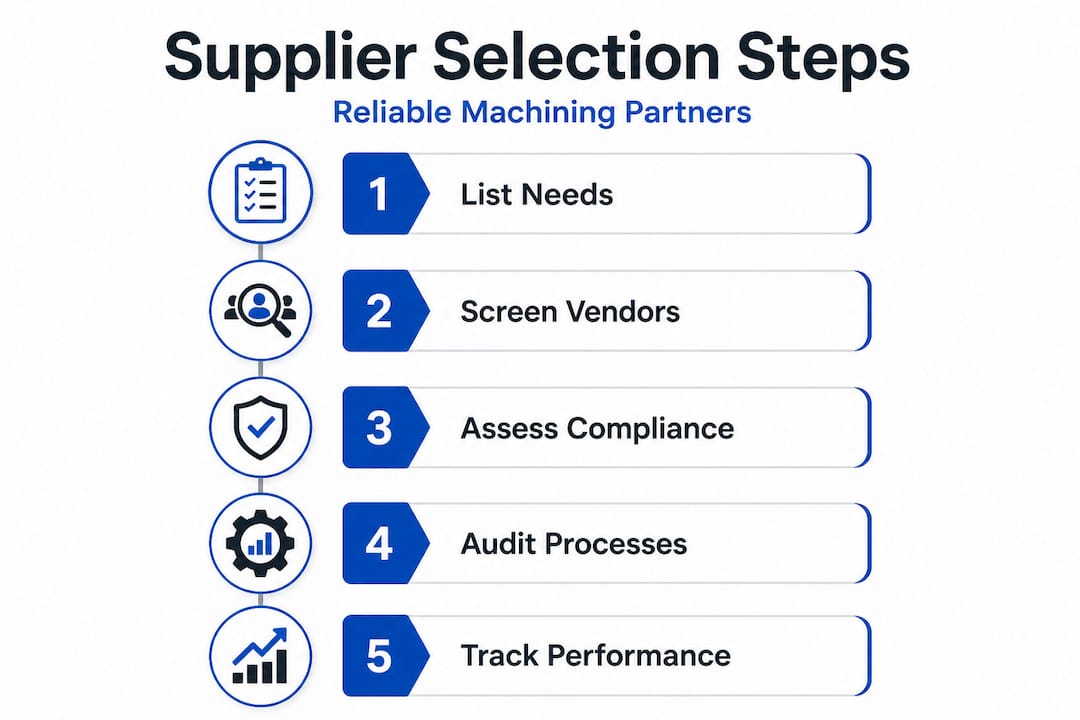
Follow this sequence to avoid common missteps:
- Build your initial long list. Research vendors through trade associations, industry referrals, and defense/firearm-specific supplier directories. Filter immediately for geographic proximity if ITAR compliance or rapid-response shipping is a factor.
- Verify baseline certifications. Confirm ISO 9001 or AS9100 certification status, ITAR registration, and any program-specific approvals. Don’t accept photocopies only; verify through the issuing registrar’s database.
- Request a capability statement. Ask for documented equipment lists, machine hours available, material processing capabilities, and evidence of experience in firearm or defense-grade work.
- Evaluate quality management systems. Review their QMS documentation including corrective action procedures, control plan methodology, and nonconformance handling. A paper QMS with no real-world bite is worse than useless.
- Dig into subcontractor control. Supplier qualification extends to all subcontractors handling special processes; validated and periodically revalidated process controls are mandatory. Ask specifically how their tier-two suppliers are approved and monitored.
- Conduct a site audit or request a virtual walkthrough. No amount of paperwork replaces seeing the floor, the equipment condition, and the housekeeping standards firsthand.
- Shortlist based on weighted criteria. Use a comparison table to rank finalists objectively, not based on the smoothest sales conversation.
Review your precision machining workflow requirements before scoring vendors. The supplier’s internal workflow needs to match the complexity of your parts, not just their general capabilities.
Vendor comparison matrix for firearm machining partners:
| Evaluation criteria | Weight | Vendor A | Vendor B | Vendor C |
|---|---|---|---|---|
| Certification status | High | AS9100 | ISO 9001 | AS9100 |
| ITAR compliance | High | Verified | Pending | Verified |
| Special process controls | High | Documented | Partial | Documented |
| Subcontractor oversight | Medium | Strong | Weak | Moderate |
| On-time delivery history | High | 97% | 88% | 94% |
| Capacity for surge | Medium | Yes | Limited | Yes |
| Corrective action response | Medium | Avg 5 days | Avg 14 days | Avg 7 days |
For a deeper guide on navigating selecting the right machining partner, use scoring models that weight compliance and process validation above price. Firearm programs cannot absorb the downstream cost of cheap parts that fail compliance.
Pro Tip: When reviewing audit findings from a supplier’s previous customers, don’t just count the findings. Investigate whether root cause corrective actions were effective and whether the same category of nonconformance recurred. Recurring findings in the same area signal a systemic problem, not a one-time lapse.
Managing special processes: controlling risk with effective oversight
While screening partners, you’ll encounter special processes requiring extra scrutiny. Understanding how to manage these processes effectively is what separates firearm OEMs who run smooth supply chains from those who get burned by problems that only surface in the field.
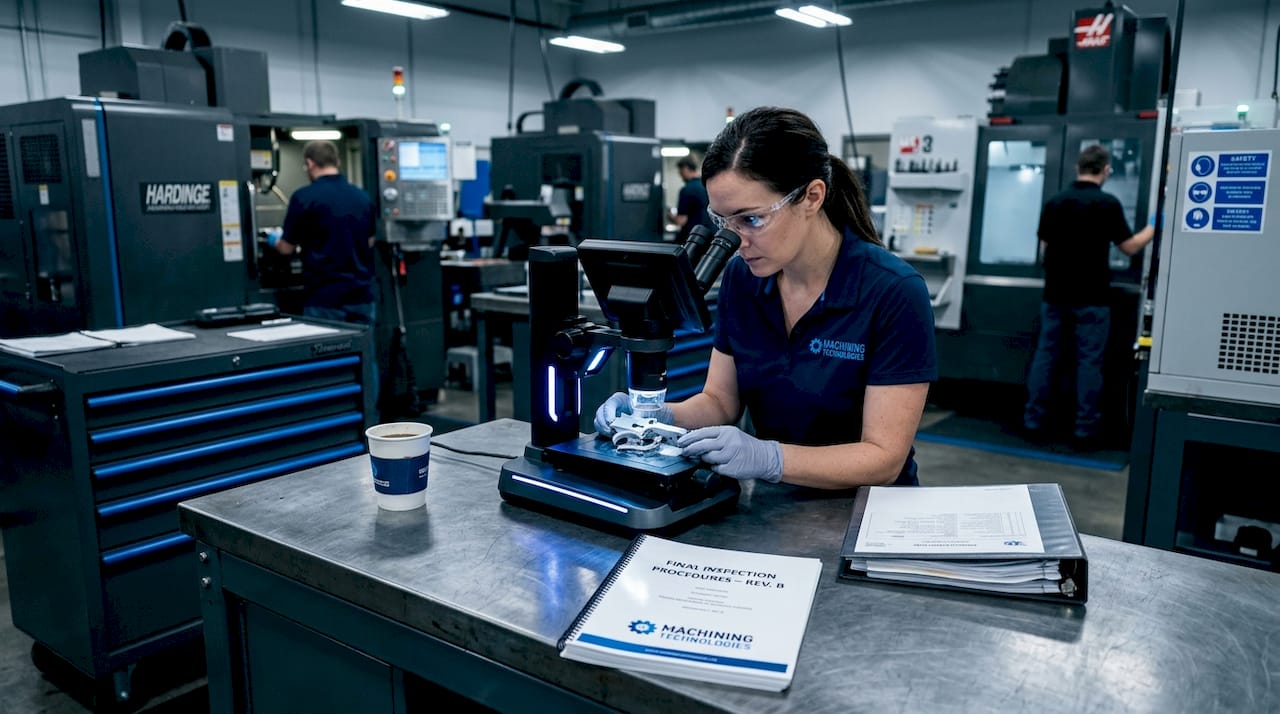
A special process is any manufacturing operation where the output cannot be fully verified by subsequent inspection alone. In firearm manufacturing, this includes heat treatment for hardening critical components, chemical and physical coatings like Parkerizing or nitride finishing, electroplating, nondestructive testing (NDT), and welding where applicable. The reason these processes require special attention is straightforward: a barrel that looks dimensionally perfect can still fail prematurely if the heat treatment was improperly conducted.
Qualification must extend to subcontracted special processes, and validation and monitoring are needed because inspection alone isn’t enough. That means your due diligence on these processes can’t stop at your prime supplier. If they outsource nitriding or Cerakote application, you need documented evidence that the sub-tier shop is also qualified.
For processes where inspection is insufficient, require validation and revalidation steps. Do not assume final checks will catch all issues. The damage is done before the part ever reaches your inspection department.
Best practices for managing special processes in your supply chain:
- Require documented process qualification records for every special process, not just a statement of capability
- Specify that operators performing special processes must hold documented training and qualification records
- Build revalidation intervals into your supplier agreements, typically annual or after any major equipment change
- Demand batch records and process parameters be retained with each lot, tied to your part traceability system
- Conduct periodic surprise audits or require third-party audits of special process subcontractors
- Flag any change in equipment, materials, or personnel at special process shops as a change notification event requiring your approval
Managing subcontract machining risks within your special processes tier is not optional. A supplier who cannot provide process parameter records for a specific heat treat lot has a documentation problem that may indicate a process control problem. Treat missing records as a red flag, not a paperwork inconvenience.
The vendors who handle this well will already have these systems in place. They’ll show you process travelers, signed operator qualification cards, and calibrated equipment records without being asked twice. That level of preparedness is a signal you’ve found a mature supplier.
Track supplier performance: metrics and ongoing verification
Once selected, continuous oversight ensures supplier performance remains high and issues are addressed before they escalate. A supplier who delivered perfectly on the first five purchase orders can still develop problems. Equipment ages, operators change, and volume pressure leads to shortcuts. Your performance tracking system is what catches drift before it becomes a crisis.
Quality partnerships are measured, not just promised. Define your key metrics at contract award and make them part of the supplier agreement, not an afterthought.
Core supplier performance metrics for firearm machining:
| Metric | Definition | Target threshold |
|---|---|---|
| Supplier defect rate | Defective parts per million (PPM) | Under 500 PPM |
| On-time delivery rate | Shipments received on or before due date | 95% or higher |
| Nonconformance count | Number of NCRs issued per quarter | Trending down |
| Audit findings count | Findings per audit cycle | Under 3 major findings |
| CAPA closure time | Days from NCR to verified corrective action | Under 15 business days |
| Recurrence rate | Repeat nonconformances in the same category | Zero tolerance |
| Documentation compliance | Certs, COC, and traveler accuracy | 100% required |
To make this system work in practice, follow a structured review cycle:
- Collect data in real time. Log every incoming inspection result, rejected lot, and late shipment in your supplier performance system immediately. Delayed logging creates inaccurate histories.
- Review monthly at the operational level. Share a brief scorecard with your supplier contact showing their current standing. Surprises at quarterly reviews serve nobody.
- Conduct formal quarterly business reviews. Go beyond numbers. Discuss upcoming program changes, capacity needs, and improvement initiatives. The relationship should be collaborative, not purely transactional.
- Respond to negative trends immediately. When a metric trends in the wrong direction for two consecutive periods, trigger a formal corrective action request before it hits your threshold. Early intervention is far cheaper than crisis management.
- Reward strong performance. Share preferred supplier status, extended contracts, or increased volume with suppliers who consistently perform. Incentive alignment is a more powerful tool than penalties alone.
Strong firearms part quality assurance depends on this kind of structured tracking. Your suppliers will perform to the level you measure them at. Vague expectations and infrequent feedback create vague results.
What most firearm OEMs get wrong in machining partner selection
After years of working with firearm OEMs at every scale, a pattern emerges. The companies that struggle with supplier performance almost always made the same early mistakes, and they rarely trace the problem back to the right root cause.
The biggest blind spot is underestimating the downstream risk hidden in inadequate process oversight. Decision makers see a vendor with the right certifications, a clean facility, and a competitive price and check the box. What they don’t examine carefully enough is the tier below that vendor: who does the heat treatment, who applies the coating, and what process records actually travel with each lot. This is where quality escapes are born.
The second mistake is allowing price pressure to override process rigor. The cheapest proposal almost always signals gaps somewhere: in operator qualification, in documentation controls, or in equipment maintenance. A 12% lower unit cost is entirely meaningless if it triggers a quality hold that costs six figures to resolve. We’ve seen it happen. The math never works in favor of the low bidder who can’t control their special processes.
Here’s an opinion that’s worth sitting with: the best long-term machining partners don’t wait for you to ask about process validation. They volunteer it. They bring documentation to the first meeting. They encourage you to measure their performance because they know their systems will hold up to scrutiny. A supplier who becomes defensive when asked for process records is telling you something important.
When evaluating candidates, look at their engineering for accuracy and compliance approach as a cultural indicator, not just a technical checklist. The mindset behind the documentation matters as much as the documentation itself.
The firearm OEMs who get supplier selection right treat it as a strategic function, not a procurement task. They build relationships with two or three deeply qualified partners rather than chasing the lowest quote across ten unfamiliar vendors. That concentration of trust, backed by rigorous measurement, produces the consistency that high-volume firearm production demands.
Unlock proven precision with the right machining partner
If you’re ready to implement a bulletproof machining partner selection process, Machining Technologies is built for exactly this kind of demand. Since 1985, we’ve served firearm OEMs and defense manufacturers who need more than capability: they need accountability, documented process controls, and the throughput to support high-volume programs without sacrificing precision.
Our 70,000 square foot facility in Webster, Massachusetts runs Hydromat systems, CNC milling, turning, and wire EDM with the capacity to produce over 20 million parts annually. Our precision machining for firearms programs are backed by rigorous quality systems and full documentation at every stage. Whether you’re sourcing a prototype run or scaling to full production, explore the contract machining benefits we deliver for firearm OEMs who can’t afford production uncertainty. See what sets our precision parts manufacturing capability apart and take the first step toward a supply chain you can count on.
Frequently asked questions
What’s the most important factor when selecting a firearm machining partner?
Beyond cost, the most important factor is validated process control, especially for special processes like heat treatment and coatings that can’t be fully verified by inspection alone.
How can I ensure ongoing supplier reliability?
Track supplier performance using clear quality and delivery metrics and conduct regular audits; metric-based tracking benchmarks reliability over time and surfaces problems before they escalate into production disruptions.
What are ‘special processes’ in firearm machining?
Special processes are operations like heat treatment, coatings, or nondestructive testing where the output cannot be fully verified by later inspection and therefore require rigorous upfront validation and ongoing monitoring.
How do I assess a supplier’s process validation methods?
Request documented procedures, look for evidence of periodic revalidation schedules, and confirm that operators performing special processes hold current qualification records.
What supplier quality metrics should I monitor?
Defect rates, on-time delivery, audit findings, CAPA closure time, and nonconformance recurrence rates are the key metrics that together give you an accurate, complete picture of supplier reliability.
Recommended
- Firearm parts machining: ±0.001″ tolerance ensures reliability | Machining Technologies
- Master Precision Machining Workflow for Firearms Components | Machining Technologies
- Precision machining: engineering firearms for accuracy & compliance | Machining Technologies
- How to Select the Right Machining Partner for OEM Success | Machining Technologies