

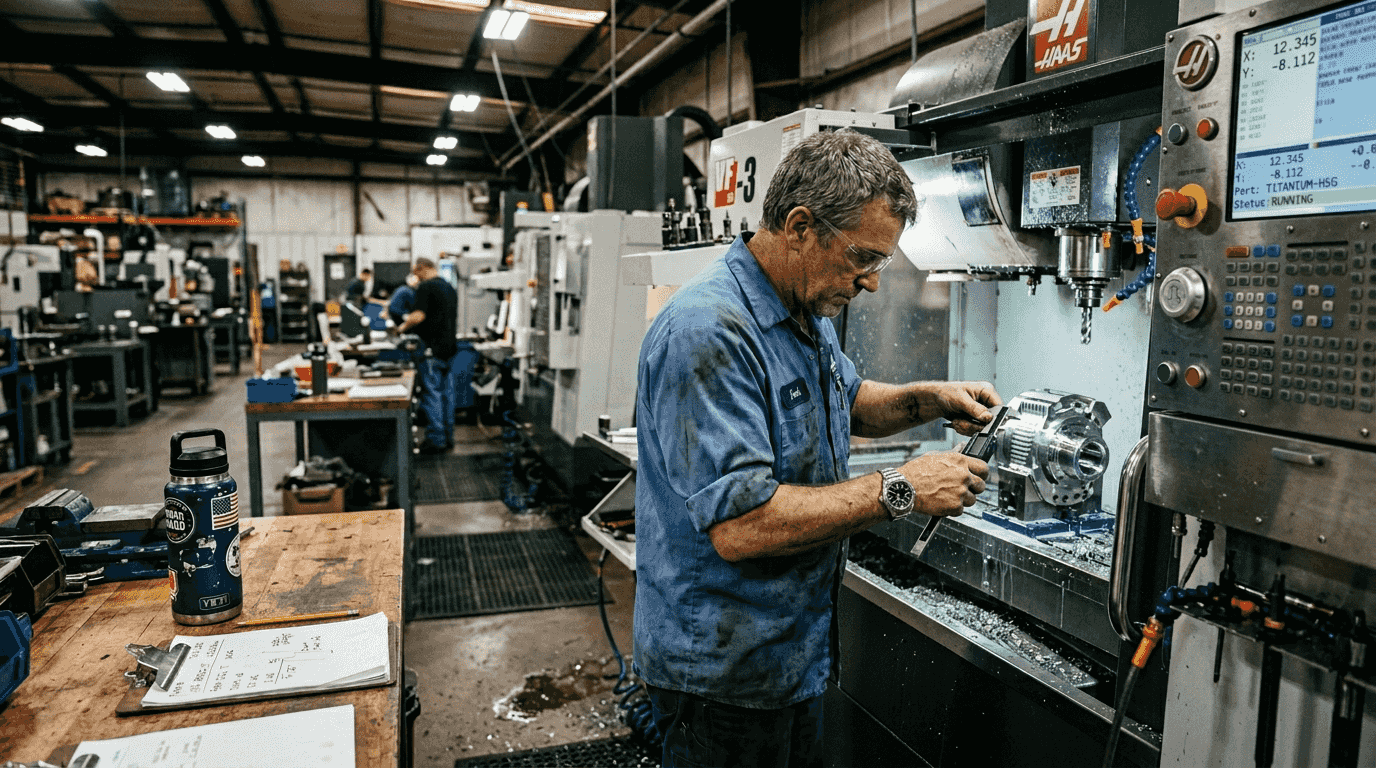
Machinability is one of the most misunderstood factors in precision manufacturing, yet it directly determines your production efficiency, tooling costs, and part quality. Many engineers focus solely on material strength or thermal properties while overlooking how easily a material machines, leading to unexpected tool wear, longer cycle times, and quality issues. This guide clarifies what machinability truly means, compares how different materials perform under cutting conditions, and provides actionable strategies to optimize your machining processes for better outcomes in 2026 and beyond.
Table of Contents
- What Machinability Means And Why It Matters In Precision Manufacturing
- How Different Materials Rank In Machinability: Metals, Alloys, And Composites
- Techniques And Strategies To Improve Machinability For Challenging Materials
- Real-World Examples: Machining Optimization In High-Precision Manufacturing
- Optimize Your Machining Processes With Expert Precision Manufacturing Services
- Frequently Asked Questions
Key takeaways
| Point | Details |
|---|---|
| Machinability impacts costs | Poor machinability increases tool wear rates and extends production cycles significantly |
| Material selection matters | Metals and alloys vary dramatically in cutting performance from free-machining steels to challenging titanium |
| Process optimization works | Adjusting cutting parameters, tooling, and automation can overcome machinability challenges |
| Real results proven | Case studies show 40% faster lead times and 50% longer tool life with machinability-focused strategies |
What machinability means and why it matters in precision manufacturing
Machinability measures how easily a material can be cut, shaped, and finished to meet specified tolerances and surface requirements. Unlike simple hardness ratings, machinability encompasses multiple performance factors that directly affect your bottom line. Understanding these factors helps you predict production costs, select appropriate tooling, and set realistic lead times for precision components.
The key factors defining machinability include tool wear rate, which determines how frequently you replace cutting tools and impacts per-part costs. Cutting forces matter because excessive forces cause deflection, vibration, and dimensional errors in precision work. Surface finish quality affects whether parts meet specifications without secondary operations. Chip formation behavior influences whether chips evacuate cleanly or cause problems like built-up edge or work hardening. Dimensional stability during cutting determines if parts hold tolerances as material is removed.
These factors combine to create measurable impacts on manufacturing efficiency. Materials with poor machinability require slower cutting speeds, more frequent tool changes, and additional finishing operations. The cumulative effect significantly increases production time and cost per part. Conversely, selecting materials with good machinability where engineering requirements allow can reduce manufacturing costs by 20 to 30 percent while improving delivery times.
Machinability measurement criteria include:
- Tool life in minutes of cutting time before replacement
- Surface roughness values in microinches or Ra measurements
- Cutting force requirements in pounds or newtons
- Maximum achievable material removal rates
- Power consumption during machining operations
- Chip formation characteristics and evacuation behavior
Machining trends in 2026 demonstrate that optimizing for machinability delivers 40% faster lead times and 50% improvements in tool life, translating to substantial cost savings and competitive advantages for manufacturers who prioritize these factors in material and process selection.
The relationship between machinability and precision manufacturing becomes especially critical when producing components with tight tolerances. Poor machinability materials generate more heat, causing thermal expansion that makes holding dimensions difficult. They also produce inconsistent cutting forces that lead to vibration and chatter, degrading surface finish and dimensional accuracy. For high-precision work, machinability often becomes as important as the material’s mechanical properties in determining manufacturing success.
How different materials rank in machinability: metals, alloys, and composites
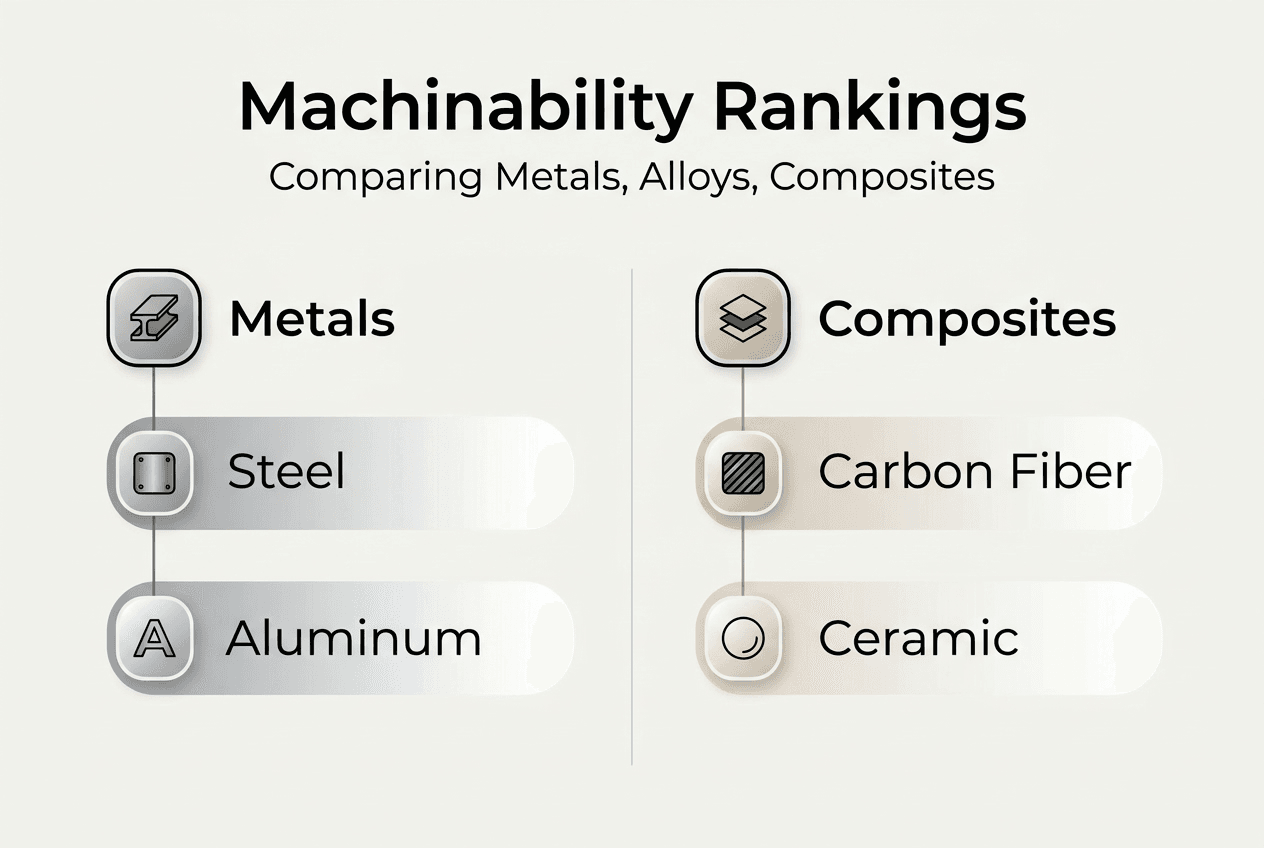
Material machinability varies enormously across the spectrum of metals, alloys, and composites used in precision manufacturing. Several fundamental properties drive these differences. Material hardness directly correlates with cutting difficulty, as harder materials require more force and generate more tool wear. Microstructure matters because fine-grained materials typically machine better than coarse-grained ones, and homogeneous structures outperform materials with hard inclusions or phases. Thermal conductivity affects how heat dissipates during cutting, with poor conductors like titanium and stainless steel concentrating heat at the tool edge.
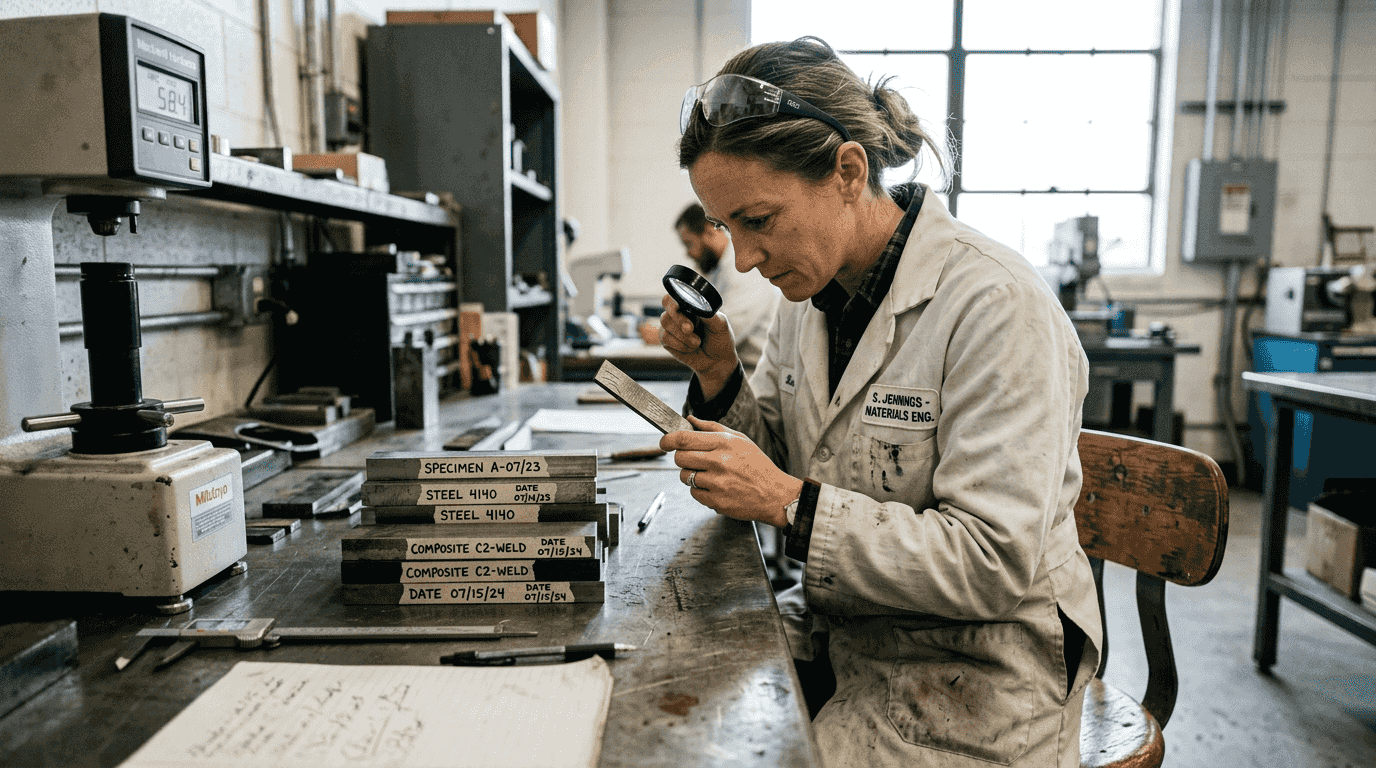
Work hardening tendency determines whether materials become progressively harder during cutting, making subsequent passes more difficult. Chemical reactivity influences whether materials weld to cutting tools or form protective oxide layers. Ductility affects chip formation, with very ductile materials producing long stringy chips that complicate machining, while brittle materials create short chips that evacuate easily.
| Material Category | Machinability Rating | Key Characteristics | Typical Applications |
|---|---|---|---|
| Free-machining steels | Excellent (100% baseline) | Sulfur or lead additions, easy chip breaking | High-volume production parts, fasteners |
| Aluminum alloys 6061, 2024 | Very good (200-300%) | High thermal conductivity, low cutting forces | Aerospace components, enclosures |
| Carbon steels | Good (60-80%) | Predictable behavior, moderate tool wear | General mechanical parts, shafts |
| Stainless steels 304, 316 | Fair (40-60%) | Work hardening, poor thermal conductivity | Corrosion-resistant components, medical devices |
| Tool steels | Fair to poor (30-50%) | High hardness when heat treated | Dies, molds, wear-resistant parts |
| Titanium alloys | Poor (20-30%) | Low thermal conductivity, high reactivity | Aerospace, defense, medical implants |
| Nickel superalloys | Very poor (10-20%) | Extreme work hardening, abrasive carbides | Turbine components, high-temperature applications |
| Fiber-reinforced composites | Variable | Abrasive fibers, delamination risks | Aerospace structures, sporting goods |
Defense industry machining applications frequently require titanium alloys despite their poor machinability because strength-to-weight ratios and corrosion resistance outweigh the manufacturing challenges. Understanding these tradeoffs helps procurement managers make informed decisions balancing material performance against production costs.
Selecting materials based on machinability involves weighing multiple factors:
- Performance requirements may mandate difficult materials despite machining challenges
- Production volume affects whether machinability optimization justifies material changes
- Tooling capabilities and machine power limit options for very hard materials
- Secondary operations costs can shift the total cost equation
- Material availability and lead times influence practical choices
- Regulatory or customer specifications may restrict material substitutions
Emerging composite materials present unique machinability challenges. Carbon fiber reinforced polymers combine soft matrix materials with extremely abrasive fibers that rapidly wear conventional tools. Metal matrix composites offer excellent properties but contain hard ceramic particles that damage cutting edges. These materials require specialized tooling strategies including diamond-coated or polycrystalline diamond tools, making machinability assessment more complex than traditional metals.
Techniques and strategies to improve machinability for challenging materials
When engineering requirements demand materials with poor machinability, process optimization becomes essential for maintaining efficiency and quality. Multiple strategies exist to mitigate machinability challenges through intelligent adjustment of cutting parameters, tooling selection, and process monitoring.
Cutting parameters fundamentally affect machining outcomes. Cutting speed determines heat generation and tool wear rates, with optimal speeds balancing productivity against tool life. Feed rate influences chip thickness and cutting forces, requiring careful tuning to avoid work hardening or excessive deflection. Depth of cut affects stability and chip formation, with lighter cuts sometimes producing better results in difficult materials despite longer cycle times. Coolant application manages thermal effects, with high-pressure coolant delivery improving chip evacuation and reducing built-up edge formation.
Step-by-step strategies to optimize machining of challenging materials:
- Start with conservative parameters below manufacturer recommendations to establish baseline performance and avoid catastrophic tool failure
- Gradually increase material removal rates while monitoring tool wear, surface finish, and dimensional accuracy to find the optimal window
- Implement climb milling rather than conventional milling to reduce work hardening in materials like stainless steel and nickel alloys
- Use peck drilling or chip-breaking cycles for deep holes to prevent chip packing and tool breakage
- Apply through-tool coolant delivery to improve chip evacuation and reduce thermal damage in deep or enclosed cuts
- Schedule regular tool changes based on actual wear monitoring rather than waiting for failure to prevent quality degradation
Tooling innovations dramatically expand capabilities with difficult materials. Modern coatings including titanium aluminum nitride, aluminum titanium nitride, and diamond-like carbon reduce friction and increase hot hardness, extending tool life in abrasive or high-temperature cutting. Advanced geometries with variable helix angles and unequal spacing reduce chatter and improve stability. Specialized grades with fine carbide grain structures and tough binders resist chipping in interrupted cuts. Ceramic and cubic boron nitride tools enable machining of hardened materials that would destroy carbide tools.
Automation in machining processes enables sophisticated approaches to machinability challenges through real-time monitoring and adaptive control. Modern CNC systems adjust parameters automatically based on spindle load, vibration sensors, and acoustic emission monitoring. This dynamic optimization maintains ideal cutting conditions as tool wear progresses or material properties vary, maximizing both productivity and tool life.
Pro Tip: The most overlooked machinability improvement involves simply ensuring tools are sharp and properly maintained. Dull tools exponentially increase cutting forces and heat generation, turning moderately difficult materials into nearly impossible ones. Establish strict tool life limits and inspection protocols rather than pushing tools to failure, and you will see immediate improvements in surface finish, dimensional accuracy, and overall productivity.
Toolpath strategies also influence machinability outcomes. Trochoidal milling uses circular tool motions to maintain constant engagement and reduce cutting forces in difficult materials. High-speed machining with light depths of cut can outperform conventional approaches in some materials by staying below work hardening thresholds. Avoiding sudden direction changes and maintaining consistent chip loads prevents shock loading that damages tools and workpieces.
Real-world examples: machining optimization in high-precision manufacturing
Actual manufacturing cases demonstrate the tangible benefits of applying machinability principles systematically. These examples show measurable improvements in productivity, quality, and cost when engineers and procurement managers prioritize machinability in their decision-making processes.
A defense contractor producing titanium structural components faced severe tool wear and long cycle times using conventional approaches. By switching to a combination of high-pressure coolant delivery, reduced cutting speeds with optimized feed rates, and modern coated carbide tools designed specifically for titanium, they achieved a 35% reduction in cycle time despite the slower speeds. Tool life increased by 60%, more than offsetting the longer cutting time per part. Surface finish improved enough to eliminate a secondary grinding operation, saving additional time and cost.
An automotive supplier manufacturing stainless steel hydraulic components struggled with work hardening and poor surface finish. Analysis revealed their conventional milling approach caused severe work hardening in the first pass, making subsequent passes progressively more difficult. Switching to climb milling with rigid toolholding and optimized parameters eliminated work hardening issues. Implementing through-spindle coolant improved chip evacuation. These changes reduced cycle time by 28% and improved surface finish consistency, reducing scrap rates from 8% to under 2%.
| Metric | Before Optimization | After Optimization | Improvement |
|---|---|---|---|
| Average cycle time (minutes) | 47 | 29 | 38% reduction |
| Tool life per edge (parts) | 12 | 42 | 250% increase |
| Surface finish Ra (microinches) | 85 | 32 | 62% improvement |
| Scrap rate (percent) | 6.5 | 1.8 | 72% reduction |
| Cost per part (dollars) | 127 | 84 | 34% savings |
A medical device manufacturer producing small precision components from difficult stainless steel alloys implemented a comprehensive machinability improvement program. They invested in high-performance tooling with advanced coatings, optimized all cutting parameters through systematic testing, and trained operators on proper technique. The program also included real-time monitoring to detect tool wear before quality suffered. Results included 40% faster production, 50% longer tool life, and quality improvements that reduced inspection failures by 80%.
Key lessons learned from these machinability optimization projects:
- Systematic testing beats guesswork every time, with documented parameter optimization delivering consistent results
- Tooling investment pays for itself quickly through extended life and improved productivity
- Operator training and engagement ensures techniques are applied consistently across shifts
- Monitoring and feedback loops prevent backsliding and enable continuous improvement
- Machinability considerations should influence material selection discussions early in design phases
- Maximizing quality and throughput requires viewing machinability as a system-level factor rather than isolated parameters
These examples demonstrate that machinability optimization is not theoretical but delivers measurable financial returns. The initial investment in better tooling, process development, and training typically pays back within months through reduced cycle times, lower tooling costs, improved quality, and decreased scrap. For high-volume production, even small percentage improvements compound into substantial annual savings.
Optimize your machining processes with expert precision manufacturing services
Applying machinability principles effectively requires both knowledge and experience across diverse materials and applications. Machining Technologies LLC brings over 35 years of precision manufacturing expertise to help you overcome machinability challenges and optimize production efficiency. Our 70,000 square foot facility houses advanced CNC equipment, automated Hydromat systems, and wire EDM capabilities specifically configured for high-precision, high-volume production.
We specialize in complex part manufacturing where machinability optimization makes the difference between profitable production and costly struggles. Our engineering team works with you to select optimal materials, develop efficient processes, and implement the tooling strategies that deliver superior results. Whether you need prototype development or full-scale production runs, our comprehensive machining services apply the machinability insights covered in this guide to your specific requirements. Contact us to discuss how our precision parts manufacturing capabilities can improve your production outcomes in 2026.
Frequently asked questions
What factors most affect the machinability of metals?
Material hardness is the primary factor, with harder metals requiring more cutting force and causing faster tool wear. Microstructure matters significantly because fine, uniform grain structures machine more predictably than coarse or mixed-phase materials. Thermal conductivity determines how effectively heat dissipates from the cutting zone, with poor conductors like titanium and stainless steel concentrating damaging heat at the tool edge. Work hardening tendency affects whether materials become progressively harder during cutting, making each pass more difficult. Understanding these factors in metal machining helps predict performance and select appropriate strategies.
How can tooling selection improve machinability in difficult materials?
Modern tool coatings like titanium aluminum nitride reduce friction and increase hot hardness, extending tool life in abrasive or high-temperature applications by 200 to 400 percent. Specialized geometries with chip breakers and variable helix angles control chip formation and reduce vibration that damages surface finish. Carbide grades engineered for specific materials balance hardness and toughness to resist both wear and chipping. Tooling and automation improvements work synergistically, with monitoring systems detecting when tools need replacement before quality suffers. Investing in premium tooling typically pays for itself through extended life and improved productivity.
What machining parameters should be adjusted to optimize material machinability?
Cutting speed has the most dramatic effect, with optimal speeds balancing productivity against tool wear and heat generation. Feed rate influences chip thickness and cutting forces, requiring adjustment based on material work hardening characteristics and desired surface finish. Depth of cut affects stability, with lighter cuts sometimes producing better results in difficult materials despite longer total cycle times. Coolant application and delivery method dramatically impact thermal management and chip evacuation. Key machining parameters should be optimized systematically through testing rather than relying solely on handbook values, as actual results vary with specific machine, tooling, and workpiece configurations.