
TL;DR:
- Integrated CAD/CAM systems create a seamless digital thread from design to finished part, reducing errors and cycle times. Effective implementation depends on high-quality data, skilled programmers, and a process-oriented approach rather than solely on software capability. Emerging trends like AI-driven optimization and hybrid manufacturing are reshaping machining workflows for greater efficiency by 2026.
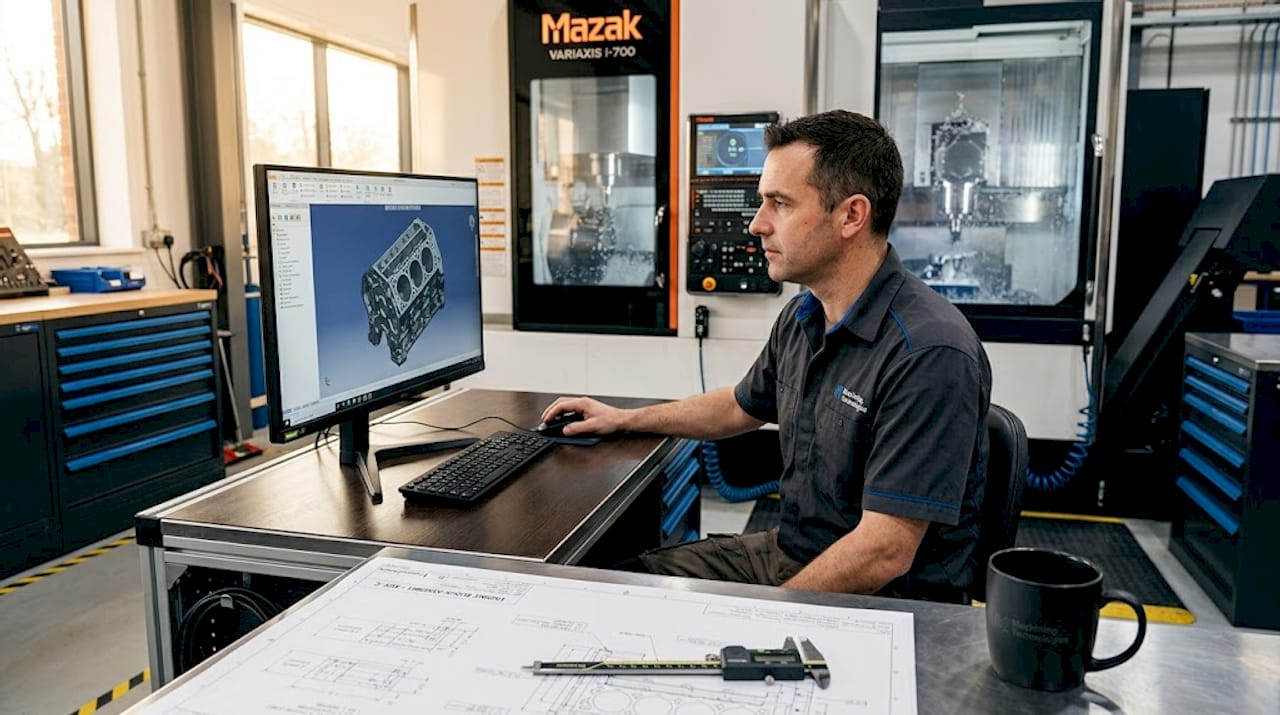
The role of CAD/CAM in machining extends far beyond generating toolpaths or producing 3D models in isolation. When properly integrated, CAD and CAM systems form a continuous digital thread from design intent to finished part, eliminating the translation errors and manual steps that drive up cycle times and scrap rates. For manufacturing engineers evaluating where precision breaks down between design and production, understanding this integration is where real efficiency gains are found. This guide covers how CAD/CAM systems operate together, the measurable benefits, emerging trends for 2026, and the implementation pitfalls that catch even experienced shops off guard.
Table of Contents
- Key takeaways
- The role of CAD/CAM in machining workflows
- Benefits of CAD/CAM integration in machining
- Advanced CAD/CAM trends shaping machining in 2026
- Implementation pitfalls that kill CAD/CAM performance
- My perspective on getting real value from CAD/CAM
- How Machiningtechllc puts CAD/CAM to work for your parts
- FAQ
Key takeaways
| Point | Details |
|---|---|
| CAD and CAM are interdependent | CAD creates the geometry; CAM translates it into machine instructions. Neither delivers full value alone. |
| Simulation prevents costly errors | Virtual toolpath simulation in CAM software catches collisions and validates cuts before any material is touched. |
| AI is changing CAM programming | Reinforcement learning enables dynamic, closed-loop CNC control, moving beyond static G-code generation. |
| Data discipline determines outcomes | Model-based definition as a single authoritative data source eliminates the fragmentation that causes rework. |
| Skills gaps limit software value | The largest obstacle to CAD/CAM maturity is not software capability. It is trained people and clean data. |
The role of CAD/CAM in machining workflows
To understand what integrated CAD/CAM actually does in a machining environment, you need to separate the two systems and then watch how they hand off to each other.
CAD (Computer-Aided Design) creates the geometric model. In precision machining, that means parametric 3D solid models capturing every feature, tolerance, and surface finish requirement. These are not sketches. They are mathematically defined representations of the final part, and they carry manufacturing semantics when built correctly.
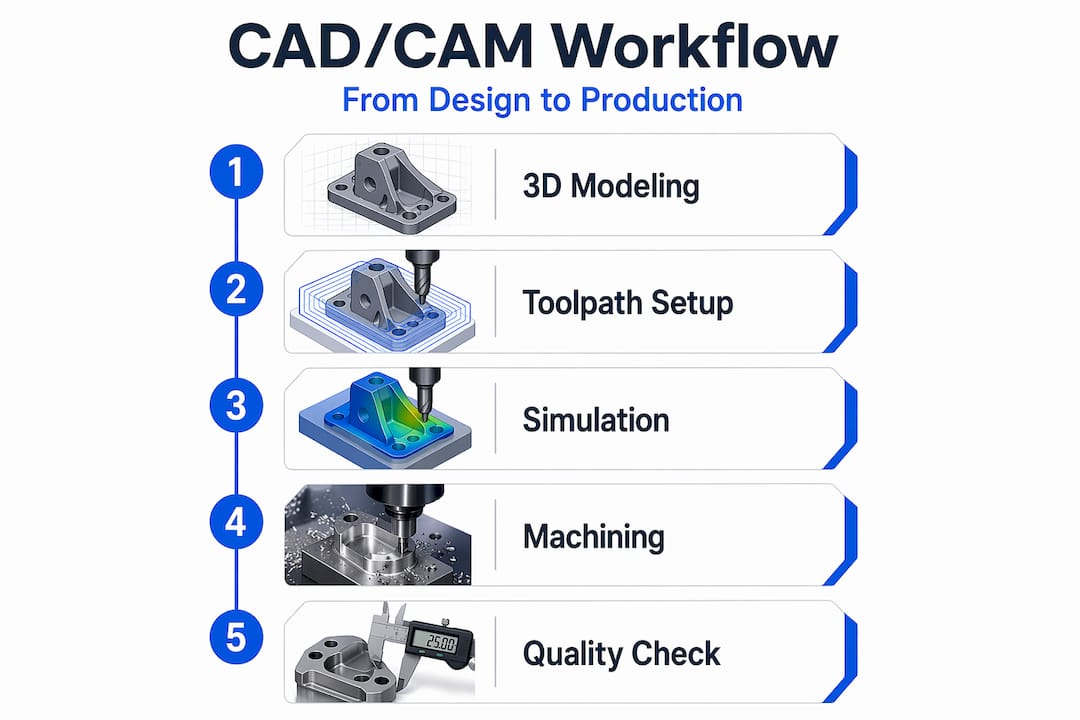
CAM (Computer-Aided Manufacturing) takes that model and generates the machine instructions. It determines tool selection, cutting sequence, feed rates, spindle speeds, and the specific toolpath geometry the CNC machine will follow. The CAM software output drives the G-code that runs on the machine controller.
Where the integration becomes genuinely powerful is in these specific capabilities:
- 5-axis milling support: Modern CAD/CAM workflows incorporate 5-axis milling with virtual simulation to prevent collisions and preserve tool life on complex geometry that would otherwise require multiple setups.
- Hybrid additive-subtractive machining: CAM systems now manage workflows where additive processes deposit material and CNC operations machine it to final dimension, tracking material allowances throughout.
- Virtual simulation and collision detection: Before a single chip is cut, CAM software runs a full kinematic simulation of the machine, tooling, fixtures, and workpiece to identify interference, eliminate gouging, and validate the process plan.
Pro Tip: Never run a new CAM program on an expensive workpiece without first running the full machine simulation with the actual post-processor output. The simulation must match the exact machine configuration on the floor, not a generic template.
| CAD function | CAM function | Integration output |
|---|---|---|
| 3D solid modeling | Toolpath generation | G-code for CNC machine |
| Tolerance and GD&T data | Feed/speed calculation | Verified, collision-free programs |
| Feature recognition | Fixture and clamping planning | Reduced setup time |
| Design revision management | Program version control | Single authoritative data source |
This handoff is where precision part design for high-volume production either works cleanly or falls apart, depending on data quality upstream.
Benefits of CAD/CAM integration in machining
The CAD CAM benefits in machining are well documented, but most summaries stop at “faster” and “more accurate” without explaining the mechanism. Here is what the gains actually look like in practice.
Accuracy and repeatability at scale. When a CAD model drives the CAM program directly, dimensional variation from manual programming interpretation is removed. For a shop producing aerospace brackets to ±0.001-inch tolerances, that matters on part 1 and part 10,000. CAD/CAM integration improves product development speed, quality, and manufacturability assessment across the entire production lifecycle.
Simulation and digital twin use. Shops running digital twins of their machining cells can test process changes virtually before touching the physical setup. That means a new fixture design or revised toolpath gets validated in software, not discovered as a collision at 4,000 RPM. The impact of CAD/CAM on manufacturing quality shows up directly in scrap reduction.
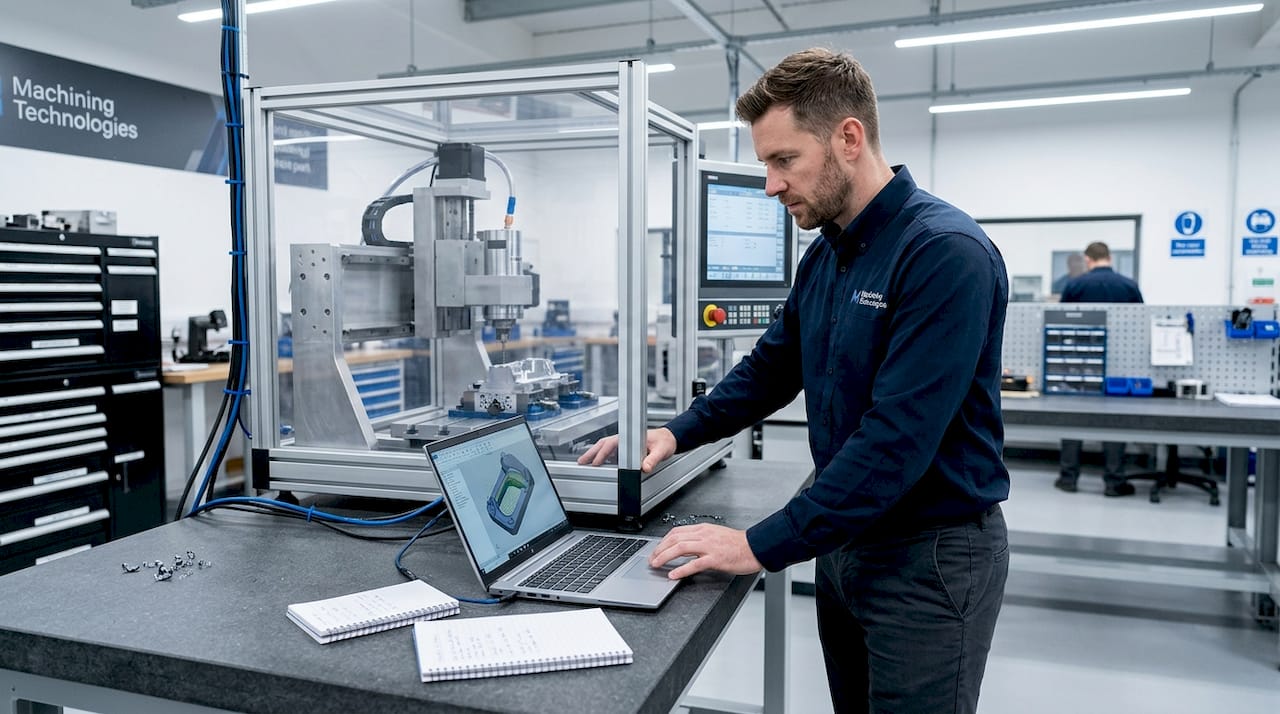
Faster design-to-production cycles. When engineering changes a feature in the CAD model, the CAM program updates parametrically rather than requiring a programmer to manually recode the operation. For defense and aerospace customers with frequent design iterations, this alone justifies the software investment.
Here are the specific workflow improvements that matter most to engineering decision-makers:
- Reduced manual NC programming time through feature-based CAM automation
- Fewer production holds caused by ambiguous or outdated 2D drawings
- Improved first-article inspection pass rates from validated toolpaths
- Faster quoting accuracy based on automatic machining time estimates from CAM simulation
The global CAM market is projected to reach $5.09 billion by 2030 at an 8.5% compound annual growth rate, driven by AI integration and cloud platform adoption. That growth reflects real production value, not speculation. Industries from aerospace to automotive to firearms manufacturing are making sustained investment in CAD/CAM technology because the return on cycle time and yield is measurable.
Pro Tip: Track first-article pass rates before and after CAD/CAM workflow improvements. If your FAI rejection rate does not drop within 90 days of improving model-based definition practices, the issue is data discipline, not the software.
Advanced CAD/CAM trends shaping machining in 2026
The role of CAD/CAM in manufacturing is shifting from a programming tool to a process intelligence platform. Here is where the technology is heading in 2026 and why it changes how you should think about deployment.
AI-driven CNC optimization. Reinforcement learning advances CAM from static toolpath programming to dynamic closed-loop control, where the machine adjusts feeds, speeds, and compensation in real time based on sensor feedback. Intelligent CNC machine tools with real-time error compensation are no longer prototypes. They are entering production environments.
Machine-aware CAM programming. Next-generation CAM software accounts for the specific kinematics, axis limits, and tool change sequences of the target machine during toolpath generation. Machine-aware CAM prevents the class of errors that only appear when a theoretically valid toolpath encounters real machine constraints on the floor.
Hybrid manufacturing workflows. Hybrid manufacturing combines additive deposition and CNC machining with CAD/CAM managing the full workflow, including material allowances and geometric reference preservation. This reduces clamping changes for complex parts and opens up geometries that pure subtractive machining cannot reach.
Cloud platforms and real-time data feedback. Cloud-based CAM enables distributed programming teams to access the same post-processors, tool libraries, and updated machine configurations. Real-time feedback from production connects floor data back into the CAM environment, giving engineers visibility into how programs perform across shifts and machines.
Digital twin integration. Next-gen machine tools will shift CAM from a programming step to a dynamic process manager, with digital twins enabling autonomous optimization between design changes and production runs.
For shops running high-volume aerospace machining, these trends are not future planning items. They are current competitive factors. The machining trends for 2026 point to measurable lead time reductions and extended tool life for shops that deploy these capabilities now.
Implementation pitfalls that kill CAD/CAM performance
Understanding how CAD/CAM improves machining is only part of the story. Knowing where implementations fail protects the investment.
The primary obstacle to CAD/CAM maturity is not software capability. It is the semantic gap between design and manufacturing data, combined with a persistent industry skills shortage. Even shops running premium CAM software produce scrap when engineers design features that are geometrically valid but not machinable, or when programmers work from outdated model revisions.
These are the specific failure modes that generate the most costly rework:
- Ignored tool accessibility. Features with insufficient clearance for the required tooling force manual workarounds or re-machining. Poor design for manufacturing inputs like ignored tool accessibility and clamping strategies are direct causes of CAD/CAM process failures.
- Fragmented data workflows. Shops still using 2D drawings as the authoritative reference for machining operations introduce revision mismatch errors that CAM software cannot catch. Model-based definition as a single 3D authoritative data source eliminates this failure mode.
- Undertrained programmers. CAM software complexity has grown faster than workforce training programs. A programmer who does not understand 5-axis kinematics cannot validate a 5-axis toolpath simulation effectively, regardless of what the software shows on screen.
- Generic post-processors. Using a generic post-processor for a specific machine model introduces G-code output that technically runs but does not exploit machine capability or match the simulated motion precisely.
- Missing clamping strategy in CAM setup. Fixture and clamping planning must be part of the CAM setup, not an afterthought. CAD/CAM process success relies heavily on defined clamping strategies and appropriate material allowances specified upstream.
Connecting quality control practices directly to the CAM workflow, so that inspection data feeds back into the programming process, is what separates shops that use CAD/CAM as a tool from those that use it as a qualified manufacturing process.
My perspective on getting real value from CAD/CAM
I have watched organizations deploy expensive CAD/CAM software and then produce parts the same way they did before. The software changes. The process does not. That is the pattern I find most common and most avoidable.
The insight I keep returning to is this: most shops treat CAD/CAM as two tools used sequentially. Design sends a model. Programming writes a program. The real value appears when you treat the integrated CAD/CAM workflow as a qualified manufacturing process with defined inputs, verified outputs, and closed-loop feedback. That is a fundamentally different mindset.
In my experience, the shops that get the most out of CAD/CAM investment share three characteristics. They invest in model-based definition discipline before they worry about advanced CAM features. They keep programmers close to design reviews so that manufacturability gets addressed before the model is released. And they measure CAM program performance on the floor, tracking actual versus simulated cycle times, so that the process improves with each run.
The skills shortage is real, and I do not minimize it. But the semantic gap between design and manufacturing data is a data governance problem, not a technology problem. It gets solved with process ownership, not with a software upgrade.
What I tell engineering leaders: your CAD/CAM platform is only as good as the data and the people managing it. Invest there first.
— Andrew
How Machiningtechllc puts CAD/CAM to work for your parts
Machiningtechllc has operated precision machining production since 1985 out of a 70,000 square foot facility in Webster, Massachusetts, producing over 20 million parts annually. The shop runs CAD/CAM-driven workflows across CNC milling, turning, wire EDM, and Hydromat systems, with programming and simulation validated before production begins. Whether you are sourcing precision parts manufacturing for aerospace and defense or need firearms manufacturing precision held to tight compliance tolerances, the CAD/CAM process infrastructure at Machiningtechllc is built to deliver repeatable quality at volume. Connect with the engineering team to discuss your application and tolerance requirements.
FAQ
What is the role of CAD/CAM in machining?
CAD creates the precise 3D model of the part, while CAM translates that geometry into machine instructions including toolpaths, feed rates, and G-code. Together they form a continuous digital workflow from design to finished machined component.
How does CAD/CAM improve machining accuracy?
By removing manual programming interpretation between the design model and the CNC machine, CAD/CAM eliminates a primary source of dimensional variation. Virtual simulation further validates the process before any material is cut.
What industries benefit most from CAD/CAM in manufacturing?
Aerospace, defense, firearms, and automotive manufacturing benefit most, because these industries require tight tolerances, complex geometries, and documented process traceability that integrated CAD/CAM workflows are built to support.
What are the biggest challenges in CAD/CAM implementation?
The largest barriers are the semantic gap between design and manufacturing data and industry skills shortages, not software limitations. Clean model-based definition practices and trained programmers determine whether a CAD/CAM investment delivers its projected return.
How is AI changing the role of CAM in CNC machining?
AI-driven CAM systems use reinforcement learning to enable real-time error compensation and autonomous process optimization, shifting CNC machining from static G-code execution to dynamic closed-loop control that adjusts to actual cutting conditions.
Recommended
- Machinability of materials guide for precision 2026 | Machining Technologies
- Machining Trends 2026: 40% Faster Lead Times + 50% Tool Life | Machining Technologies
- Complex part manufacturing: precision strategies 2026 | Machining Technologies
- Optimize high-volume machining workflow: aerospace precision | Machining Technologies