
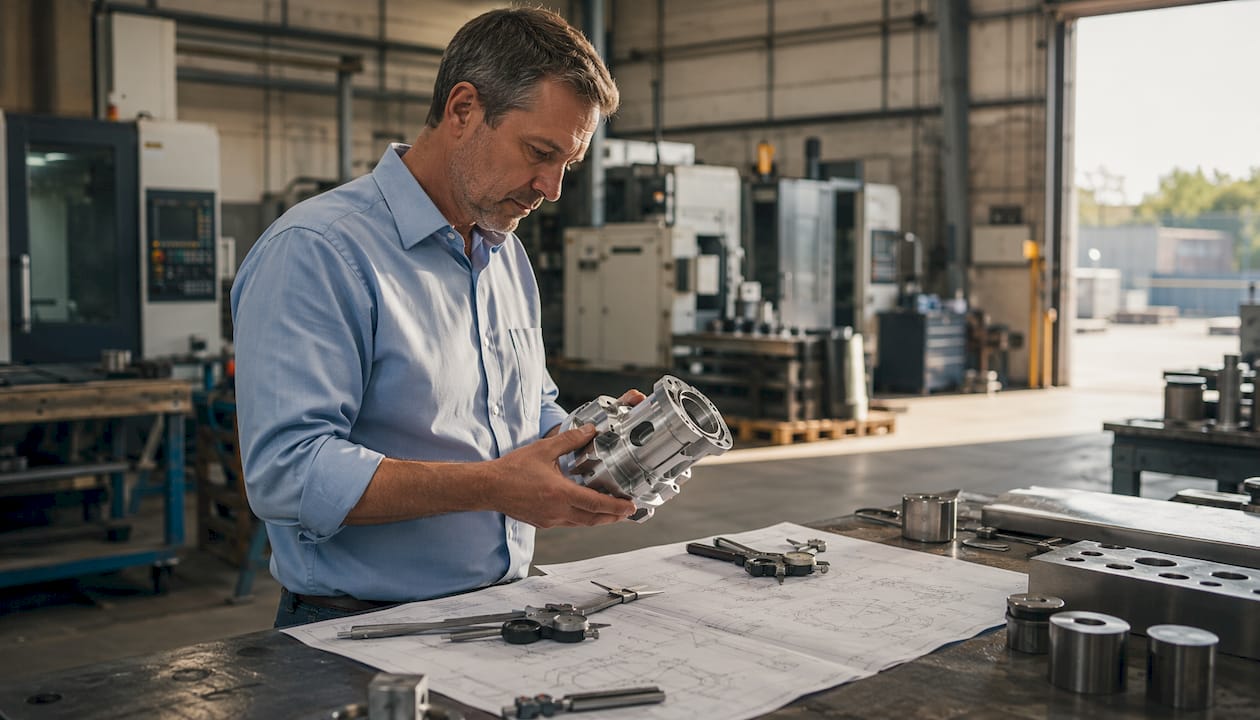
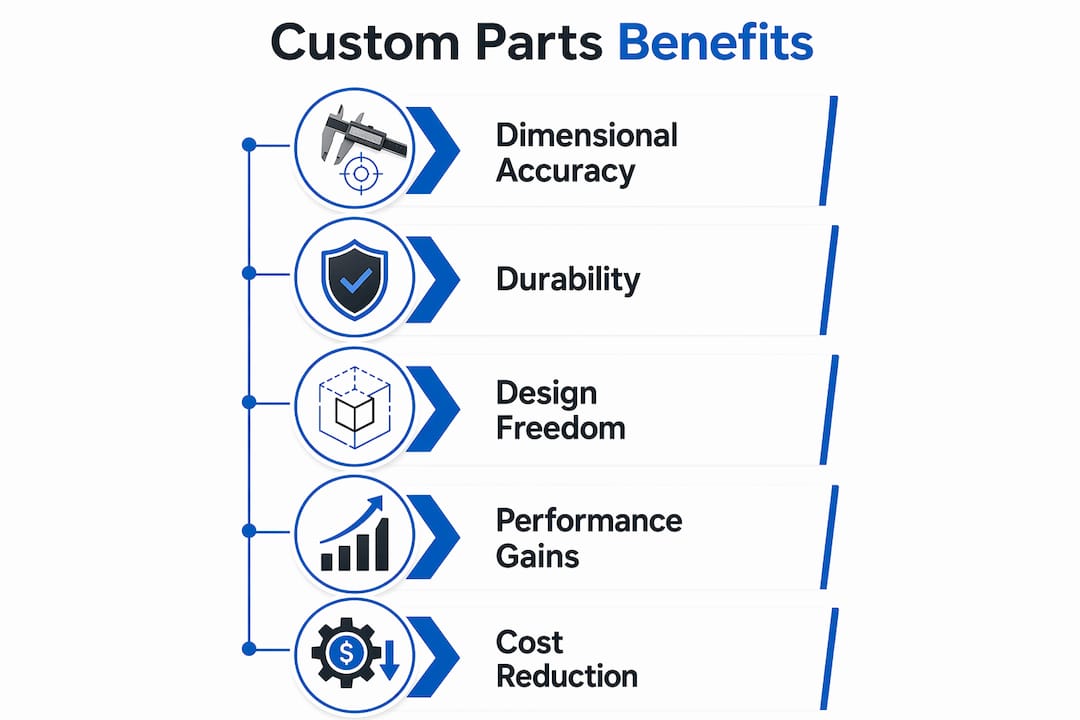
Custom parts are components engineered to exact application specifications, and they consistently outperform standard off-the-shelf alternatives in fit, durability, and long-term cost. For engineers and manufacturers operating in demanding sectors like aerospace, defense, and industrial machinery, the difference between a tailored component and a generic one often determines whether a system runs reliably or fails under load. The core advantages of custom parts include:
- Perfect dimensional fit with no assembly compromises
- Material selection matched to actual operating conditions
- Design freedom for complex geometries and integrated features
- Better system performance through mechanical balance and energy efficiency
- Lower total cost of ownership by reducing rework, downtime, and replacements
Industries from firearm manufacturing to precision glass production rely on custom components to stay competitive. Standard parts simply weren’t built for your machine, your tolerances, or your environment.
1. Why custom parts matter for dimensional accuracy
When a part is engineered to exact dimensions, it drops into an assembly without shimming, grinding, or forcing. That sounds basic, but the downstream effects are real. Misfit components create uneven stress distribution across mating surfaces, which accelerates wear on bearings, seals, and adjacent parts far faster than the design intended.
Custom parts eliminate that mechanical mismatch at the source. Engineers specify tolerances based on actual load paths and thermal expansion rates, not generic catalog ranges. The result shows up in reduced assembly time, fewer field adjustments, and longer intervals between scheduled maintenance.
Fit-critical applications where this matters most:
- Hydraulic valve bodies where leakage paths form at even minor dimensional gaps
- Precision gearboxes where backlash compounds through mismatched gear geometry
- Aerospace structural brackets where tolerance stack-up across multiple parts affects load transfer
- High-speed rotating assemblies where imbalance from imprecise bores causes vibration and fatigue
Engineered components match their role with accuracy, avoiding strain or wasted motion, which directly reduces wear on connected parts and extends service life.
2. How custom parts improve durability and reduce failures
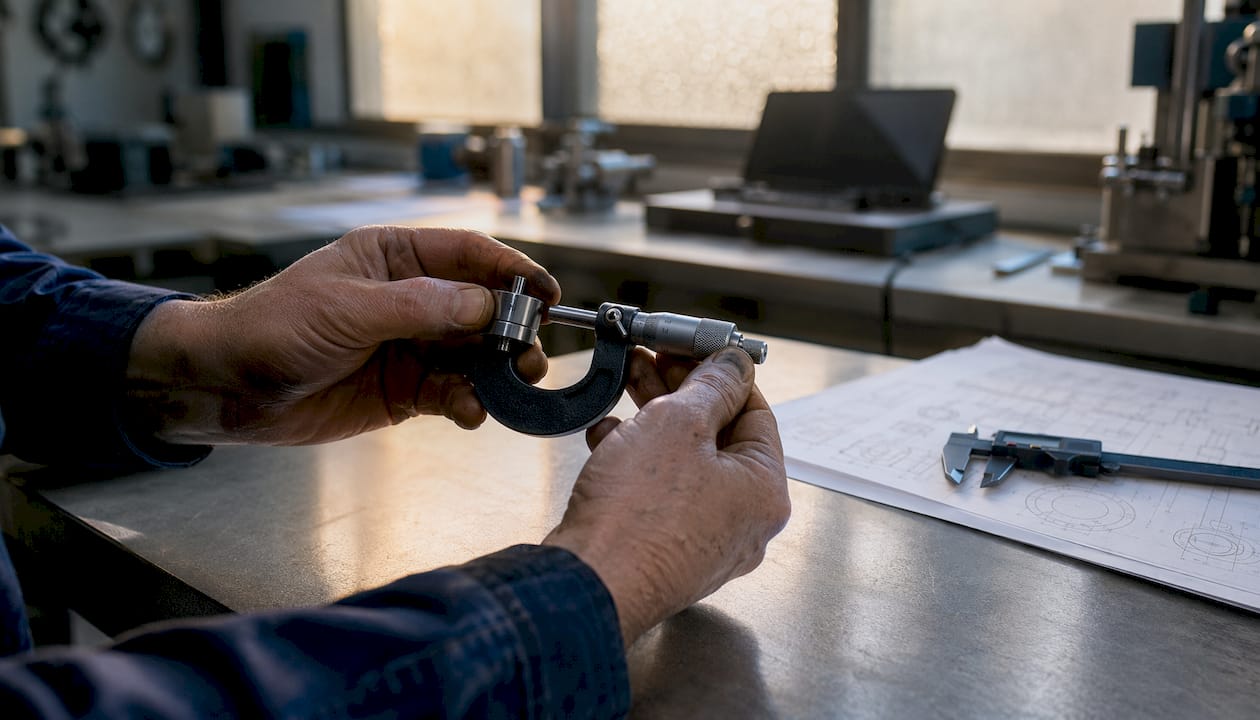
Standard parts follow general specifications that don’t account for your specific operating environment. A component rated for moderate temperatures and standard loads will degrade faster when exposed to the actual conditions inside a high-cycle press or a defense system running continuous duty cycles. Application-specific optimizations in custom parts address exactly this gap, improving durability where generic designs fall short.
Material selection drives most of the durability advantage. A custom part designed for a corrosive chemical environment might use 316L stainless steel with a passivated surface, while the same geometry in a high-wear sliding application would call for tool steel with a PVD coating. Neither choice appears in a standard catalog because neither serves every application.
The durability benefits compound over time:
- Fewer unplanned breakdowns due to material-appropriate design
- Reduced downtime because custom engineered components decrease the need for emergency modifications
- Extended service intervals in critical sectors like aerospace and defense
- Lower total maintenance spend across the equipment lifecycle
Pro Tip: When specifying a custom part for a harsh environment, document the actual operating temperature range, chemical exposure, and peak load cycles before selecting a material. That data is what separates a part that lasts from one that fails at 60% of its expected life.
3. What design freedom actually unlocks for your product
Standard parts constrain your design. When you’re forced to build around a catalog component, you’re accepting someone else’s geometry, someone else’s material, and someone else’s tradeoffs. Custom fabrication removes that constraint entirely, letting the function drive the form rather than the other way around.
Customization drives industrial innovation by enabling smarter, more flexible designs beyond off-the-shelf limitations. That means you can integrate multiple functions into a single machined part, eliminating fasteners and assembly steps. It means you can specify wall thicknesses that reduce weight without sacrificing stiffness, a critical factor in aerospace and portable equipment.
Design freedom benefits that engineers frequently underestimate:
- Integrated features like fluid passages, mounting bosses, and sensor pockets machined into one part instead of assembled from five
- Complex geometries achievable through wire EDM and multi-axis CNC that no standard part can replicate
- Lightweighting through topology-informed material removal, reducing part mass while maintaining structural performance
- Ergonomic and human-factors improvements in handheld or operator-interface components
Pro Tip: Early collaboration between design engineers and your machining partner pays off most here. Sharing CAD models before finalizing tolerances lets the manufacturer flag features that add cost without adding function, often saving significant tooling expense.
4. Performance and efficiency gains from tailored components
A custom part optimized for its exact role in a system delivers measurable efficiency gains that generic components cannot match. Tailored components improve mechanical balance, reduce energy consumption, and enhance output consistency across the full production run. In high-cycle machinery, those gains accumulate quickly.
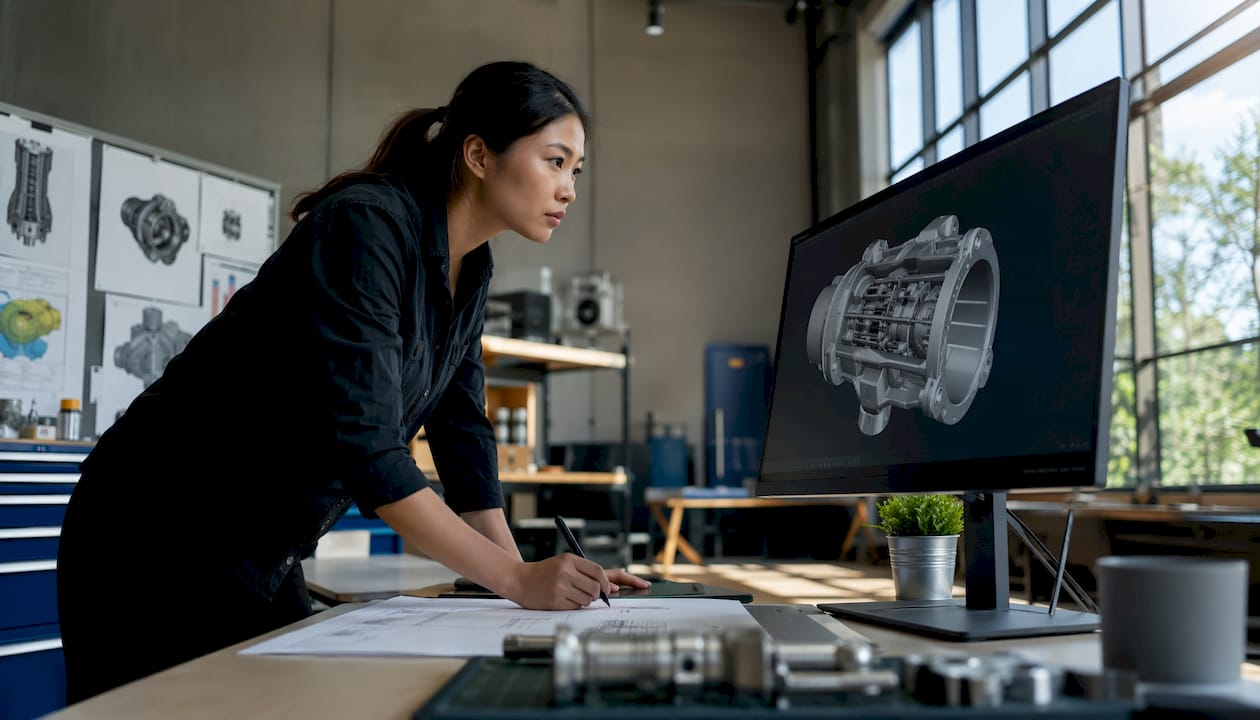
Precision gears are the clearest example. A gear set machined to the exact pitch diameter, tooth profile, and surface finish required by a specific gearbox runs quieter, generates less heat, and transmits power more efficiently than a catalog gear adapted to fit. The same logic applies to pump impellers, valve spools, and actuator pistons.
Performance advantages that custom parts deliver:
- Reduced parasitic friction losses from surfaces finished to application-specific Ra values
- Better mechanical balance in rotating assemblies, cutting vibration and bearing loads
- Consistent output quality because the part performs identically across thousands of cycles
- Improved energy efficiency in pneumatic and hydraulic systems through tighter clearance fits
For aerospace components, where custom machining must meet strict material and dimensional standards, the performance margin between a tailored part and a standard substitute can determine certification compliance.
5. How custom parts reduce total manufacturing costs
The upfront cost of a custom part is almost always higher than a standard equivalent. Tooling, programming, and first-article inspection all add to the initial unit price. But that comparison ignores the full picture. Custom manufacturing reduces total cost of ownership by cutting replacements, repairs, and downtime over the part’s service life.
The math shifts further when you factor in rapid prototyping workflows that compress development cycles. Getting a validated custom part into production faster means less engineering rework and shorter time to market, both of which carry real dollar values for OEMs.
Cost advantages that custom parts deliver over time:
- Fewer replacement cycles because the part was designed for the actual duty cycle
- Less rework and scrap from parts that don’t fit the first time
- Economies of scale in specialized production once tooling is amortized
- Higher machine uptime translating directly to production throughput
The material and process selection built into a well-designed custom part also eliminates the workarounds manufacturers often build into maintenance schedules when using standard components that don’t quite fit.
6. Challenges and trade-offs worth knowing before you commit
Custom parts aren’t the right answer for every situation. Higher initial tooling costs, longer upfront design times, and potential supply chain complexity are real trade-offs that engineers need to weigh against the performance and lifecycle benefits.
The design phase takes longer because it requires detailed application data, tolerance analysis, and often first-article qualification. For low-criticality components with short service lives, a standard part may deliver acceptable performance at lower total cost. The decision hinges on how much the part’s performance affects system reliability and what failure actually costs in your application.
Key considerations before choosing custom over standard:
- Volume: tooling costs amortize better at higher quantities
- Criticality: the higher the failure consequence, the stronger the case for custom
- Lead time: standard parts ship from stock; custom parts require production lead time
- Supply chain: a single-source custom part creates dependency that needs a contingency plan
For engineers in glass durability applications, the same trade-off analysis applies: custom components designed for specific wear and thermal conditions outperform standard alternatives, but the upfront engineering investment must be justified by the application’s demands.
7. How Machiningtechllc delivers precision custom parts at scale
Machiningtechllc has operated from its 70,000 square foot facility in Webster, Massachusetts since 1985, producing over 20 million precision parts annually for aerospace, defense, firearm manufacturing, and industrial machinery customers. That volume isn’t just a capacity figure. It reflects the process discipline required to hold tight tolerances consistently across high-cycle production runs.
The equipment mix is what makes complex custom work achievable at production scale. Hydromat rotary transfer systems handle high-volume turned parts with consistent cycle times. CNC milling and turning centers tackle complex geometries across a wide range of materials. Wire EDM produces intricate profiles and fine-feature details that no other process can match without distorting the workpiece.
Capabilities that support custom part production:
- Hydromat systems for high-volume, multi-operation turned components with repeatable accuracy
- Multi-axis CNC milling and turning for complex geometries in aluminum, steel, titanium, and specialty alloys
- Wire EDM for tight-tolerance profiles, thin walls, and hardened materials
- Prototype-to-production workflows that validate designs before full-scale tooling commitment
Machiningtechllc’s contract machining services give OEMs a direct path from custom part design to high-volume delivery, with the process controls and quality systems that aerospace and defense programs require.
OEMs and manufacturers that need custom parts produced at volume, with documented quality and on-time delivery, can contact Machiningtechllc directly through machiningtechllc.com to discuss project requirements.
Key Takeaways
Custom parts deliver measurable advantages in fit, durability, performance, and lifecycle cost when engineered to exact application specifications, making them the right choice for critical and high-cycle manufacturing applications.
| Point | Details |
|---|---|
| Dimensional accuracy reduces failures | Custom tolerances eliminate mechanical mismatch, cutting wear on adjacent components and extending service life. |
| Material selection drives durability | Matching material and surface finish to actual operating conditions prevents premature failure under load or harsh environments. |
| Design freedom enables integration | Custom parts can combine multiple functions into one machined component, reducing assembly steps and part count. |
| Lifecycle cost beats unit cost | Higher upfront tooling costs are offset by fewer replacements, less downtime, and lower maintenance spend over time. |
| Over 20 million parts annually | Machiningtechllc produces over 20 million precision parts per year using Hydromat, CNC, and wire EDM systems. |
Recommended
- Unlock Customization for Precision Manufacturing Success | Machining Technologies
- Why choose custom machining for aerospace and defense | Machining Technologies
- Custom Component Fabrication Steps: Engineer’s Guide | Machining Technologies
- Custom vs standard machining: choosing the right fit | Machining Technologies