

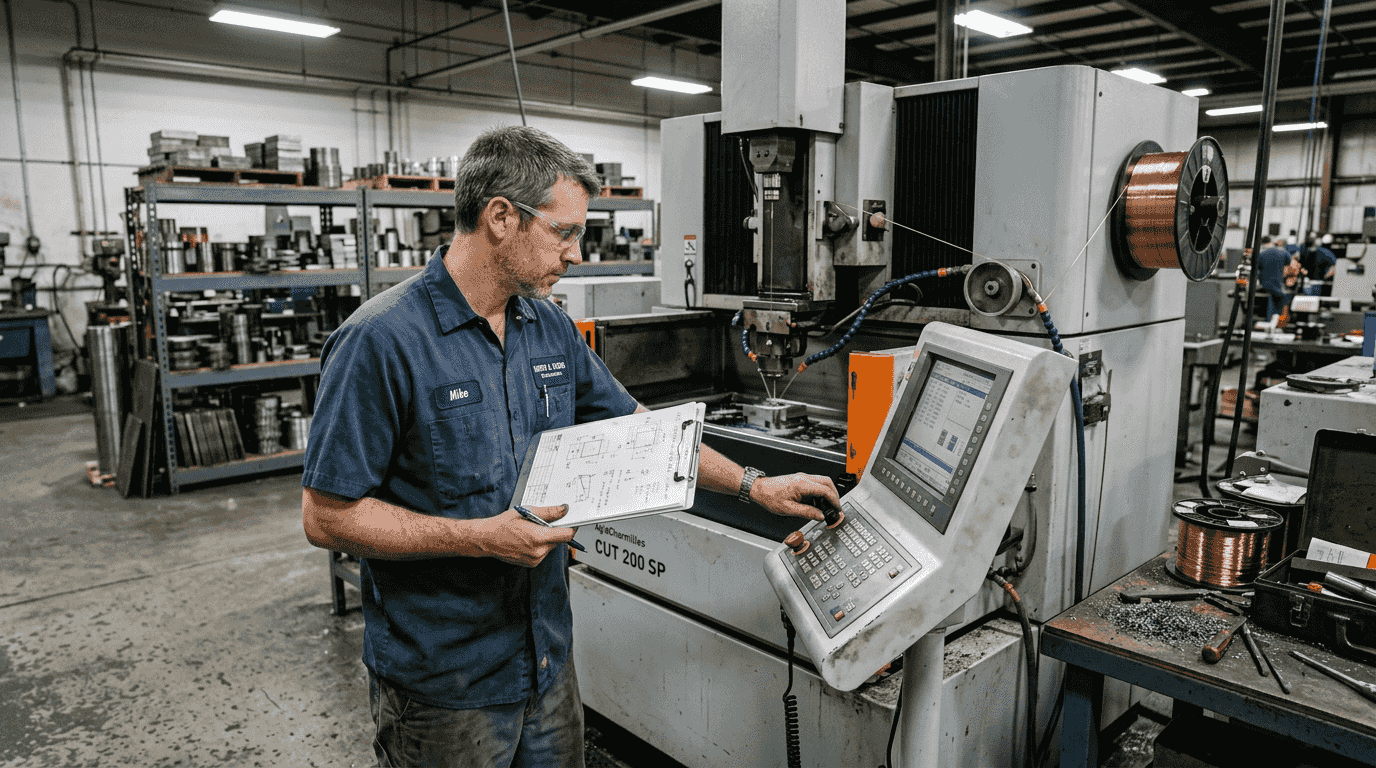
Machining complex aerospace and defense components demands extreme precision, the ability to handle tough materials like titanium and Inconel, and geometries that challenge traditional methods. When tolerances tighten to microns and part integrity becomes mission critical, conventional milling and turning often fall short. Wire electrical discharge machining addresses these challenges with unique capabilities that make it indispensable for high-stakes manufacturing. This article outlines the top advantages of wire EDM technology to guide your machining decisions and optimize production outcomes.
Table of Contents
- 1. Exceptional Precision And Surface Finish
- 2. Capability To Machine Complex Geometries And Hard Materials
- 3. Process Stability And Parameter Optimization For Quality And Efficiency
- 4. Advantages For Aerospace, Defense, And Industrial Applications
- 5. Comparing Wire Edm With Traditional Machining Methods
Key takeaways
| Point | Details |
|---|---|
| Micron-level precision | Wire EDM achieves tolerances as tight as ±0.0025 mm and surface finishes down to Ra 0.1 μm. |
| Complex geometry capability | Machines intricate shapes in hardened materials like titanium and Inconel with 30% faster cycle times than milling. |
| Non-contact process | Eliminates mechanical stresses and thermal distortions that compromise part integrity in conventional machining. |
| Parameter optimization | Balancing pulse duration, current, and wire feed maximizes material removal rate while maintaining surface quality. |
| Industry-proven reliability | Widely adopted in aerospace, defense, and industrial sectors for mission-critical components requiring absolute precision. |
1. Exceptional precision and surface finish
Wire EDM delivers tolerances as tight as ±0.0025 mm and surface finishes of Ra 0.1 μm, meeting the exacting demands of aerospace and defense applications. This level of dimensional accuracy proves essential when manufacturing turbine blades, fuel injection components, and guidance system parts where micron-level deviations can compromise performance or safety. The non-contact nature of electrical discharge machining prevents the mechanical forces that cause workpiece deflection in conventional methods.
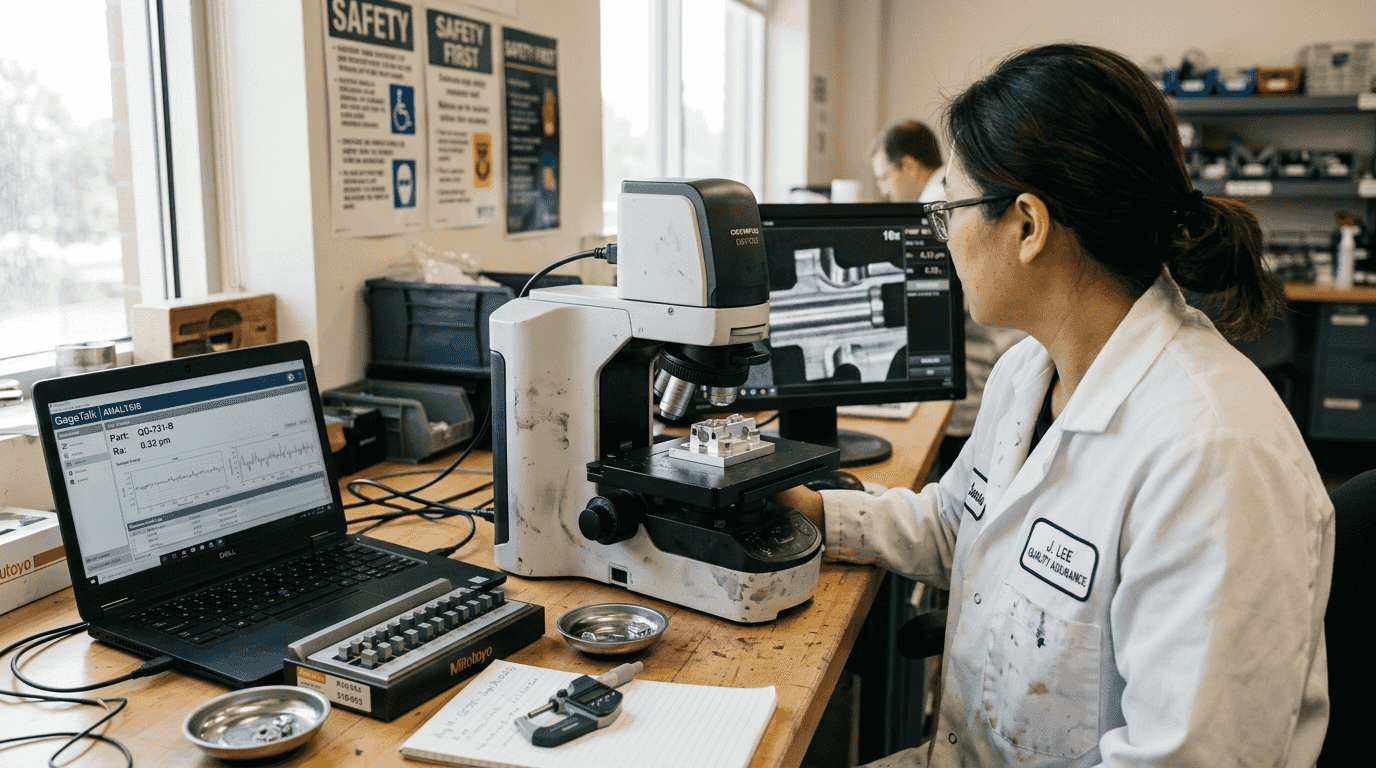
Achieving such fine surface finishes reduces or eliminates secondary operations like grinding and polishing. You cut production time, lower costs, and minimize the risk of introducing new errors during finishing steps. Parts emerge from the wire EDM process ready for inspection and assembly, streamlining your workflow from raw material to finished component.
The precision advantage translates directly to reduced scrap rates and inspection time. When parts consistently hit tight tolerances in aerospace machining, quality control becomes more predictable and less resource intensive. Statistical process control data shows tighter distributions, giving you confidence in batch consistency and reducing the need for 100% inspection protocols.
Key precision benefits include:
- Micron-level dimensional control for critical aerospace components
- Surface finishes eliminating secondary grinding operations
- Reduced scrap from dimensional deviations
- Consistent batch-to-batch quality for high-volume production
- Preserved part integrity through non-contact machining
Pro Tip: When machining aerospace parts with wire EDM, verify that your process parameters maintain consistent spark gap conditions throughout the cut. Variations in dielectric fluid temperature or contamination can affect precision, so implement regular fluid monitoring and replacement schedules to sustain micron-level accuracy across production runs.
2. Capability to machine complex geometries and hard materials
Wire EDM excels at cutting intricate shapes, miniature features, and micro-scale geometries that conventional milling or turning cannot reach. The thin wire electrode navigates tight radii, sharp corners, and delicate internal cavities without tool deflection or chatter. This capability proves invaluable when manufacturing complex cooling channels in turbine components, precision slots in landing gear parts, or intricate contours in defense system housings.
The process handles aerospace-grade alloys like Ti6Al4V and Inconel 718 with remarkable efficiency. Research shows wire EDM reduces machining time by 30% compared to milling when working with these difficult materials. Traditional cutting tools wear rapidly and require frequent replacement when machining hardened alloys, but wire EDM maintains consistent performance regardless of material hardness.
Electrode material selection critically impacts productivity and surface quality. Studies demonstrate that copper electrodes yield 235% higher material removal rates and 14x lower tool wear than brass when machining aerospace alloys. This performance difference becomes significant in high-volume production environments where cycle time and consumable costs directly affect profitability.
| Electrode Material | Material Removal Rate | Tool Wear Index | Best Applications |
|---|---|---|---|
| Copper | 235% higher | 14x lower | Aerospace alloys, high-volume production |
| Brass | Baseline | Baseline | General purpose, lower cost operations |
| Zinc-coated | 180% higher | 8x lower | Balanced performance, moderate volumes |
Optimizing parameters like pulse current, voltage, and wire feed rate improves both productivity and surface integrity. You can fine-tune these variables to match specific material properties and geometric requirements, achieving the ideal balance between speed and quality for each application.
Complex geometry capabilities:
- Intricate internal features unreachable by rotating tools
- Sharp corners and tight radii without tool radius limitations
- Micro-scale features down to wire diameter dimensions
- Multi-axis contouring for three-dimensional shapes
- Consistent accuracy regardless of material hardness
Explore proven complex part manufacturing strategies and learn more about wire EDM capabilities to expand your manufacturing options for challenging geometries.
3. Process stability and parameter optimization for quality and efficiency
Achieving optimal wire EDM performance requires balancing three critical parameters: Ton (pulse duration), Toff (pulse interval), and peak current. Ton controls how long electrical energy flows during each discharge, directly affecting material removal depth per pulse. Toff determines the interval between pulses, allowing debris to flush from the spark gap and preventing arc instability. Peak current governs the energy intensity of each discharge, influencing both material removal rate and surface roughness.
Research confirms that increasing peak current raises material removal rate but worsens surface finish, requiring careful optimization. Advanced algorithms can improve material removal rate by 15% while maintaining surface quality by dynamically adjusting parameters based on real-time feedback. This optimization becomes crucial when machining expensive aerospace materials where scrap costs are high.
Process instability from improper settings creates defects that compromise part quality. Studies show high Ton and insufficient Toff cause instability, increasing machining time and reducing material removal rate. The debris accumulation in the spark gap leads to secondary discharges, micro-pores in the recast layer, and rough surface textures that require additional finishing.
Steps to optimize wire EDM parameters:
- Start with manufacturer-recommended baseline settings for your specific material and thickness.
- Conduct test cuts measuring material removal rate, surface roughness, and dimensional accuracy.
- Adjust peak current first, as it exerts the dominant influence on machining performance and surface quality.
- Fine-tune Ton and Toff to balance removal rate with spark gap stability and debris flushing.
- Verify dielectric fluid flow rate and temperature to maintain consistent machining conditions.
- Document optimized parameters for each material-thickness combination to build a knowledge base.
Pro Tip: Monitor the color and consistency of your dielectric fluid during extended production runs. Contamination from machining debris reduces spark gap stability and can shift your optimized parameters out of spec. Implement filtration system maintenance schedules based on material removal volume rather than arbitrary time intervals.
Peak current serves as the dominant factor controlling wire EDM performance, with direct influence on material removal rate, surface finish, and recast layer characteristics. Optimizing this single parameter often yields greater improvements than adjusting multiple secondary variables.
Understanding these parameter relationships helps you achieve reliable, high-quality results while minimizing production time. Learn how parameter optimization supports custom machining for aerospace and defense applications where quality and efficiency both matter.
4. Advantages for aerospace, defense, and industrial applications
Wire EDM proves essential for manufacturing mission-critical components where tight tolerances and absolute reliability cannot be compromised. The technology enables precision machining of titanium alloys that provide the strength-to-weight ratios demanded by modern aircraft and defense systems. Ti6Al4V alloys machined by wire EDM deliver high strength, excellent corrosion resistance, and performance characteristics required in aviation and petrochemical industries.
The non-contact machining process preserves delicate features and prevents distortions that plague conventional methods when working with thin-walled structures or complex geometries. You can machine intricate cooling channels, precision slots, and miniature features without worrying about tool pressure deforming the workpiece. This capability becomes critical when manufacturing components like turbine blades where aerodynamic profiles must maintain exact dimensions.
Industry adoption reflects wire EDM’s strategic value. Wire EDM is widely used in aerospace and defense for machining advanced materials, complex shapes, and miniature features with high reliability. The technology supports the miniaturization trends driving modern industrial design, enabling micro-scale features that would be impossible with conventional cutting tools.
Typical aerospace and defense parts benefiting from wire EDM:
- Turbine blades and vanes with complex cooling channels
- Landing gear components requiring precise tolerances
- Fuel injection nozzles with intricate internal geometries
- Guidance system housings with tight dimensional control
- Firearm components demanding consistent accuracy
- Sensor mounts and brackets with miniature features
- Hydraulic valve bodies with complex internal passages
The technology’s reliability and precision make it indispensable for defense industry precision machining where component failure is not an option. When you need absolute confidence in dimensional accuracy and surface integrity, wire EDM delivers results that conventional methods struggle to match. Explore comprehensive precision parts manufacturing capabilities to understand how wire EDM fits into modern production strategies.
5. Comparing wire EDM with traditional machining methods
Understanding how wire EDM stacks up against conventional milling and turning helps you make informed decisions about which process best suits your application. The comparison reveals distinct advantages in specific scenarios, particularly when working with complex geometries or hardened materials.
| Criteria | Wire EDM | CNC Milling | CNC Turning |
|---|---|---|---|
| Tolerance | ±0.0025 mm | ±0.005 mm | ±0.010 mm |
| Surface Finish | Ra 0.1 μm | Ra 0.8 μm | Ra 1.6 μm |
| Material Capability | Any conductive material, hardness irrelevant | Limited by tool wear on hard materials | Best for softer materials |
| Process Stress | Zero mechanical stress | High cutting forces | Moderate to high forces |
| Complex Geometry | Excellent for intricate shapes | Limited by tool access | Limited to rotational symmetry |
| Machining Time | 30% faster for complex aerospace parts | Baseline for simple geometries | Fastest for cylindrical parts |
Research confirms wire EDM reduces machining time by 30% for complex aerospace parts compared to milling while achieving tighter tolerances and better surface finish. This efficiency gain becomes more pronounced as part complexity increases and material hardness rises.
Key scenarios where wire EDM excels:
- Machining hardened tool steels and aerospace alloys where conventional tools wear rapidly
- Creating intricate internal features and sharp corners unreachable by rotating cutters
- Producing parts with thin walls or delicate features prone to deflection under cutting forces
- Achieving surface finishes that eliminate secondary grinding or polishing operations
- Manufacturing small-batch or prototype parts where tool setup time dominates conventional machining
The non-contact nature eliminates workpiece deformation from clamping forces and cutting pressure. Conventional methods require substantial clamping to resist cutting forces, potentially distorting thin-walled parts or introducing residual stresses. Wire EDM machines parts with minimal fixturing, preserving dimensional accuracy and reducing setup complexity.
For a broader perspective on machining options, compare these capabilities with CNC milling and turning processes to determine the optimal approach for your specific manufacturing requirements.
Explore advanced wire EDM machining services
Machining Technologies brings over three decades of precision manufacturing expertise to complex aerospace and defense applications. Our modern 70,000 square foot facility houses advanced wire EDM equipment alongside CNC milling and turning capabilities, enabling comprehensive solutions from prototype through full-scale production. We specialize in machining intricate geometries in difficult materials, delivering the micron-level accuracy and surface finishes your mission-critical components demand.
Our engineering team optimizes wire EDM parameters for each unique application, balancing material removal rates with surface integrity to minimize your production costs while maintaining quality. We handle everything from single prototypes to high-volume runs exceeding 20 million parts annually, with on-time delivery backed by rigorous quality control.
Key service offerings:
- Precision wire EDM services for complex geometries and hard materials
- Rapid prototyping to validate designs before committing to production tooling
- Complex part manufacturing strategies optimized for your specific requirements
- Full-service machining capabilities including CNC milling, turning, and finishing
Contact our engineering team to discuss how wire EDM can solve your toughest machining challenges and improve your production outcomes.
Frequently asked questions about wire EDM advantages
What materials can wire EDM machine effectively?
Wire EDM machines any electrically conductive material regardless of hardness, including titanium alloys, Inconel, hardened tool steels, carbides, and exotic aerospace materials. Material hardness does not affect the process since machining occurs through electrical discharge rather than mechanical cutting forces.
How does wire EDM reduce mechanical stresses compared to milling?
Wire EDM uses electrical discharge to remove material without physical contact between the electrode and workpiece. This eliminates cutting forces, clamping pressure, and heat-affected zones that cause distortion in conventional milling, preserving part integrity and dimensional accuracy.
Can wire EDM handle complex micro-scale features reliably?
Wire EDM excels at micro-scale machining, creating features as small as the wire diameter with consistent accuracy. The thin electrode navigates tight radii, sharp corners, and intricate internal cavities that conventional tools cannot reach, making it ideal for miniature aerospace and defense components.
What factors influence wire EDM machining speed and quality?
Peak current, pulse duration (Ton), pulse interval (Toff), wire feed rate, and dielectric fluid conditions primarily control machining speed and quality. Optimizing these parameters balances material removal rate with surface finish, while electrode material selection affects productivity and tool wear.
Is wire EDM cost-effective for low-volume aerospace parts?
Wire EDM proves highly cost-effective for low-volume production because it requires minimal tooling investment and setup time compared to conventional methods. The superior surface finish often eliminates secondary operations, and the ability to machine complex geometries in one setup reduces total production costs despite potentially slower cycle times than high-volume conventional processes.