

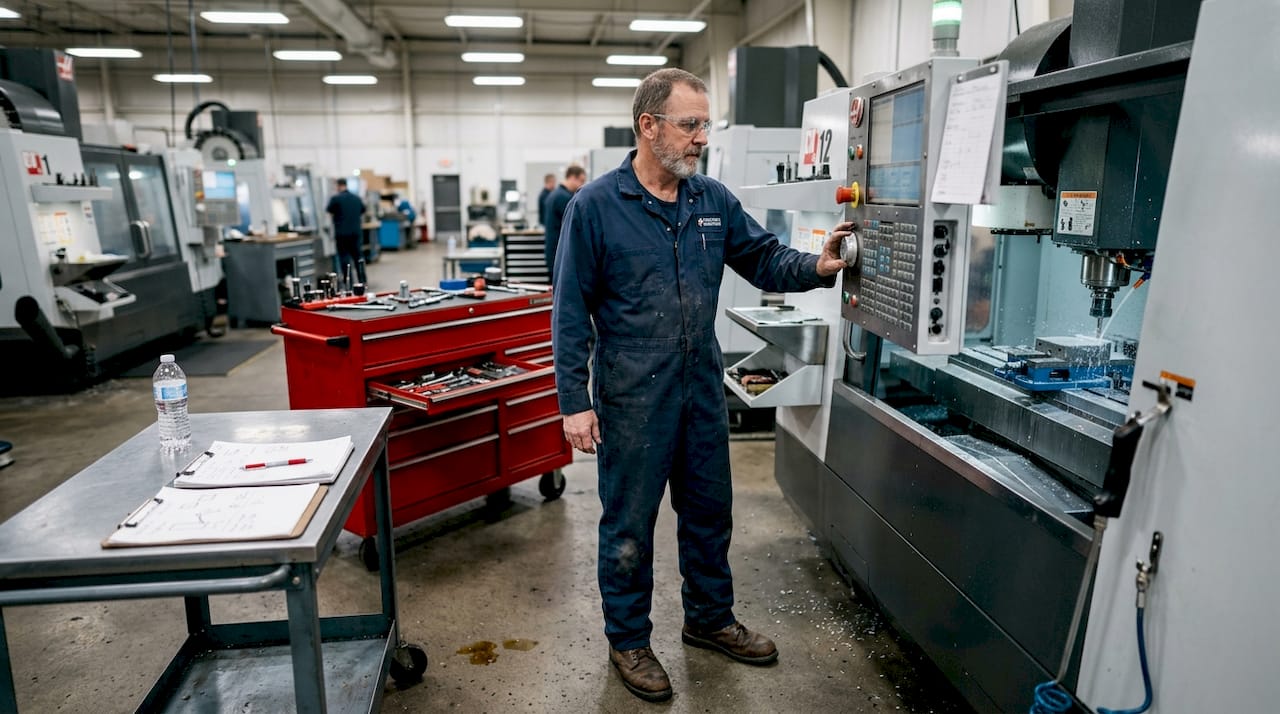
Aerospace manufacturing demands uncompromising precision and efficiency. Parts must meet tolerances measured in microns while maintaining cost-effective production cycles. Manufacturing engineers and procurement specialists face constant pressure to deliver components that satisfy stringent safety standards without sacrificing throughput. This article explores proven best practices for aerospace machining, from establishing quality criteria to selecting optimal processes, comparing machining approaches, and implementing decision frameworks that enhance both precision and operational efficiency in your production environment.
Table of Contents
- Key takeaways
- Establishing criteria for aerospace machining excellence
- Top best practices for aerospace machining processes
- Comparing machining approaches for aerospace manufacturing
- Deciding the best aerospace machining practices for your needs
- Enhance your aerospace machining with expert precision manufacturing
- Frequently asked questions
Key Takeaways
| Point | Details |
|---|---|
| Tight tolerance control | Tolerance requirements guide process choices and drive equipment and operator skill. |
| Material and tooling impact | Material properties of titanium, Inconel, and aluminum dictate machining approaches and tooling selection. |
| Multi axis CNC benefits | Five axis capability enables complex geometry in a single setup to reduce handling and improve accuracy. |
| Wire EDM precision | Wire EDM delivers ultra high precision for hard materials and thin walls where conventional cutting would distort features. |
| Automation and standardization | Standardized processes and automated workflows shorten lead times while preserving quality and traceability. |
Establishing criteria for aerospace machining excellence
Before selecting machining processes, you need clear criteria that align with aerospace quality standards and production goals. Tolerance requirements drive every decision in aerospace machining. Maintaining critical tolerances ensures components function correctly within assemblies and meet regulatory requirements. Parts often require tolerances within ±0.0005 inches or tighter, demanding specialized equipment and skilled operators.
Material properties significantly influence your machining approach. Aerospace-grade alloys like titanium, Inconel, and aluminum variants present unique challenges. Titanium offers excellent strength-to-weight ratios but generates heat rapidly during cutting, requiring specific tooling and coolant strategies. Inconel’s work-hardening characteristics demand rigid setups and carbide or ceramic cutting tools. Understanding these material behaviors helps you select appropriate machines and parameters.
Efficiency goals balance quality with economic reality. You need to achieve target cycle times while maintaining dimensional accuracy. Throughput capacity affects your ability to meet delivery schedules, especially for high-volume production runs. Consider these crucial criteria when evaluating machining practices:
- Dimensional tolerance requirements and geometric tolerancing standards
- Material machinability ratings and thermal properties
- Surface finish specifications for aerodynamic or mating surfaces
- Production volume and required throughput capacity
- Cost constraints including tooling, machine time, and labor
- Complexity of part geometries and feature accessibility
- Quality documentation and traceability requirements
These criteria form the foundation for selecting machining technologies and developing production workflows. Each aerospace project presents unique combinations of these factors, requiring customized approaches rather than one-size-fits-all solutions.
Top best practices for aerospace machining processes
Implementing proven machining techniques directly impacts your ability to produce aerospace components that meet exacting standards. CNC milling and turning provide the foundation for precision aerospace manufacturing. Modern CNC systems offer multi-axis capabilities that enable complex geometries in single setups, reducing handling errors and improving accuracy. Five-axis machining allows continuous tool orientation adjustments, essential for contoured surfaces and compound angles common in aerospace parts.
Wire EDM excels at producing intricate cuts with exceptional precision. This thermal process removes material through electrical discharge, making it ideal for hardened materials and thin-wall sections where mechanical cutting forces would cause distortion. Wire EDM achieves tolerances within 0.0001 inches and creates features impossible with conventional cutting tools, including sharp internal corners and complex contours.
Tool selection and maintenance directly affect part quality and production costs. Carbide end mills with specialized coatings extend tool life in difficult materials. Insert tooling systems allow quick changes without removing tools from the machine, minimizing downtime. Implement systematic tool management programs that track usage, monitor wear patterns, and schedule replacements before quality degradation occurs.
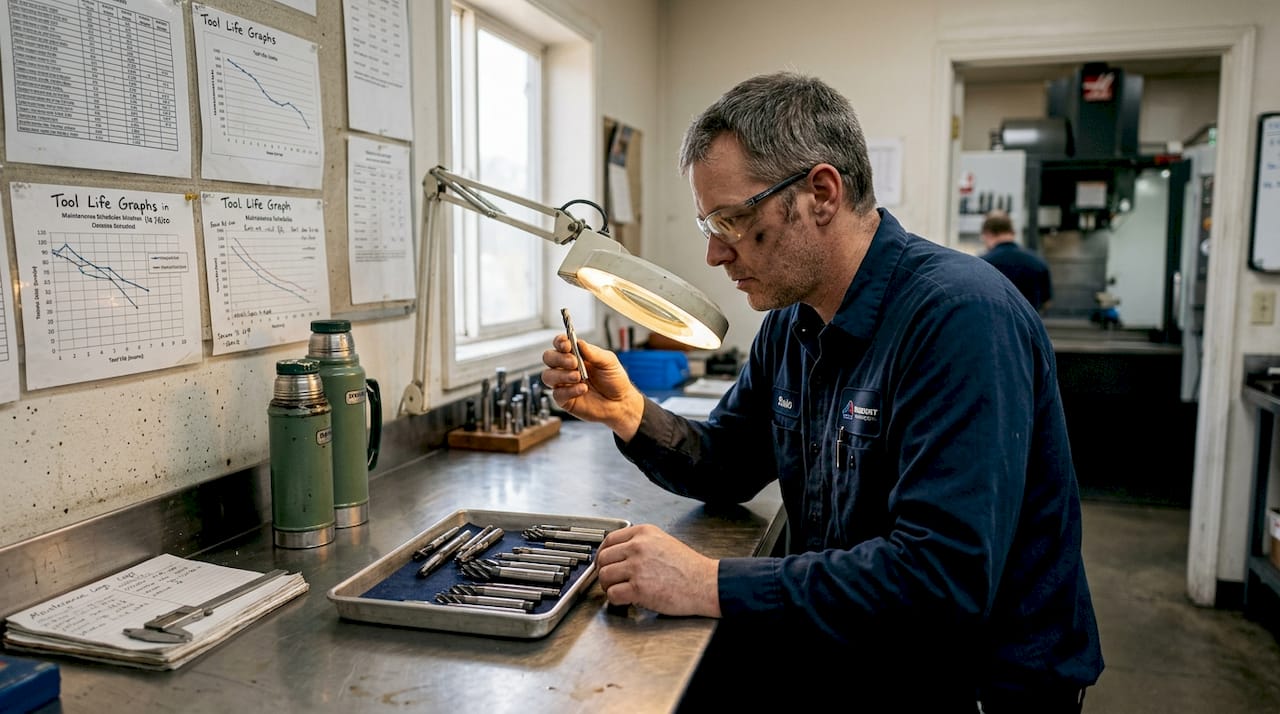
Integrating quality control throughout the machining process catches issues early when corrections cost less. In-process inspection using coordinate measuring machines or laser scanners verifies critical dimensions before completing subsequent operations. Statistical process control monitors trends that indicate tool wear or machine drift, enabling preventive adjustments.
Key practices for aerospace machining success:
- Develop optimized CNC programs using CAM software with aerospace-specific toolpaths
- Implement fixture designs that ensure repeatability and minimize part distortion
- Use high-pressure coolant systems to manage heat in difficult materials
- Establish documented procedures for setup, operation, and inspection
- Maintain climate-controlled environments to prevent thermal expansion errors
- Apply advanced coating technologies to extend tool life and improve surface finish
Pro Tip: Regularly calibrate machines and use in-process inspection to minimize defects. Schedule calibration checks monthly for critical equipment and perform quick verification routines at the start of each production run. This practice catches dimensional drift before producing out-of-spec parts, saving time and material costs.
Comparing machining approaches for aerospace manufacturing
Different machining technologies offer distinct advantages depending on part complexity, material, and production requirements. Understanding these trade-offs helps you select optimal processes for specific applications.
| Machining Method | Precision Level | Cost Factor | Throughput | Best For |
|---|---|---|---|---|
| CNC Milling | ±0.0005 in | Medium | Medium to High | Complex 3D geometries, pockets |
| CNC Turning | ±0.0003 in | Low to Medium | High | Cylindrical parts, shafts, bushings |
| Wire EDM | ±0.0001 in | High | Low to Medium | Hardened materials, intricate cuts |
| Hydromat Machining | ±0.0005 in | Medium | Very High | High-volume cylindrical components |
| Automated Systems | ±0.0005 in | High initial | Very High | Lights-out production, consistency |
Advanced manufacturing strategies reduce lead times significantly while extending tool life, making automation investments increasingly attractive. CNC milling handles the widest range of part geometries but requires longer cycle times for complex features. Turning operations achieve faster cycle times for cylindrical components and deliver excellent surface finishes on diameters and faces.
Wire EDM provides unmatched precision for hardened materials and delicate features but operates more slowly than conventional machining. The process eliminates cutting forces, preventing distortion in thin-wall sections. However, EDM requires conductive materials and adds costs through electrode consumption and longer processing times.
Hydromat rotary transfer machines excel at high-volume production of cylindrical aerospace components. These systems perform multiple operations simultaneously as parts index through stations, achieving cycle times measured in seconds. Initial setup complexity and tooling costs make Hydromat machining economical only for large production runs, typically thousands of parts or more.
Automation integration transforms machining economics and quality consistency. Robotic loading systems enable lights-out operation, multiplying effective capacity without additional labor. Automated inspection systems verify every part, ensuring consistent quality across production runs. While automation requires significant capital investment, the return comes through reduced labor costs, improved throughput, and enhanced quality control.
Key comparison takeaways:
- Match machining method to part geometry and production volume for optimal economics
- Consider total cost including setup, tooling, cycle time, and quality assurance
- Evaluate automation potential for high-volume aerospace components
- Balance precision requirements against throughput and cost constraints
- Plan for technology combinations that leverage strengths of multiple processes
Deciding the best aerospace machining practices for your needs
Selecting and implementing optimal machining practices requires systematic evaluation of your specific aerospace manufacturing requirements. Follow this decision framework to align technology choices with production goals.
Define precise tolerance and quality requirements for each part feature. Document geometric dimensioning and tolerancing callouts, surface finish specifications, and critical dimensions that affect assembly or function.
Analyze material properties and machinability characteristics. Consult cutting tool manufacturers for recommended parameters and tooling for your specific aerospace alloys. Consider thermal properties, work-hardening tendencies, and abrasiveness.
Calculate production volume and required throughput. Determine whether batch sizes justify automation investment or favor flexible manual setups. Project annual volumes over the product lifecycle to evaluate equipment amortization.
Evaluate part complexity and feature accessibility. Identify geometries requiring multi-axis machining, EDM, or specialized processes. Assess whether single-setup operations reduce handling and improve accuracy.
Compare total cost scenarios for candidate processes. Include tooling, machine time, labor, quality inspection, and scrap rates. Factor in setup time amortization across production quantities.
Assess quality assurance integration options. Plan inspection points, measurement equipment requirements, and documentation systems. Custom machining workflows enhance part quality while optimizing timelines through strategic quality gates.
Implement process monitoring and continuous improvement systems. Collect data on cycle times, tool life, scrap rates, and quality metrics. Use statistical analysis to identify improvement opportunities and validate process changes.
Integrating automation and quality assurance into workflows amplifies the benefits of best-practice machining techniques. Automated tool measurement systems compensate for wear in real time, maintaining dimensional accuracy throughout production runs. Vision systems verify part orientation and feature presence before machining, preventing costly errors.
Pro Tip: Partner with precision parts manufacturers for expert support and faster turnaround. Experienced contract manufacturers bring specialized equipment, proven processes, and aerospace quality systems that accelerate your time to production while reducing development risk. Their expertise helps you avoid costly trial-and-error during process development.
Continuous improvement through data analysis drives long-term manufacturing excellence. Track key performance indicators including first-pass yield, cycle time variance, and tool consumption rates. Regular review of these metrics reveals opportunities for parameter optimization, tooling upgrades, or process refinements. Technology upgrades should follow demonstrated needs rather than chasing the latest equipment for its own sake.
Enhance your aerospace machining with expert precision manufacturing
Achieving aerospace machining excellence requires more than knowledge. It demands specialized equipment, proven processes, and deep manufacturing expertise. Machining Technologies brings over three decades of precision aerospace component manufacturing experience to your most challenging projects. Our advanced capabilities support everything from prototype development through high-volume production.
Our facility houses state-of-the-art CNC milling and turning centers, wire EDM systems, and automated Hydromat machines capable of producing over 20 million precision parts annually. We specialize in precision parts manufacturing quality that meets stringent aerospace standards while delivering competitive lead times. Whether you need complex part manufacturing with tight tolerances or high-volume production runs, our team provides the technical expertise and capacity to support your goals.
We understand that aerospace projects demand absolute reliability. Our quality management systems ensure full traceability and documentation for every component. Fast turnaround capabilities help you meet aggressive schedules without compromising precision. Expert consultation services help optimize your designs for manufacturability, reducing costs while improving quality. Access to advanced CNC milling and turning technologies positions your projects at the forefront of aerospace manufacturing innovation.
Frequently asked questions
What materials are best for aerospace machining?
High-strength alloys like titanium, Inconel, and aerospace-grade aluminum dominate aerospace applications due to their excellent strength-to-weight ratios and temperature resistance. Material selection depends on specific performance requirements including stress loads, operating temperatures, corrosion resistance, and weight constraints. Machinability guides help optimize tooling selections and cutting parameters for each alloy, improving efficiency and tool life while maintaining quality standards.
How does automation improve aerospace machining?
Automation reduces human error, increases throughput, and ensures consistent quality across production runs by eliminating variation in part handling and setup procedures. Robotic loading systems enable lights-out operation that multiplies effective capacity without proportional labor increases. Automated machining processes incorporate traceability features that enhance compliance with aerospace quality standards, automatically documenting process parameters and inspection results for every component produced.
What role does quality control play in aerospace machining?
In-process inspection and final audits ensure parts meet stringent aerospace standards before they enter assemblies where failures could have catastrophic consequences. Quality control catches dimensional errors, surface defects, and material anomalies early in production when corrections cost significantly less than field failures or warranty claims. Rigorous quality control in precision manufacturing reduces waste and rework costs while building the documentation trail required for aerospace certification and regulatory compliance.
How do tight tolerances affect machining costs?
Tighter tolerances require more precise equipment, longer cycle times, and additional quality verification steps that increase per-part costs. Tolerances beyond ±0.001 inches often necessitate specialized machines, climate-controlled environments, and skilled operators with aerospace machining experience. However, specifying appropriate tolerances only where functionally necessary controls costs without compromising part performance. Work with experienced manufacturers to optimize tolerance specifications based on actual functional requirements rather than applying blanket tight tolerances across all features.
Recommended
- Why tight tolerances matter for aerospace machining | Machining Technologies
- Why choose custom machining for aerospace and defense | Machining Technologies
- Precision Parts Manufacturing: Maximizing Quality and Throughput | Machining Technologies
- Machining in defense industry: precision and innovation | Machining Technologies